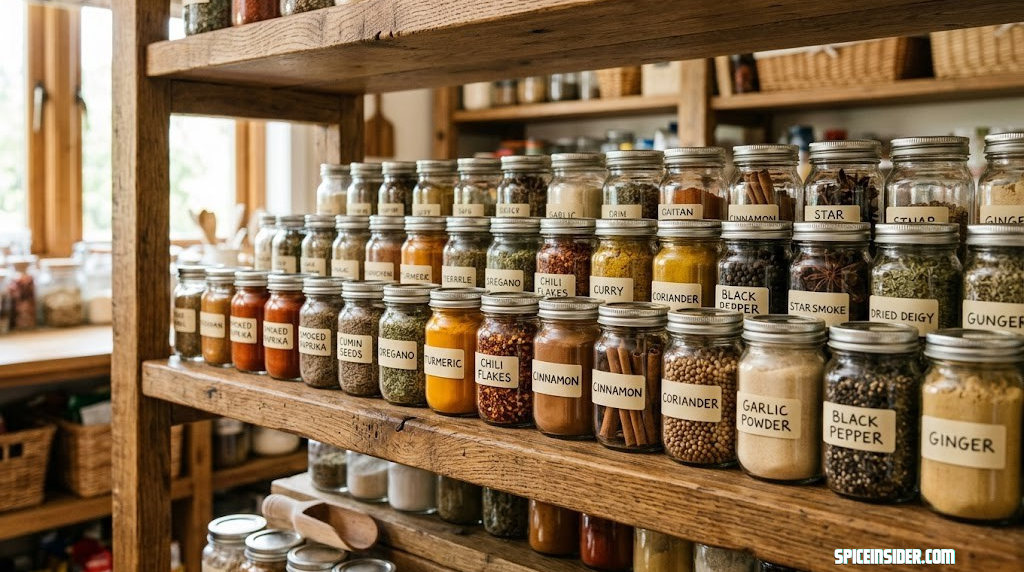
How to Store Bulk Spices So They Stay Fresh for Years, Not Months
A complete, tested system for buying spices in bulk without losing flavor, potency, or money to light, heat, air, and moisture.
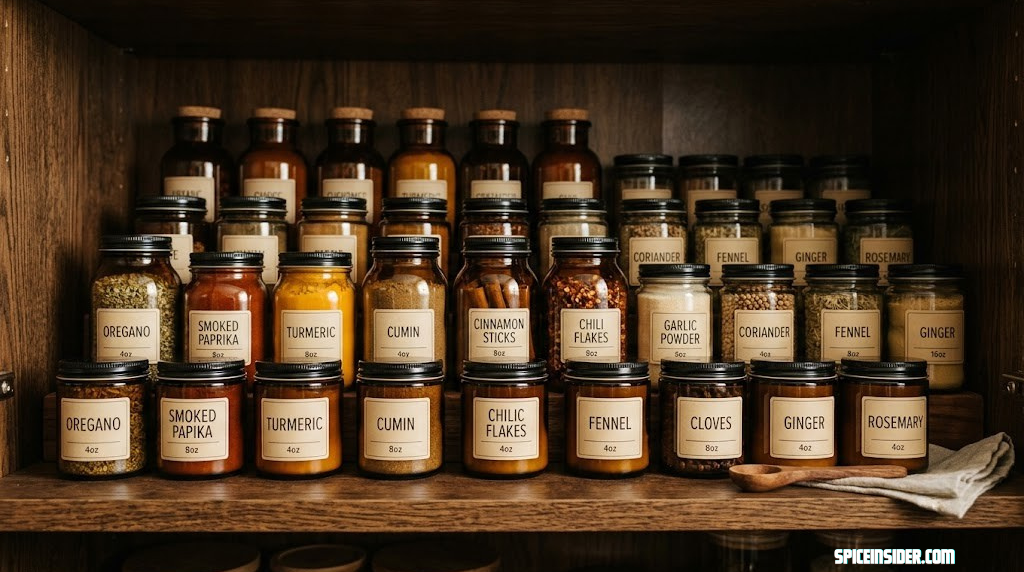
Why Bulk Spice Storage Matters
Buying spices in bulk is one of the smartest moves a home cook can make. A pound of cumin from a bulk bin or wholesale supplier can cost a fraction of what the same weight costs in a dozen tiny supermarket jars, and it means you never run out mid-recipe. But bulk buying only pays off if the spices are still potent by the time you use them. Ground coriander that has spent eight months in a clear plastic tub on the counter is not really the same ingredient anymore. It has lost its aromatic oils, its color has dulled, and the flavor it contributes to a dish is a whisper of what it used to be.
The problem is not the spice. It is the storage. Most people transfer bulk spices into whatever container is on hand, park it somewhere convenient, and forget about it. That single decision, repeated across a whole pantry, is why so many home cooks quietly over-season to compensate for weak spices, or give up on bulk buying altogether after one disappointing batch.
This guide walks through a complete, repeatable system for storing bulk spices: the containers that actually protect flavor, the environment that slows degradation, the labeling habits that prevent waste, and the rotation method that keeps your pantry working like a well-run kitchen rather than a junk drawer. If you already have a spice cabinet and just need a better way to keep it organized day to day, our guide on how to organize spices in your kitchen pairs well with everything below.
There is also a psychological reason bulk spice storage tends to go wrong: a large bag or tub of spice does not look perishable in the way fresh produce does. Nothing wilts, nothing changes texture overnight, and there is no obvious expiration date printed on the bag the way there is on a carton of milk. That absence of visible feedback is exactly what allows a spice to quietly decline for a year or two without anyone noticing, until the day a recipe tastes flat and the cook reaches for more and more of an ingredient that simply is not delivering the way it used to. A deliberate storage system replaces that invisible decline with a set of concrete habits: sealed containers, dated labels, and a rotation schedule that surfaces the problem before it shows up in a dish.
It is also worth being honest about what “fresh” actually means for a dried spice, since it is different from fresh produce. A dried spice will not spoil in the sense of becoming unsafe to eat for a very long time, often years past its ideal flavor window, which is part of why so many people keep using spices well past the point where they are contributing much to a recipe. The goal of this guide is not food safety in the traditional sense; it is flavor preservation, and that distinction shapes almost every recommendation that follows. A well-stored bulk spice is one that still smells like itself the day you open it, not simply one that has not technically gone bad.
Throughout this guide, the recommendations apply whether you are buying from a bulk bin at a co-op, ordering a one-pound bag from a wholesale spice company, or simply buying the largest size available at a warehouse club. The source does not change the storage math. What matters is what happens to that spice between the moment it arrives in your kitchen and the moment it is used in a dish, and that entire window is within your control.
The Four Enemies of Spice Freshness
Every spice storage decision you make is really a decision about how much exposure you are giving to four specific threats. Understanding them makes the rest of this guide feel less like a list of rules and more like common sense.
Light
Ultraviolet and visible light break down the pigments and volatile oils that give spices their color and aroma. Paprika fades from brick red to a dusty orange. Turmeric loses its golden punch. This is why the spice racks sold as decorative countertop displays, with spices sitting in clear glass under kitchen lighting or near a window, are actually one of the worst storage choices available, even though they look appealing in a showroom photo.
Heat
Heat accelerates every chemical reaction involved in flavor loss, including oxidation and the evaporation of essential oils. A shelf above the stove or next to the oven might be convenient while cooking, but it is consistently one of the warmest spots in the kitchen, and warmth is exactly what shortens a spice’s usable life.
Air and Oxygen
Oxygen slowly oxidizes the aromatic compounds in spices, which is part of why a container that is not properly sealed loses potency faster than a well-sealed one, even if it is kept in a dark, cool cabinet. Every time a container is opened, a small amount of fresh oxygen rushes in, so containers that are opened dozens of times a week degrade faster than a bulk reserve that is opened once a month.
Moisture
Moisture is the enemy that causes the most dramatic failures: caking, clumping, and in humid climates, mold. A wet measuring spoon dipped directly into a bulk container, or storage near a stove where steam collects, introduces exactly the kind of humidity that turns a fine powder into a solid brick within weeks.
Every recommendation in this guide, from the containers to the shelf placement, exists to reduce exposure to one or more of these four factors. It helps to think of storage decisions less as a checklist and more as a running total: every degree of extra heat, every extra minute under a kitchen light, every extra second a lid sits open, adds a small amount to the cumulative exposure a spice experiences over its life in your kitchen. No single lapse ruins a spice outright, but a bulk container that is exposed to all four factors regularly will noticeably underperform one that is not, often within a matter of months rather than years.
How the Four Factors Interact
These four enemies rarely act alone. A cabinet above the stove, for example, combines heat with occasional moisture from steam, and if that cabinet also has a glass front, light exposure is added to the mix. Understanding this interaction is useful when you are triaging an imperfect kitchen: if you can only fix one storage location, prioritize the spot that combines the fewest number of these four factors, even if it means a slightly less convenient location for everyday cooking.
It is also worth noting that whole spices resist all four factors better than ground spices, simply because less surface area is exposed at any given time. This is one of the reasons whole-spice bulk buying, discussed in more detail later in this guide, tends to outperform ground-spice bulk buying by a wide margin when both are stored under otherwise identical conditions.
Step-by-Step: How to Store Bulk Spices
Here is the full process, broken into six steps. Each step includes a simple diagram showing exactly what the setup should look like. Follow them in order the first time you set up a bulk spice system, then repeat steps 4 through 6 each time you restock.
Choose Truly Airtight Bulk Containers
Your bulk reserve container is the single most important purchase in this entire system. Look for a container with a gasket-sealed lid, either a silicone ring built into a screw-top lid or a clamp-style lid with a rubber seal, rather than a simple snap-on lid with no gasket at all. Press the lid on and try to gently squeeze the container; if you feel or hear air escaping, the seal is not tight enough for long-term bulk storage.
Shield the Container From Light
If your bulk container is clear glass or clear plastic, it needs a second layer of light protection: an opaque cabinet, a closed drawer, or an outer box. Amber or cobalt glass containers solve this automatically by filtering UV light even when left in view, which is why they are worth the extra cost for spices you buy in large quantities and keep for months.
Portion Spices Into Smaller Working Jars
As soon as bulk spices arrive, divide them: a small working jar for the counter or cabinet you actually cook from, and the rest sealed in the large bulk reserve. This limits how often the main supply is exposed to air and moisture, since only the small jar takes the daily wear of an open-and-close kitchen routine.
Label Every Container With Name and Fill Date
Write the spice name and the date it was portioned on both the bulk reserve and the working jar. This single habit is what makes the whole rotation system function, and it removes the guesswork of trying to judge freshness by smell alone months later. For a full labeling workflow, including printable templates and placement tips, see our dedicated guide on how to label spice jars.
Store in a Cool, Dark, Dry Location
Once portioned and labeled, both containers belong in a cabinet or drawer away from the stove, oven, dishwasher, and any window. An interior pantry shelf, a closed cabinet on an exterior wall, or a drawer insert are all strong choices. If you have not yet mapped out the best storage zones in your specific kitchen layout, our guide on organizing spices in your kitchen walks through exactly how to choose one.
Rotate Using First-In, First-Out
When you refill your working jar from the bulk reserve, always use the oldest stock first. If you buy a fresh bag of paprika before the previous one is finished, combine them so the older material gets used first rather than sitting untouched at the back of the container.

Start with the right jars. A gasket-sealed, airtight glass set is the single upgrade that protects everything else in this guide.
Shop Airtight Storage JarsChoosing the Right Storage Containers
Not every container marketed for spices is built for bulk quantities. A tiny 2-ounce jar with a snap lid is fine for a well-used seasoning blend, but it is the wrong tool for a pound of coriander seed you bought to last the year. When shopping for bulk-specific storage, look for three things: capacity that matches how much you actually buy, a genuinely airtight seal, and a shape that fits your available shelf or drawer space without wasting height or depth.
Square or rectangular containers use cabinet space more efficiently than round ones, since round jars leave gaps between them on a shelf. If you are setting up a full system rather than a single container, it is worth browsing a dedicated organizer set rather than buying jars piecemeal; our roundup of the best spice organizers compares stackable trays, drawer inserts, and wall-mounted racks sized for exactly this kind of bulk-plus-working-jar setup.
What to Look For
- Wide mouth openings for easy scooping without spilling, especially for whole spices like peppercorns or cinnamon sticks.
- Flat-bottomed, stackable shapes so bulk reserves can sit safely beneath or behind working jars.
- A visible fill line or clear panel so you can check remaining quantity without opening the lid.
- Dishwasher-safe construction so containers can be fully sanitized between refills, which matters more than people expect once a container has held a strongly oiled spice like paprika or chili powder.
Matching Container Size to Purchase Habits
One detail that is easy to overlook is that the “right” container size depends entirely on how you buy, not just on how much cabinet space you have. If your usual bulk purchase is a one-pound bag, a container sized for exactly one pound with a small amount of headroom will keep the spice snugly packed with minimal air space above it. Buying an oversized container “to be safe” actually works against you here, since a partially filled large container has more internal air volume relative to the spice than a properly sized one, which very slightly accelerates oxidation even with a good seal.
If your bulk purchasing habits vary, for example sometimes buying a half-pound and sometimes a full pound depending on what is on sale, it is worth having two or three container sizes on hand rather than forcing every purchase into a single fixed size. A modest investment in a few different container sizes pays for itself quickly once you are buying spices in bulk on a regular basis, since it removes the temptation to leave a container half full of empty air for months at a stretch.
Glass Lids vs. Plastic Lids
The lid matters as much as the jar body. Glass lids with a rubber gasket, of the kind found on traditional canning jars, tend to hold their seal longer than plastic lids, whose gaskets can degrade or warp slightly with repeated washing in a dishwasher’s heated dry cycle. If you are using plastic-lidded jars for a bulk reserve that will sit untouched for many months, it is worth inspecting the gasket every so often and replacing lids that no longer click firmly into place.
Good bulk container signs
- Gasket or silicone-sealed lid
- Opaque, amber, or UV-tinted material
- Wide mouth for scooping
- Stackable or nestable shape
Signs to avoid
- Snap lid with no gasket
- Clear glass with no cabinet cover
- Narrow neck that traps moisture
- Thin plastic that absorbs odors
Container Material Comparison
The material a container is made from affects how well it blocks light, resists odor absorption, and holds a seal over years of reuse. Here is how the four common options stack up for bulk spice storage specifically.
| Material | Light Protection | Odor Resistance | Seal Durability | Best For |
|---|---|---|---|---|
| Amber or cobalt glass | Excellent | Excellent | Good, if gasket-lidded | Long-term bulk reserves |
| Clear glass (cabinet-stored) | Good, only if kept dark | Excellent | Good, if gasket-lidded | Working jars, visual ID |
| Food-grade opaque plastic | Good | Fair, can absorb oils over time | Fair, seals wear faster | Lightweight bulk storage |
| Stainless steel tins | Excellent | Good | Good with rubber gasket | Whole spices, travel kits |
| Mylar bags with clip seal | Excellent | Good | Fair, needs re-clipping | Freezer backup storage |
For most kitchens, the winning combination is amber or opaque glass for the bulk reserve paired with clear glass working jars kept inside a closed cabinet. This gives you the light protection of dark glass where it matters most, while keeping the everyday jars easy to identify at a glance.
Cost is worth a brief mention here too. Glass, particularly amber glass, tends to cost more upfront than plastic, but it also lasts far longer without degrading, does not absorb odors from oily spices the way plastic can over repeated use, and holds its seal integrity for years rather than months. Stainless steel tins sit in between on cost and offer excellent durability, though they lack the visual check of a see-through panel, which some cooks find inconvenient for quickly identifying contents. Weighing durability against convenience, rather than upfront price alone, tends to produce the better long-term choice for a system meant to be used for years.

Prefer amber glass? UV-tinted jars block light automatically, even on an open shelf.
Shop Amber Glass JarsThe Working Jar vs. Bulk Reserve System
The two-tier system described in the steps above is worth explaining in more depth, because it is the single biggest factor separating a bulk buyer who wastes spices from one who does not. The idea is simple: separate the spice you use daily from the spice you are saving for later, and only let the daily portion take the wear and tear of frequent opening.
A working jar should hold roughly two to six weeks of usage, depending on how often you cook with that particular spice. Cinnamon and black pepper might warrant a slightly larger working portion since they are used constantly, while a specialty spice like sumac or asafoetida might only need a tablespoon or two on hand at a time, with the rest sealed away.
The bulk reserve, by contrast, should be opened as rarely as possible, ideally just once every few weeks to refill the working jar. Every additional open-and-close cycle introduces a small amount of oxygen and, depending on your kitchen, humidity. Treating the bulk reserve almost like a pantry deposit box rather than a daily-use container is what allows a pound of spice to actually last as long as its shelf life suggests.
Sizing Your Working Jars Correctly
A common mistake is using a working jar that is far larger than what gets used in a reasonable window. An oversized working jar means the spice sits partially full for months, with more air space above it than a smaller jar would have, which actually accelerates staleness compared to a snugly sized container. When in doubt, size the working jar to be about three-quarters full immediately after refilling, rather than choosing the largest jar available.
Why Two Tiers Beats One Big Container
It can feel redundant to maintain two containers for a single spice, especially when a kitchen already has limited storage space. But the math favors the two-tier approach clearly once you account for how often each container is opened. A single large container used for both daily cooking and long-term storage might be opened twenty or thirty times a month. Split into a working jar and a bulk reserve, only the small working jar absorbs that frequent opening, while the reserve might be opened only once or twice in the same period. Since each opening introduces a small amount of fresh air and, in humid kitchens, a small amount of moisture, cutting the reserve’s exposure by nine-tenths has a real, measurable effect on how long the bulk of your spice supply stays at peak flavor.
There is a secondary benefit as well: a working jar that gets used constantly tends to get refilled with attention, since you notice when it is running low. A single giant container, by contrast, can hide a slowly aging bottom layer for a very long time simply because the top few inches keep getting scooped from first. Separating the two makes the aging process visible and manageable rather than invisible.
Labeling and Dating Your Spice Stock
Labeling is the habit that makes every other part of this system function over time. Without a fill date, there is no reliable way to know whether a jar is two months old or two years old, and most people default to guessing based on smell, which is both inconsistent and easy to get wrong with milder spices like coriander or fennel.
At minimum, every container should carry two pieces of information: the name of the spice and the date it was portioned into that container. A third useful field is the source or grind date if you buy whole spices and grind them yourself, since ground spice degrades faster than the whole seed or pod it came from.
Our full walkthrough on how to label spice jars covers printable label templates, waterproof pen recommendations, and placement strategies that survive dishwasher cycles, which is worth reading in full if you are setting up labels for the first time. The short version for bulk storage specifically: label the lid, not just the body, since bulk reserves are often stored stacked or behind other items where only the lid is visible.
A Simple Rotation Calendar
Beyond individual labels, it helps to keep a lightweight master list, whether on paper taped inside a cabinet door or a simple spreadsheet, tracking what was purchased, when, and in what quantity. This turns spice management from a guessing game into a five-minute monthly check-in, and it makes it obvious when a spice is approaching the end of its useful window well before it actually goes flat.
Color-Coding for Fast Visual Checks
Some households add a simple color-coding system on top of written labels, such as a small colored dot sticker indicating the quarter or season a spice was purchased. This is entirely optional, but for a large bulk pantry with a dozen or more containers, it allows a glance across a shelf to immediately surface anything that has been sitting for multiple color cycles without needing to read each individual label closely.
What to Do With Unlabeled Legacy Stock
If you are implementing this system for the first time and already have a cabinet full of unlabeled spices, the honest approach is a one-time audit. Open each container, do the crush-and-smell test described later in this guide, and either relabel it with today’s date as a fresh starting point or, if the aroma is genuinely faint, retire it and start clean. Trying to guess an accurate fill date for existing stock is rarely worth the effort compared to simply resetting the clock and committing to the labeling habit going forward.
Where to Store Bulk Spices in Your Kitchen
Even the best container fails if it is placed in the wrong spot. The ideal storage zone is a cabinet or drawer that is closed, on an interior wall away from direct sun, and at least a few feet from the stove, oven, dishwasher, or any appliance that generates heat or steam.
Strong Storage Locations
- An interior pantry shelf, especially one below eye level and away from any window
- A closed cabinet on an exterior wall away from the cooking zone
- A shallow drawer fitted with a spice organizer insert, which keeps jars upright and visible without opening a cabinet door
- A basement or cool interior closet for true long-term bulk reserves that are opened only a few times a year
Locations to Avoid
- Any shelf directly above or beside the stove or oven
- A windowsill or any spot that receives direct sunlight for part of the day
- Inside a cabinet directly above the dishwasher, which vents heat and moisture during cycles
- The refrigerator door for most dried spices, since the constant temperature swings from opening and closing actually introduce more condensation than a stable room-temperature cabinet
If your kitchen genuinely does not have a good interior storage zone, for example a small galley kitchen where every cabinet is near the stove, our guide on organizing spices in a kitchen covers workaround layouts, including using a nearby closet or a rolling cart positioned away from heat sources.
Working Jars vs. Bulk Reserves: Different Placement Rules
It is worth separating placement decisions for your working jars from those for your bulk reserve, since they do not need to follow identical rules. Working jars, opened daily, benefit most from being genuinely convenient, close to the stove or prep area, as long as they are inside a closed cabinet or drawer rather than sitting exposed on the counter. The bulk reserve, opened far less often, can be placed somewhere slightly less convenient in exchange for a meaningfully better environment, such as a back cabinet, a pantry shelf, or even a cool basement storage area for households with the space.
Renters and Small Kitchens
Not everyone has the luxury of choosing an ideal cabinet layout, particularly in rental kitchens with fixed, sometimes awkward storage. In these situations, a stackable, closed storage bin kept inside any interior closet, even one outside the kitchen itself, can function as a bulk reserve zone when no cabinet in the kitchen itself is far enough from heat and light. The bulk reserve does not need to live in the kitchen at all; it only needs to be reasonably accessible when it is time to refill a working jar.
Temperature and Humidity Control
Most kitchens do not need special equipment to control temperature and humidity for spice storage; they need better placement decisions. That said, a few situations call for more deliberate climate management.
Hot or Humid Climates
In consistently warm, humid regions, a standard cabinet may not stay cool and dry enough for long-term bulk storage, particularly during summer months. In these cases, a small silica gel packet dropped into each bulk container absorbs residual moisture without affecting flavor, and an interior closet with air conditioning coverage will outperform an uninsulated kitchen cabinet.
Freezer Storage for True Long-Term Bulk
For spices bought in very large bulk quantities that will not be used for six months or longer, portioning a backup supply into freezer-safe, airtight bags or containers and storing them in the freezer can meaningfully extend shelf life, especially for ground spices and anything with a high oil content like paprika or chili powder. Bring only what you need back to room temperature at a time, since repeated freeze-thaw cycles introduce condensation that can cause clumping.
Signs Your Storage Environment Needs Adjusting
- Condensation visible on the inside of a container lid after opening
- Clumping or caking in a spice that used to pour freely
- A noticeably warm cabinet interior when touched, especially near the stove wall
- Faster-than-expected fading of color in bright spices like turmeric or paprika
Seasonal Adjustments
Even kitchens with a generally good storage cabinet can see seasonal swings, particularly in climates with humid summers and dry winters, or in homes where air conditioning is used inconsistently. It is worth doing a quick check of your bulk storage area at the start of each season, feeling for warmth, checking for any condensation on lids, and confirming the seal on your most-used containers is still tight. This takes only a few minutes but catches problems before they affect a full bulk purchase.
For households in particularly challenging climates, a small standalone dehumidifier placed in a pantry closet, run periodically rather than continuously, can keep an otherwise problematic storage area within a safe humidity range without the cost or footprint of climate-controlling an entire kitchen.

Humid kitchen or climate? Food-safe silica packets keep bulk containers dry between refills.
Shop Moisture AbsorbersCommon Mistakes That Ruin Bulk Spices
Dipping a Wet Measuring Spoon Directly Into the Container
This is the single fastest way to introduce moisture into an otherwise well-managed bulk container. Always measure into a dry bowl first, or use a dedicated dry scoop kept inside the jar.
Storing Everything in One Giant Container
Mixing several months of bulk spice into a single oversized jar means the bottom layer is opened and exposed to air just as often as the top, since there is no way to isolate older stock. Smaller, dated batches solve this automatically.
Buying More Than You Will Realistically Use
Bulk pricing is tempting, but a spice used only occasionally, like saffron threads or whole star anise, rarely benefits from a bulk quantity, since even perfect storage cannot outpace how slowly it gets used. Reserve bulk buying for the spices in heaviest weekly rotation.
Skipping the Sniff-and-Look Check Before Cooking
Even with excellent storage, spices do eventually fade. A quick check, crushing a small pinch between your fingers to smell it before adding it to a dish, catches a spice that has quietly gone flat before it under-seasons an entire meal.
Ignoring Whole vs. Ground Differences
Ground spices lose potency significantly faster than their whole counterparts because grinding exposes far more surface area to air. Buying whole spices in bulk and grinding smaller portions as needed is one of the most effective freshness strategies available, and it pairs directly with the next section.
Storing Bulk Containers on Top of the Refrigerator
The top of the refrigerator is a common storage spot simply because it is out of the way, but it is also warmer than most people expect, since heat generated by the refrigerator’s compressor rises and collects there. It is a poor location for anything beyond a container of salt.
Leaving Bulk Bags Unsealed in Their Original Packaging
Many bulk spices arrive in a simple paper or thin plastic bag with a basic fold-over closure. That packaging is designed to survive shipping, not to protect flavor for months on a shelf. Transferring the contents into a proper airtight container as soon as it arrives, rather than leaving it in the original bag “for now,” is a step that is easy to skip and consistently costly when skipped.
Buying Pre-Ground Blends in Very Large Bulk Sizes
Spice blends, such as a bulk curry powder or taco seasoning mix, are made up of several different ground spices, each degrading at its own pace. A blend loses its balance faster than a single-ingredient spice does, since the fastest-fading component in the mix throws off the whole blend’s flavor profile well before the slower-fading components are anywhere near spent. Buy blends in smaller bulk quantities than you would for a single spice.
Grinding, Rotation, and Freshness
If you are serious about getting the most out of bulk spice buying, shift as much of your bulk purchasing as possible toward whole form: whole cumin seed instead of ground, whole peppercorns instead of pre-ground pepper, whole cinnamon sticks instead of powder. Whole spices can often be stored a full year or more longer than their ground equivalents when kept under the conditions described in this guide, simply because the essential oils are sealed inside the seed or bark rather than exposed on every surface of a powder.
Grinding in small batches, just enough for a week or two of working jar use, means you are essentially always cooking with freshly ground spice, even when the underlying bulk supply is technically months old. A dedicated spice grinder makes this practical on a weekly basis rather than feeling like an extra chore, and it is one of the highest-impact purchases for anyone managing a serious bulk spice rotation.
A Simple Weekly Rotation Habit
Pick one day a week, even five minutes on a Sunday, to check working jar levels, grind a fresh small batch of whatever is running low, and refill from the bulk reserve using the first-in, first-out method from Step 6. This small recurring habit is what actually keeps a bulk spice system running smoothly long after the initial setup.

Grind only what you need. A compact spice grinder makes weekly small-batch grinding effortless.
Shop Spice GrindersSpice Shelf Life by Category
These ranges assume proper bulk storage as described throughout this guide: airtight, dark, cool, and dry. Actual shelf life varies with climate and how often a container is opened, but this table is a reliable general reference for planning bulk purchase quantities.
| Category | Whole Form | Ground Form | Notes |
|---|---|---|---|
| Seeds (cumin, coriander, fennel) | 3–4 years | 2–3 years | Toast whole seeds before grinding for best flavor |
| Barks and roots (cinnamon, turmeric root) | 3–4 years | 2 years | Ground turmeric fades in color fastest of this group |
| Dried chilies and peppers | 2–3 years | 1–2 years | High oil content means faster flavor loss when ground |
| Leafy dried herbs (oregano, thyme, bay) | 1–3 years | 1–2 years | Crumble a leaf to test aroma before use |
| Delicate spices (saffron, ground ginger) | 2 years | 1–2 years | Buy in small bulk quantities only |
| Salt-based and mineral blends | Indefinite | Indefinite | Not subject to flavor degradation, only clumping from moisture |
Use this table alongside your labeling system: if a jar’s fill date is approaching the outer edge of its category’s range, move it to the front of your rotation rather than letting it sit untouched.
These figures assume the storage conditions described throughout this guide are actually being followed. A spice kept in a hot cabinet above the stove, or left in a clear jar on a sunlit counter, should be treated as being on the low end of its range, or below it, regardless of what the category table suggests. Treat the table as a ceiling that good storage helps you reach, not a guarantee that applies automatically to any container regardless of where it sits.
Calculating Real Bulk Savings
Bulk spice buying is often marketed on price per ounce alone, but the real savings calculation needs to account for how much of that bulk quantity you will actually use while it is still flavorful. A spice that is 40% cheaper per ounce in bulk is not actually a bargain if a third of it ends up thrown away after losing potency, because storage was an afterthought.
A Simple Way to Think About It
Before buying a large quantity of any spice, it helps to ask two quick questions: how often do I actually cook with this, and does my kitchen have a genuinely good storage spot for it? A spice used in three or four meals a week, like garlic powder or black pepper, is almost always worth buying in bulk, since the working jar will cycle through fresh stock quickly and the bulk reserve will be consumed well within its shelf life. A spice used once every month or two, like ground cloves or whole star anise, rarely benefits from a large bulk purchase no matter how good the per-ounce price looks, because the reserve will still be sitting in the cabinet long after its ideal flavor window has passed.
Factoring in Storage Investment
The one-time cost of proper storage containers is small relative to what it protects. A set of quality airtight jars is a purchase made once and reused indefinitely across every future bulk purchase, while poor storage quietly erodes the value of every bulk purchase made afterward. Looked at over a year or two of regular bulk buying, the container investment pays for itself many times over simply by preventing waste on spices that would otherwise need to be replaced early.
Buying Frequency vs. Bulk Size
For spices in the middle tier, used regularly but not constantly, it is often smarter to buy a moderate bulk size more frequently rather than the largest available size infrequently. Buying a half-pound bag every four months, for example, keeps your working jar and reserve cycling through genuinely fresh stock, whereas a single two-pound bag bought once a year all but guarantees the back half of that bag will be noticeably past its best by the time it is used, regardless of how well it is stored.

Portioning by weight? A simple kitchen scale makes splitting bulk bags into working and reserve portions fast and consistent.
Shop Kitchen ScalesStorage Notes for 12 Common Bulk Spices
General storage rules cover most situations, but a handful of commonly bulk-purchased spices have quirks worth knowing about individually.
Black Peppercorns
Among the most bulk-friendly spices available, since whole peppercorns store exceptionally well when kept dry and sealed. Grind only what you need for the week using a dedicated grinder to get the most flavor per purchase.
Cinnamon
Whole cinnamon sticks retain their aromatic oils far longer than pre-ground cinnamon. If you regularly use ground cinnamon, consider buying sticks in bulk and grinding small batches rather than buying pre-ground in bulk.
Paprika
High in natural oils, which makes it prone to both color fading from light and flavor loss from heat. This is one of the spices most worth storing in amber glass specifically, rather than clear glass in a cabinet.
Turmeric
Extremely light-sensitive; its signature golden color is one of the first visible signs of over-exposure. Ground turmeric bought in bulk should go straight into opaque or amber storage.
Cumin
A heavy-rotation spice in many kitchens, which makes it a strong bulk-buying candidate. Toasting whole cumin seed briefly before grinding brings out more flavor than pre-ground cumin typically delivers.
Garlic and Onion Powder
Prone to clumping in humid conditions due to their fine, slightly hygroscopic texture. A silica packet in the bulk reserve is particularly useful for these two.
Chili Powder and Cayenne
Similar to paprika in oil content and light sensitivity. Buy in moderate bulk quantities matched to actual usage rather than maximum available size, since flavor decline is noticeable within a year even under good storage.
Whole Nutmeg
One of the best possible spices for bulk buying in whole form, since whole nutmeg stored properly can last for several years with minimal flavor loss. Grate fresh with a microplane as needed.
Dried Oregano and Thyme
Leafy herbs lose potency faster than seeds, roots, or barks. Crumble a pinch between your fingers before use; if the aroma is faint, it is time to move to the front of the rotation.
Saffron
Rarely worth buying in large bulk quantities regardless of price, given how little is used per recipe. A small, well-sealed, light-blocked container is more appropriate than a bulk reserve for this particular spice.
Whole Coriander Seed
Stores extremely well whole and takes on a noticeably brighter, citrusy flavor when toasted and ground fresh, making it a strong candidate for the whole-spice bulk strategy described earlier in this guide.
Bay Leaves
Best purchased in moderate bulk quantities rather than very large ones, since whole leaves do eventually lose their characteristic aroma even when stored well, typically over one to two years.
Frequently Asked Questions
How much bulk spice should I actually buy at once?
A reasonable rule of thumb is to buy no more than you can use within the shelf life range for that spice category, even at a slower cooking pace than usual. For a spice used weekly, a one-pound bulk bag is often reasonable; for something used occasionally, a much smaller quantity avoids waste regardless of the discount.
Can I store bulk spices in the refrigerator?
Most dried spices do not benefit from refrigeration, since the temperature swings from repeated opening introduce condensation. The freezer is a better option for true long-term backup storage, kept in airtight, freezer-safe containers and only partially thawed as needed.
What is the best container for bulk spice storage?
A gasket-sealed, opaque or amber glass container with a wide mouth is generally the strongest choice, combining airtightness, light protection, and ease of scooping in one package.
How do I know if a bulk spice has gone bad?
Crush a small pinch between your fingers and smell it. If the aroma is faint or absent compared to when it was fresh, the spice has lost potency, even if it is not technically unsafe to eat. Clumping, caking, or any sign of mold means it should be discarded.
Is it cheaper to buy spices in bulk?
Yes, in most cases bulk spice pricing per ounce is significantly lower than small retail jars, but the savings only hold up if the spice stays usable long enough to actually be consumed, which is the entire reason a proper storage system matters.
Should I store whole spices or ground spices in bulk?
Whole spices last considerably longer in bulk storage than ground versions. Buying whole and grinding small batches as needed is the single best strategy for anyone buying spices in large quantities.
How often should I refill my working jars from the bulk reserve?
Every two to six weeks is typical, depending on how frequently you use that particular spice. Refilling on a set schedule, rather than only when a jar runs completely empty, makes it easier to maintain the first-in, first-out rotation.
Do vacuum-sealed bags work for bulk spice storage?
Vacuum-sealed mylar bags can work well as a secondary long-term backup, particularly for freezer storage, but they are less convenient for everyday scooping compared to a wide-mouth jar, so they are best used for reserve stock rather than working supply.
Why did my ground turmeric lose its bright color?
Color fading in turmeric is almost always caused by light exposure. Switching to an opaque or amber container, or moving the jar into a closed cabinet, typically slows this significantly for future batches.
Can I reuse old spice jars for a new bulk system?
Yes, as long as the lid still forms a tight seal and the jar has been thoroughly washed and fully dried before refilling. Check the seal by pressing the lid down firmly; if it does not resist gentle pressure, it is no longer airtight enough for bulk storage.
What is the biggest mistake people make with bulk spice storage?
Storing the entire bulk quantity in one large container that gets opened as often as a small everyday jar. Separating a small working portion from the main reserve is the change that makes the biggest difference.
How should I label bulk spice containers?
Label both the lid and the body with the spice name and the date it was portioned, using a waterproof marker or a printed label rated for kitchen conditions. A full labeling walkthrough is available in our guide to labeling spice jars.
Build a System That Actually Lasts
Bulk spice buying only pays off when the storage behind it is deliberate. Airtight, light-blocking containers, a cool and dry location away from the stove, a working jar separated from the main reserve, clear labels with fill dates, and a simple first-in, first-out rotation habit are the entire system, and none of it requires special equipment beyond good jars and a bit of consistency. Set it up once, and every future bulk purchase becomes a genuine win instead of a gamble.
None of these steps need to happen all at once. Many home cooks start with a single change, switching one badly sealed container for a proper airtight jar, and expand the system gradually as more bulk purchases come through the kitchen. What matters most is consistency once the habit is in place: the same sealed containers, the same dark and cool shelf, the same label on every jar, every single time. That consistency is what turns a one-time storage upgrade into a pantry that reliably delivers full flavor, purchase after purchase, for years to come.
If you are starting from scratch, begin with the containers, then work through the rest of your cabinet layout using our guide to organizing spices in your kitchen.
Shop Bulk Spice Storage Sets
Pingback: Best Turmeric Powder: Organic Picks with Real Curcumin