How to Toast Spices Before Grinding: The Complete Step-by-Step Guide
Discover the single most powerful technique that separates good cooks from extraordinary ones — and why your spice cabinet will never smell the same again.
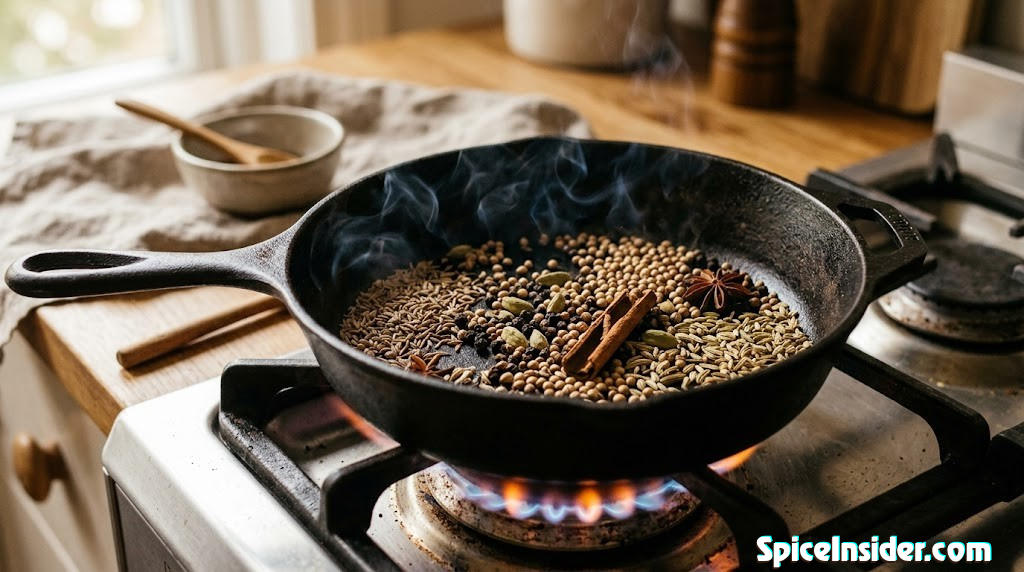
Freshly toasted whole spices develop a deep, nutty aroma that pre-ground spices simply cannot replicate.
There is a moment in every cook’s journey when they stop thinking about food as just fuel and start chasing flavor the way a musician chases a note. For many, that moment arrives the first time they toast whole spices in a dry pan and the kitchen fills with an aroma so rich, so intoxicating, it almost seems unfair that such depth was hiding inside a handful of pale seeds all along.
Toasting spices before grinding is one of the oldest flavor-building techniques in the culinary world. From Indian kitchens slow-cooking garam masala to Moroccan cooks building ras el hanout from scratch, from Yemeni hawaij to the spice-forward stews of the American South, the principle is universal: raw whole spices hold their flavor potential in reserve, and heat is the key that unlocks it.
In this complete guide, you will learn exactly how to toast spices before grinding, understand the chemistry behind why it works, discover which spices benefit most (and which to leave raw), and avoid the common mistakes that turn beautiful spices into bitter ash. Whether you own a top-rated spice grinder or plan to use a mortar and pestle, the toasting step will elevate every blend you ever make.
✦ What You Will Learn
- The science of why toasting unlocks 60–80% more volatile aroma compounds
- A foolproof 6-step dry pan method with visual cues for every stage
- The oven and microwave alternatives when you need speed
- A spice-by-spice toasting temperature and time reference guide
- How to grind toasted spices for maximum shelf life and flavor
- The 9 mistakes that ruin toasted spices — and how to sidestep every one
Why Toast Spices Before Grinding?
The short answer: raw whole spices are flavorful, but toasted whole spices are transformative. The difference between the two is not just a degree of intensity — it is a fundamental change in the flavor profile, aroma depth, and the way a spice interacts with every other ingredient in a dish.
When you purchase whole cumin seeds, coriander, cardamom pods, or black pepper from the store, you are buying spices that are alive with potential. The aromatic oils responsible for their flavor — called volatile essential oils — are locked inside the cell walls of each seed, bark, or berry. Until those cell walls are broken down by heat or grinding, a significant portion of that flavor potential remains sealed away.
Toasting accomplishes two things at once. First, it gently ruptures cell walls and drives moisture out of the spice, which concentrates the essential oils right at the surface where they become immediately accessible. Second, it triggers a series of chemical reactions — most importantly, the Maillard reaction and pyrazine formation — that generate entirely new flavor compounds that simply do not exist in raw spices at all.
The result is a spice that smells like a more mature, complex version of itself. Raw cumin is earthy and slightly grassy. Toasted cumin is rich, nutty, warm, almost smoky, with a depth that lingers. Raw coriander is bright and citrusy. Toasted coriander is caramel-adjacent, with an almost floral sweetness layered under the brightness. These are not small differences — they are flavor revolutions.
If you have been relying entirely on pre-ground spices from a jar, this guide might permanently change the way you think about your spice cabinet.
✅ Benefits of Toasting First
- 60–80% more volatile aroma compounds released
- Entirely new flavor compounds created via Maillard reaction
- Reduced moisture = longer shelf life after grinding
- Easier grinding (drier seeds crack cleanly)
- Smoother, more uniform powder with less friction on grinder
- Deeper color in finished spice blends
⚠️ Considerations
- Requires active attention — cannot walk away
- Burnt spices are irreversible (must discard)
- Not all spices benefit — some lose delicate notes
- Adds 5–8 minutes to prep time
- Ground toasted spices have a slightly shorter shelf life than raw ground

Grind your toasted spices to perfection
A dedicated electric spice grinder turns freshly toasted whole spices into ultra-fine, aromatic powder in seconds. Read our full Cuisinart SG-10 review to see if it belongs on your counter.
Check Price on Amazon →The Science Behind Toasting Spices
Understanding why toasting works makes you a better cook. It moves the process from guess-work into informed control — you stop relying on timers and start trusting your nose and eyes.
Volatile Compound Activation
Spice flavor comes from volatile organic compounds — primarily terpenes, terpenoids, and phenylpropanoids — that evaporate easily at room temperature. When you toast a spice, two things happen to these compounds. First, heat forces moisture out of the seed, which concentrates the volatiles. Second, heat physically expands and fractures the cellular matrix that contains them, releasing a dramatic burst of aromatic oils to the surface.
Research on cuminum cyminum (cumin) has shown that heat treatment at 150–180°C triggers the liberation of cuminaldehyde, the primary aromatic compound, at rates 3–4 times higher than in raw seeds. Similar effects have been documented in coriander, fennel, and black pepper.
The Maillard Reaction & Pyrazines
Beyond simply releasing existing compounds, toasting creates new ones. When amino acids and reducing sugars in the spice react together under heat above approximately 140°C (284°F), they produce hundreds of new flavor compounds through the Maillard reaction — the same chemical process that browns bread, sears meat, and makes roasted coffee smell the way it does.
One particularly important class of compounds produced during spice toasting is pyrazines — nitrogen-containing molecules responsible for the roasted, nutty, earthy quality in toasted spices. Raw cumin has virtually no pyrazines. Toasted cumin is rich with them. This is why the flavor is not just “stronger” but genuinely different in character.
Moisture Removal
Whole spices, even when they appear dry, contain anywhere from 8–15% residual moisture. This moisture competes with essential oils during grinding — wet seeds generate heat through friction and can partially steam rather than crack cleanly, resulting in a paste-like residue rather than a fine powder. Toasting drives out this moisture, leaving the spice brittle and crisp, which means your spice grinder can do its job with far less effort and achieve a finer, more uniform powder.
Which Spices Should You Toast — and Which to Skip?
Not every spice rewards toasting equally. Some are transformed by it. Others lose delicate floral or citrus notes that are best preserved by gentle heat or no heat at all. Knowing the difference saves you from ruining an expensive bottle of cardamom or saffron.
Spices That Shine After Toasting
Spices to Toast with Extra Care
Cardamom pods benefit from very light, brief toasting — just 1–2 minutes — that enhances their floral eucalyptus note without burning the delicate inner seeds. Cinnamon sticks toast beautifully but go from fragrant to bitter quickly; keep the heat medium-low and watch closely. Dried turmeric root pieces can be very gently warmed (not toasted) to ease grinding.
Spices Best Left Raw (or Used Minimally)
Saffron threads should never be dry-toasted in a pan — their delicate water-soluble compounds degrade rapidly at high heat. The traditional method of “blooming” saffron in warm liquid is entirely separate and should not be confused with spice toasting. Paprika and ground turmeric powder (already ground) will simply scorch and should never be dry-toasted. Vanilla beans contain their flavor compounds in a medium too delicate for dry heat. Whole mace blades can be briefly warmed but are quite delicate.
Tools You Will Need
You do not need specialized equipment to toast spices beautifully. The right pan matters more than any gadget.
| Tool | Best Option | Why It Matters |
|---|---|---|
| Pan | Heavy cast iron or carbon steel skillet | Holds heat evenly; no hot spots that scorch seeds |
| Stirring | Wooden spoon or silicone spatula | Keeps seeds moving; no static charge like plastic |
| Cooling | Wide ceramic plate or sheet pan | Stops carryover cooking immediately |
| Grinding | Electric spice grinder or mortar & pestle | Converts toasted seeds to fine powder |
| Storage | Dark glass spice jar with tight lid | Protects volatile compounds from light and air |
| Scale (optional) | Digital kitchen scale | Precise batching for repeatable spice blends |
For the grinding step, you have two main paths: a dedicated electric spice grinder for fine, consistent powder with minimal effort, or a traditional mortar and pestle for more texture control and a meditative, hands-on experience. If you are wondering which approach suits your cooking style, our guide to grinding spices without a grinder covers all the manual alternatives in detail.
Step-by-Step: The Dry Pan Toasting Method
This is the gold-standard method used by professional cooks worldwide. It is fast, gives you precise visual and aromatic control, and works on any stovetop — gas, electric, or induction. Follow each step carefully, especially for your first few batches.
Gather and Measure Your Spices
Before turning on any heat, assemble everything. Pull out the whole spices you intend to toast, inspect them for any visible debris or clumped pieces, and measure out the quantity you need. Working with premeasured spices means you will never be scrambling for your grinder with a pan full of rapidly toasting seeds.
A practical batch size for home cooking is 2 to 4 tablespoons per spice. This is enough to coat the pan in a thin, even layer — the key to uniform toasting. If you need more, work in multiple batches rather than crowding the pan.
Measure each spice into separate small bowls before toasting. Never toast different spices together in the same batch.
Heat the Pan First — Dry, with No Oil
Place your heavy skillet over medium heat. Never add oil. The process is called dry toasting precisely because fat has no role here — oil would fry the spices rather than toast them, producing a completely different (and less desirable) result when grinding.
Allow the pan to preheat for 60 to 90 seconds before adding any spices. A properly preheated pan ensures immediate, even contact heat when the seeds land, which prevents the uneven toasting that comes from spices gradually warming in a cold pan. To test if your pan is ready, hold your palm 3 inches above the surface — you should feel a steady, gentle warmth radiating upward.
A dry cast iron or carbon steel pan on medium heat. Preheat for 60–90 seconds before adding spices. No oil, ever.
Add the Spices in a Single, Even Layer
Pour your measured spice into the hot dry pan. Immediately spread them across the surface using the back of a wooden spoon or by gently swirling the pan. You want a single, thin, even layer — not a pile, not a heap. The thinner the layer, the more evenly every seed will receive the same amount of heat.
If you hear an immediate, sharp sizzle when the spices hit the pan, your heat is too high. Turn it down to medium-low. There should be almost no sound at first — just the whisper of seeds settling onto a warm surface. Within 30 seconds, you will begin to hear a very quiet, gentle rustling as the moisture begins to release.
A thin, even single layer ensures uniform heat contact. Crowded or piled seeds toast unevenly — some burn while others stay raw.
Toast and Stir Continuously
The most important rule of dry toasting: never walk away from the pan. Spices go from perfectly toasted to acrid and ruined in a matter of 30 seconds. Stay at the stove, stir or swirl constantly, and keep every seed moving across the surface.
Use a wooden spoon or spatula to gently stir the spices every 15–20 seconds. Alternatively, hold the pan handle and use a quick wrist motion to toss the spices in the air like you would when sautéing onions. This keeps the seeds in constant motion, ensuring no single seed sits in contact with the hot surface long enough to scorch.
The process typically takes 2 to 5 minutes for most whole seeds, with smaller seeds (like mustard) finishing faster and larger pieces (like dried chiles) taking longer. Watch the color and smell the aroma — these are your real timers, not the clock.
Continuous stirring is the most critical active step. Any seed that sits still for too long will scorch on the bottom while staying raw on top.
Watch and Smell for the Perfect “Done” Signal
Knowing when to stop is the true skill in spice toasting, and it is learned through experience and observation rather than any timer. There are three reliable signals to watch for simultaneously:
Color: Most seeds should deepen by 1–2 shades from their raw state. Cumin goes from pale greenish-beige to a warm, golden-brown. Coriander lightens slightly at first, then develops tan patches. Black pepper develops a slight matte bloom. If any seeds are turning dark brown or black, you have gone too far.
Aroma: This is the most reliable signal. When the spice is perfectly toasted, it will release an extraordinary, blooming aroma that fills the kitchen. The smell should be warm, nutty, and deeply complex — like the best version of that spice you have ever encountered. If the smell becomes sharp, acrid, or smoky-in-a-bad-way, stop immediately.
Sound: Seeds will crackle slightly as their moisture fully releases. Mustard seeds will begin to pop. Fennel seeds will sizzle gently at the very end. These sounds are your auditory confirmation that the process is working.
Use all three senses simultaneously. Aroma is the most reliable signal — when the kitchen smells extraordinary, your spices are ready.
Cool Completely Before Grinding
The moment your spices hit that perfect aromatic peak, immediately transfer them from the hot pan onto a wide ceramic plate, a marble slab, or a cool sheet pan. This is called stopping carryover cooking. A cast iron pan retains heat for a long time — leaving perfectly toasted spices in the pan for even 60 seconds after removing it from the heat can continue the toasting process and push them into over-toasted territory.
Spread the spices in a single layer on the cool surface and let them rest at room temperature for a minimum of 5 to 8 minutes. Grinding warm spices in an electric grinder is one of the most common mistakes home cooks make. Warm spices still contain volatile aromatic compounds in a gaseous state. Grinding them while warm causes these compounds to escape before they can be trapped in the ground spice, and the heat generated by the grinder motor compounds this loss further.
Let them cool completely until they feel room temperature to the touch. Then grind.
Transfer immediately to a cool surface. Carryover heat in a cast iron pan can continue toasting for up to 60 seconds after you remove it from the flame.

The Right Grinder Makes All the Difference
Once your toasted spices are cool, you need a grinder that produces ultra-fine, consistent powder without overheating. Our Secura spice grinder review covers one of the best budget-friendly options available.
Check Price on Amazon →Oven Toasting Method: Best for Large Batches
When you are making large quantities of a spice blend — a full batch of garam masala, a Texas-style chili powder, or a Moroccan chermoula base — the oven method gives you more control and makes the work hands-free after initial setup. It is also excellent for large, hard spices like whole cloves, cinnamon sticks, and star anise that benefit from slower, more gentle heat.
Oven Toasting Instructions
Preheat your oven to 325°F (165°C). Spread your whole spices in a single, even layer on a dry, unlined rimmed baking sheet. Place the sheet on the center rack. Toast for 6 to 12 minutes, opening the oven and stirring or shaking the pan every 3 minutes to ensure even exposure. The same sensory signals apply: look for the color deepening by a shade or two and listen for the first hints of aroma drifting out when you open the oven door. Remove the pan the moment that beautiful aromatic signal arrives.
The oven method runs slightly cooler than the dry pan method, which means it is more forgiving — you have more time between “perfect” and “burnt.” However, it also means less dramatic pyrazine formation (the roasted, nutty character) compared to quick, high-heat dry pan toasting. For the very best flavor, the dry pan method wins on pure intensity; the oven method wins on consistency and scale.
Microwave Quick Method: Emergency Toasting in 90 Seconds
This method is not ideal, and it will not replace dry pan toasting for flavor depth. But if you need toasted ground spice immediately and your stovetop is occupied, a microwave can produce a serviceable result in under two minutes.
Place 2 tablespoons of whole spices in a single layer on a microwave-safe plate. Microwave on HIGH in 30-second intervals, removing the plate and stirring or swirling between each interval. Most whole seeds will be adequately toasted after 2–3 intervals (60–90 seconds total). Watch carefully — microwaves vary significantly in power, and some spices (particularly fenugreek) can scorch very quickly.
The microwave method produces less of the Maillard reaction character than stovetop toasting, because the heat is generated internally by moisture excitation rather than surface contact. You will still get moisture removal and some volatile compound liberation, but the roasted-nutty depth will be less pronounced. Use this as an emergency option, not a primary technique.
Grinding After Toasting: Getting the Most from Your Equipment
You have done the hard work of toasting. Now the grinding step needs to deliver on that investment. Whether you are using an electric grinder, a mortar and pestle, or improvising with a rolling pin, the goal is the same: achieve the finest possible, most uniform powder while preserving every volatile aromatic compound you just worked to unlock.
Electric Spice Grinder
This is the fastest, most consistent option. A good electric spice grinder should reduce properly cooled, dry, toasted seeds to a fine powder in 20–40 seconds. Work in short bursts of 5–10 seconds, pulsing rather than running continuously, to avoid overheating the spice with motor friction. Tap the grinder on the counter between pulses to redistribute the seeds. If you notice the powder is not as fine as you want, check our guide on what to do when your spice grinder isn’t fine enough — the solution is often technique-based rather than an equipment upgrade.
Mortar and Pestle
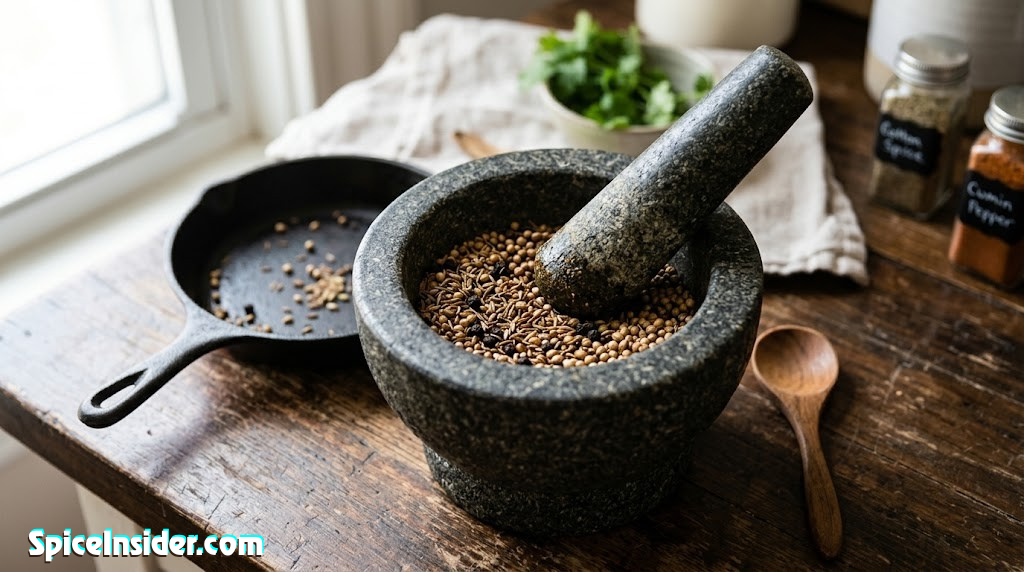
Toasted seeds grind dramatically more easily in a mortar than raw seeds. The moisture removal during toasting makes them brittle and crisp, so they fracture cleanly under the pestle rather than compressing and sliding. Start by cracking the seeds roughly with a few firm strikes of the pestle, then transition to a grinding circular motion to develop the fine powder. This technique is covered in depth in our guide on how to grind spices without a grinder.
Blade vs. Burr Grinder
If you are deciding between grinder types, it is worth understanding that most dedicated spice grinders use a blade (impact) mechanism, while some use burr-style grinding. The key differences — and which matters most for spices — are covered in our blade vs. burr grinder comparison for spices.

Need a Reliable Electric Spice Grinder?
Our comprehensive roundup covers the best spice grinders at every price point, from budget blades to professional-grade burr grinders that produce barista-quality powder.
Check Price on Amazon →Spice-by-Spice Toasting Reference Guide
Different spices have different densities, moisture content, and heat sensitivities. This table gives you specific guidance for the most commonly toasted whole spices, so you never have to guess.
| Spice | Heat Level | Time (Dry Pan) | Key Signal | Toast? |
|---|---|---|---|---|
| Cumin Seeds | Medium | 3–4 min | Deep golden-brown; nutty smoke scent | ✔ Always |
| Coriander Seeds | Medium | 3–5 min | Tan, slightly matte; warm caramel aroma | ✔ Always |
| Black Pepper | Medium | 2–3 min | Slight color deepening; piney floral aroma emerges | ✔ Yes |
| Fennel Seeds | Medium | 2–3 min | Light golden; intensified anise sweetness | ✔ Yes |
| Mustard Seeds | Medium-High | 1–2 min | Seeds pop and jump; nutty onion character | ✔ Yes |
| Cardamom Pods | Medium-Low | 1–2 min | Pods slightly crack; floral eucalyptus deepens | ✔ Lightly |
| Cloves | Medium-Low | 1–2 min | Fragrant, slight oil sheen appears on surface | ✔ Yes |
| Fenugreek Seeds | Medium-Low | 2–3 min | Slight golden color; bitter edge softens | ✔ Yes |
| Star Anise | Medium-Low | 2–3 min | Warming aroma intensifies; slight darkening | ✔ Yes |
| Cinnamon Sticks | Low | 2–3 min | Deeply fragrant; watch for any darkening | ✔ Carefully |
| Dried Chiles | Medium | 30–60 sec | Pliable, fragrant; wisps of smoke from stem end | ✔ Yes |
| Saffron | N/A | N/A | Never dry toast; bloom in warm liquid instead | ✘ Never |
| Paprika (ground) | N/A | N/A | Already ground; will scorch instantly | ✘ Never |
| Turmeric Powder | N/A | N/A | Already ground; use whole dried rhizome only | ✘ Never |
9 Common Mistakes to Avoid When Toasting Spices
Even experienced cooks make these errors. Avoiding them will immediately improve your results.
1. Toasting Mixed Spices Together
The most common mistake. Cumin seeds and mustard seeds have completely different density and heat requirements. Toast each spice separately, then combine after cooling. This is non-negotiable if you want even results.
2. Walking Away from the Pan
Spices go from perfectly toasted to burnt in 20–30 seconds. This is a hands-on process that requires your full attention. Keep your spatula in hand and your eyes and nose engaged for the entire duration.
3. Starting with Too High Heat
High heat might seem like it would speed things up, but it creates hot spots on the pan surface that scorch individual seeds while the rest remain raw. Medium heat gives you control. If you hear an immediate sharp sizzle when seeds hit the pan, your heat is too high.
4. Toasting Ground Spices
Only whole spices should be toasted. Ground spices have no cellular structure to gradually release aromatics — they will simply scorch and turn bitter on a hot pan in seconds. If you only have pre-ground spices, add them to warm oil or ghee (called “blooming in fat”) rather than dry toasting.
5. Grinding While Still Warm
A warm spice releases its volatile aromatics as gas. Grinding warm spices vents these aromatics directly into the air around your grinder rather than trapping them in the powder. Always wait until seeds are completely at room temperature before grinding.
6. Overcrowding the Pan
Too many seeds in the pan means the bottom layer burns while the top stays raw. For a 10-inch skillet, 3–4 tablespoons is the maximum single-layer batch. Work in multiple batches for larger quantities rather than piling in more seeds.
7. Using a Non-Stick Pan
Non-stick coatings (PTFE/Teflon) can degrade when heated empty to the temperatures needed for toasting spices. Use stainless steel, cast iron, or carbon steel instead. If you have persistent problems with spices sticking or burning unevenly, check our guide on spice grinder dos and don’ts for additional equipment tips.
8. Toasting Then Immediately Storing Without Grinding
Toasted whole spices will begin to stale faster than raw whole spices because the toasting process has already opened the cell structure. If you toast, always grind immediately (after cooling) rather than leaving toasted-but-unground seeds in a jar. If you need to store them, raw whole spices store far better.
9. Not Cleaning the Grinder Between Varieties
Aromatic residue from one spice can contaminate the next. After grinding cumin, traces will remain in the bowl and blade. The fastest fix is the rice method: grind 1 tablespoon of uncooked white rice, which absorbs oils and wipes the interior clean. See our full guide on how to clean a spice grinder for thorough cleaning protocols.

The Right Pan for Spice Toasting
A good cast iron skillet is the ideal tool for dry toasting — it holds heat evenly, eliminates hot spots, and lasts forever. This Lodge 10-inch cast iron pan is a perennial favorite for exactly this kind of work.
Check Price on Amazon →Storing Toasted and Ground Spices for Maximum Shelf Life
Toasting and grinding whole spices at home gives you the freshest possible ground spice — but it also means that spice begins degrading from the moment it leaves the grinder. Understanding the enemies of freshness (light, air, heat, moisture) allows you to extend shelf life significantly without any special equipment.
The Enemies of Fresh Ground Spice
Light degrades volatile aromatic compounds through photo-oxidation — this is why commercial spices come in opaque or dark-tinted containers. Air enables oxidation of the aromatic oils, turning them rancid and flat. Heat accelerates all degradation reactions. Moisture enables microbial growth and can turn your beautifully fine powder into a clumped, unusable paste.
| Storage Method | Container | Location | Estimated Shelf Life |
|---|---|---|---|
| Optimal | Dark glass jar, airtight lid | Cool, dark pantry or drawer | 3–6 months (ground toasted) |
| Good | Ceramic or stainless steel jar | Away from stove heat | 2–4 months |
| Acceptable | Clear glass, tinted or in cupboard | Away from direct light | 1–3 months |
| Poor | Any container | Near stove or in sunlight | 2–4 weeks |
| Raw Whole (Reference) | Any airtight container | Cool, dark location | 2–4 years |
The best practice for home cooks is to toast and grind in small quantities — enough for 1–2 weeks of cooking — rather than making large batches that will stale before use. This is the approach taken by professional chefs who want peak aromatic intensity in every dish.
For your grinder’s long-term health and performance, our guide on cleaning a spice grinder and removing odors covers how to keep equipment fresh between uses, and you can also learn whether washing your spice grinder with water is safe for your particular model.
Frequently Asked Questions
Conclusion: Toasting Spices Is the Simplest Way to Cook Better Food
If there is one technique worth adding to your cooking practice immediately, it is this one. Toasting whole spices before grinding requires no special equipment beyond a basic skillet and takes less than 10 minutes. Yet the impact on the final dish is profound and immediate — the difference between a good curry and a transcendent one, between a serviceable chili and one that people ask about for years.
The science is clear: toasting unlocks volatile aromatic compounds that are otherwise sealed inside whole seeds, and it creates entirely new flavor molecules through the Maillard reaction that cannot exist in raw spices at all. The sensory evidence is even clearer: the first time you toast cumin seeds in a dry pan and smell that blooming, nutty, deeply complex aroma fill your kitchen, you will understand instantly why every great spice tradition in the world begins with this step.
Remember the six steps: measure first, heat the pan dry to medium, add a single even layer, stir constantly, watch for the aromatic signal, and cool completely before grinding. Avoid the nine common mistakes, follow the spice-by-spice reference table, and store your ground toasted spices in a dark, airtight container away from heat and light.
From there, explore further: try getting the most from your spice grinder, experiment with grinding whole spices versus buying pre-ground, and discover how maintaining your equipment — including knowing how to properly clean your spice grinder — keeps every grinding session producing peak-quality powder.
The spice cabinet you have today holds everything you need for the food you want to cook tomorrow. Toasting is the key.
Ready to Find the Best Spice Grinder for Your Kitchen?
We have tested and reviewed the top electric spice grinders at every price point. Find the one that fits your cooking style and budget.
See Our Top Picks →