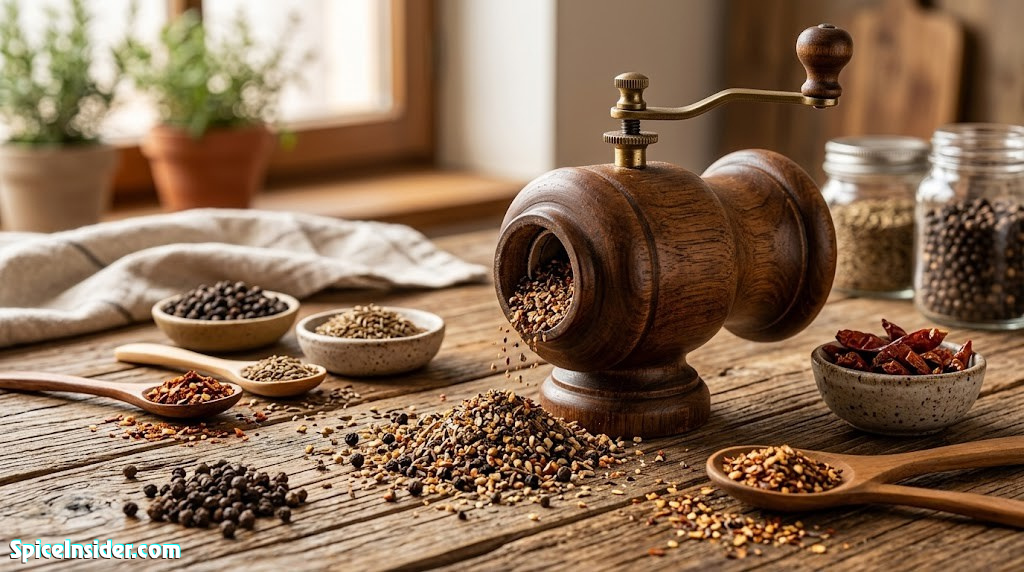
Why Does My Spice Grinder Leave Chunks?
Every cause explained — from dull blades and moisture to overloading and grinder type — with practical fixes that actually work.

The Short Answer (Before We Dig In)
You open the grinder lid expecting a fine, fragrant powder — and instead find a mixture of ground dust and stubbornly whole or half-crushed pieces. It is one of the most common frustrations in home cooking, and almost everyone who grinds their own spices has run into it at some point.
The good news is that a spice grinder leaving chunks is almost always fixable, and most of the time the root cause is something you can address immediately — no new equipment required. The not-so-good news is that there are actually multiple reasons this happens, and they require different solutions. Treating a moisture problem the same way you treat an overloading problem will only make things worse.
🧂 The Most Common Culprits at a Glance
- Overloading the chamber — too many spices for blades to reach everything
- Running the grinder too briefly — chunks need more time under the blade
- Dull blades — old blades bruise instead of cut
- Moisture in the spices or bowl — wet particles clump and resist grinding
- Grinding hard spices without prep — cinnamon sticks and dried ginger need a head start
- Wrong grinder type — blade grinders are inherently inconsistent
We’re going to walk through all twelve causes in detail, with a clear explanation of the mechanism behind each one and a concrete fix you can use right away. By the end, you’ll know exactly why your grinder is leaving chunks — and how to stop it happening again.
How Spice Grinders Actually Work (And Why That Matters)
Before you can diagnose a chunk problem, it helps to understand what a spice grinder is doing mechanically. Most home spice grinders fall into one of two categories: blade grinders (which dominate the market) and burr grinders. Their internal mechanics are completely different, and those differences explain a lot about why chunks happen.
Blade Grinders: The Blender Approach
A blade grinder works almost exactly like a miniature blender. A motor spins a flat, double-edged metal blade at high speed inside a small chamber. Spices get thrown upward by centrifugal force, fall back down, and get hit again. The grinding is chaotic — spice pieces are battered from multiple angles, with some getting very fine while others barely interact with the blade at all. This randomness is the fundamental reason blade grinders leave chunks: there is no guarantee that every piece will get equal contact with the blade.
Burr Grinders: The Precision Approach
A burr grinder works completely differently. Two abrasive surfaces — one stationary, one rotating — create a narrow, controlled gap through which spices must pass. Because every spice particle is forced through the same gap, the output is far more uniform. You can even adjust the gap to control coarseness. If you find that your grinder consistently leaves chunks no matter what you do, the blade vs. burr grinder comparison is worth reading in full — the design difference is the root cause, and no technique tip will fully compensate for it.
With that mechanical context in mind, let’s look at every reason your grinder is leaving chunks.
All 12 Reasons Your Spice Grinder Leaves Chunks
These causes range from instantly fixable technique mistakes to deeper equipment issues. Start at the top — the first three causes account for the majority of chunk complaints.
Overloading
Too many spices for the blade to reach everything
Dull Blades
Blades bruise instead of cut cleanly
Moisture
Water residue or humid spices clump during grinding
Hard Spices
Dense spices need prep or longer grinding
Wrong Technique
One long run beats dozens of short pulses
Blade Grinder by Design
Inherent inconsistency in the blade mechanism
Oily Residue
Previous spice oils gum up the chamber
Skipping Toast
Untoasted spices are tougher and wetter
Undersized Motor
Budget grinders lack the power for hard spices
Blade Height
Spices that sit above the blade arc don’t get ground
Static & Clumping
Fine powder sticks to walls and re-clumps
Grinder Wear
Overall mechanical degradation over time
Cause 1: Overloading the Grinding Chamber
This is the single most common cause, and it is almost always an easy fix. The logic makes intuitive sense once you visualize it: a blade grinder’s cutting action only covers a specific arc — the radius of the blade. Anything stacked above that arc, or packed so tightly that it cannot move, simply does not get cut. The blade spins in a small circle at the bottom of the chamber while the top layer of spices sits untouched, like spectators watching the action from the stands.
Most people load their grinders based on what looks like a reasonable amount of spice. In reality, the effective grinding zone is surprisingly small — typically the bottom third of the chamber.
The Fix: Use Half the Chamber or Less
Fill the grinding chamber no more than halfway — ideally to one-third. For most consumer blade grinders, that means 2 to 4 tablespoons of whole spices maximum. If you need more ground spice than that, grind in batches. It takes 30 extra seconds and produces a dramatically better result.
When you visit the hub page covering the best spice grinders, you’ll notice that the top-rated models have wider, shallower chambers. This design maximizes blade contact area relative to spice volume — it’s not just aesthetics.

Secura Stainless Steel Electric Spice Grinder
Wide, shallow chamber design maximizes blade contact. Consistently fine results with minimal chunks.
Check Price on AmazonCause 2: Dull Blades That Can No Longer Cut Cleanly
Blade dullness is the silent, creeping cause that people rarely suspect — until they realize their grinder worked perfectly for the first year and now consistently leaves chunks even when they do everything right. The problem is that blade wear happens gradually. There’s no single moment when the blade “goes dull.” It’s a slow decline that you adapt to without noticing, grinding a little longer each time, until one day chunks are simply the norm.
A sharp blade slices through spice cell walls efficiently, releasing aromatic oils and producing clean-edged fragments that break down further with each pass. A dull blade doesn’t cut — it beats. It transfers impact energy into the spice, which compresses and bounces rather than fracturing. Some pieces break, but others get hammered into adjacent pieces and stick together, creating irregular clumps that are harder to grind than the original whole spice.
How to Tell If Your Blades Are Dull
- The grinder takes noticeably longer to achieve the same result it used to produce quickly
- Spices appear compacted and slightly discolored at the edges rather than cleanly fractured
- The motor sounds louder or more strained than it used to
- You can see visible dents or rounded edges on the blade when you inspect it
- Soft spices like dried chili flakes that used to grind instantly now leave chunks
The Fix
Check your manufacturer’s website for replacement blades. Many popular models — including Cuisinart and Secura — sell replacement blade assemblies that restore performance completely. If replacement blades aren’t available for your model, it’s worth considering an upgrade to one of the spice grinders built to last, which use higher-grade blade materials that maintain their edge far longer.
In the meantime, grinding a few tablespoons of dry, uncooked white rice can temporarily sharpen blades by providing a gentle abrasive surface. This is also a good cleaning method — see the full guide on using rice to clean and freshen a spice grinder for details.
Cause 3: Moisture — The Invisible Enemy
Moisture is the cause most people don’t think to check, and it can come from two completely different sources: the spices themselves or the grinder bowl. Both cause chunks, but through slightly different mechanisms.
Moisture in the Spices
Spices stored improperly — near a stove, in a humid pantry, or left with an unsealed lid — absorb moisture from the air over time. When you try to grind them, the moisture makes the cell walls pliable rather than brittle. Instead of fracturing cleanly under the blade, they compress, squish, and stick together. You end up with paste-like clumps rather than dry powder. This is especially common with cardamom pods, dried chilies, and any spice that has even a slight leathery texture rather than a crisp, snappy one.
Moisture in the Bowl
Even a single drop of water left in the grinding bowl after washing is enough to cause serious clumping. When fine spice powder lands on a wet surface, it immediately absorbs that moisture and clumps — and those clumps resist being re-ground because they’re now dense and slightly sticky. This is why the guidance on washing a spice grinder is so emphatic about complete drying before use.
The Fix
Start with the grinder: after any washing, dry it thoroughly with a cloth, then leave the lid off for at least an hour before use. Better yet, dry-wipe rather than wet-wash and use the recommended dry-cleaning methods to avoid water contact entirely.
For the spices: if you suspect moisture, spread them on a dry tray and leave them at room temperature for several hours. Or lightly toast them — toasting spices before grinding removes moisture efficiently and has the bonus of developing deeper flavor.

Cuisinart SG-10 Electric Spice & Nut Grinder
Powerful motor handles hard, dry spices with ease. Removable bowl makes drying thoroughly a breeze. Read our full Cuisinart SG-10 review for details.
Check Price on AmazonCause 4: Grinding Spices That Are Too Hard Without Preparation
Not all spices are equal in hardness. Trying to grind a cinnamon stick the same way you grind dried chili flakes is asking your grinder to do something it simply wasn’t designed for. Understanding which spices fall into which hardness category is one of the most practically useful things you can take away from this guide.
Hard spices pose two challenges: they resist the blade even when it is sharp, and they often have fibrous structures that create long, stringy chunks rather than powder. Dried ginger root, cinnamon bark, nutmeg, and dried turmeric root are the classic offenders — they are essentially wood-like in their density and require either pre-breaking or a motor powerful enough to overcome that resistance.
The Fix: Pre-Break Before You Grind
For hard spices, mechanical pre-breaking is essential. Use a mortar and pestle, the flat of a heavy knife, or even a sealed ziplock bag and a rolling pin to crack the spice into smaller pieces before it goes into the electric grinder. You’re not trying to grind it — just reducing it from a solid chunk to a collection of smaller fragments that the blade can engage with effectively.
Cinnamon sticks should be snapped into short segments. Dried ginger should be cracked with a mortar. Whole nutmeg should be grated rather than ground in a blade grinder at all — most blade grinders genuinely cannot handle nutmeg reliably.
Cause 5: Wrong Grinding Technique — The Pulse Method Explained
Most people hold the button down for as long as they can and then check on the result. This continuous-run approach is actually one of the least effective ways to use a blade grinder, and it’s also hard on the motor. Understanding why pulse grinding works better changes how you approach the grinder entirely.
When you run a blade grinder continuously, heat builds up rapidly. The motor heats the air in the chamber, which heats the spices. Warm spices become slightly pliable — especially those with high oil content — and instead of fracturing, they compress and smear together. Simultaneously, the centrifugal force pushes ground particles to the outer rim while large chunks stay in the center. After 10 seconds of continuous running, you often have very fine powder at the edges and untouched chunks in the middle.
The Correct Approach
Use 5-second bursts. Grind for 5 seconds, stop. Pick up the grinder and shake it gently to redistribute the contents — this is crucial, as it brings bottom-layer particles to the top and exposes chunks that have been hiding in corners. Then grind for another 5 seconds. Repeat this 4 to 6 times, and you will consistently achieve finer results than you would from a single 30-second run.
The shake step between pulses is not optional. It is what converts a mediocre blade grinder into a genuinely effective one. This is covered in more depth in our guide on how to use a spice grinder properly, which is worth bookmarking alongside this article.
Cause 6: The Fundamental Limitation of Blade Grinders
This is the cause no one wants to hear, but it’s honest and important: some chunk problems are not technique problems. They are equipment problems. A blade grinder, by its very design, produces uneven particle sizes. The question is not whether it will leave some variation — it will — but whether that variation includes chunks large enough to be noticeable in your cooking.
If you’ve tried every technique fix — small batches, pulse grinding, dry spices, clean blades — and you’re still consistently getting chunks that ruin the texture of your finished dish, the grinder type itself may be the root issue. This is especially true if you regularly grind hard spices like cinnamon or dried ginger, or if you need fine spice powder for applications like chai masala or ras el hanout where texture really matters.
Blade vs. Burr: A Practical Comparison
| Feature | Blade Grinder | Burr Grinder |
|---|---|---|
| Grind consistency | Uneven — some fine, some chunks | Very uniform particle size |
| Adjustable coarseness | No | Yes — dial or stepped settings |
| Heat generation | High — affects aroma | Low — aroma preserved |
| Handles hard spices | Struggles | Handles well |
| Price point | $15–$50 | $60–$200+ |
| Ease of cleaning | Simple, often removable bowl | More complex internals |
| Chunk production | Common without good technique | Rare to none |
| Best for | Casual everyday grinding | Serious cooks, fine textures |
The deep-dive blade vs. burr grinder comparison covers every dimension of this decision in detail if you’re weighing an upgrade. For most home cooks, a good blade grinder with proper technique produces perfectly acceptable results. For those who grind hard spices regularly or need professional-level consistency, a burr grinder eliminates the chunk problem at its source.

Dedicated Burr-Style Spice Grinder
Eliminates chunk problems entirely with consistent particle size control. Ideal for serious spice blenders who grind daily.
Browse Options on AmazonCause 7: Oily Residue from Previous Grinding Sessions
Aromatic spices are rich in essential oils. Every time you grind cardamom, cloves, cumin, or coriander, a thin film of these oils coats the inside of the grinding bowl and the blade itself. This is completely normal — in fact, it’s part of what makes freshly ground spice so much more aromatic than pre-ground powder from a jar. The problem is what happens to that film over time.
With each grinding session, the oil film attracts and holds fine spice particles. These particles dry out, harden slightly, and form a thin, gummy layer that effectively changes the internal geometry of your grinding bowl. Fresh spice particles land on this sticky surface and get caught rather than continuing to circulate back into the blade’s path. The result is chunks that are partially fresh spice and partially hardened old-spice residue.
Why This Also Causes Flavor Problems
Beyond chunks, this residue is also why your freshly ground cumin might taste faintly of the cardamom you ground last week. The oils embed themselves in the bowl material — even stainless steel develops micro-scratches over time that hold residue. This is well-documented in guides on spice grinder odor removal, and the fix for odor and the fix for residue-caused chunks are largely the same.
The Fix: Regular Dry Cleaning
- Wipe the bowl with a dry cloth or paper towel after every use
- Grind a tablespoon of uncooked rice to absorb oils and loosen residue — discard the rice and wipe clean
- Grind a tablespoon of coarse salt for a slightly more abrasive clean
- For stubborn buildup, grind dry rice, then wipe, then repeat
- Only use water if absolutely necessary, and dry completely before the next use
For a comprehensive breakdown of the best cleaning approaches by residue type, the full guide to cleaning a spice grinder covers every method with step-by-step instructions. The spice grinder dos and don’ts page also has a concise list of cleaning mistakes that cause long-term buildup.
Cause 8–10: Spice Hardness, Static, and Motor Power
Spice Hardness Reference Chart
Knowing where your spice falls on the hardness spectrum lets you calibrate your approach before you even pick up the grinder. This chart saves a lot of frustration.
| Hardness Level | Spices | Prep Needed? | Grind Time |
|---|---|---|---|
| Easy | Dried chili flakes, cardamom pods (dehusked), dried herb leaves, paprika flakes | None | 5–10 seconds |
| Medium | Coriander seeds, cumin seeds, fennel seeds, mustard seeds, star anise | Optional toast | 10–20 seconds (with pulses) |
| Hard | Black pepper, allspice berries, cloves, fenugreek seeds, dried bay | Recommended toast | 20–30 seconds (with pulses + shakes) |
| Very Hard | Cinnamon sticks, dried ginger root, dried turmeric root, cardamom pods (whole) | Pre-break required | 30–45s, multiple sessions |
| Extreme | Whole nutmeg, cassia bark (thick), dried galangal | Grate by hand; avoid blade grinder | Not recommended for blade grinders |
Static and Clumping After Grinding
Some spices — particularly those high in volatile oils like cardamom and cloves — generate significant static electricity when ground. The fine powder becomes electrostatically charged and clings to the bowl walls, lid, and blade in a way that makes it look like chunks. When you open the lid and see powder stuck to the walls and a slightly mound in the middle, that’s often static rather than incomplete grinding.
The fix is simple: let the grinder sit for 10 to 15 seconds after the last pulse before opening. The static dissipates quickly. You can also tap the bowl gently against the counter to dislodge clingy powder. A wooden or silicone spatula is ideal for scraping down the walls rather than a metal spoon, which can scratch the bowl surface.
Motor Power and Undersized Grinders
Budget blade grinders sometimes genuinely lack the motor wattage to handle hard spices. A 75-watt grinder that works perfectly on soft herbs and seeds may slow noticeably and produce chunks when faced with cloves or fenugreek. If your grinder sounds strained with medium-hard spices, that’s the motor reaching its limits. The guide on spice grinder motor burning smells explains what to watch for and when it’s time to replace rather than push through. When shopping for a replacement, look for models in the 150–200+ watt range.

High-Wattage Spice Grinder (150W+)
More motor power means hard spices like cinnamon and dried ginger grind to powder without chunks — no pre-breaking required.
See Options on AmazonCause 11: Skipping the Toast — A Step That Changes Everything
Toasting spices before grinding is not optional for the best results — it’s a game changer that directly addresses three of the main causes of chunks at once. Heat drives off residual moisture (making spices brittle), breaks down the fibrous cell walls that resist blade cutting, and releases volatile aromatics that make the final powder more intensely flavored. After toasting, even spices that normally resist the blade will grind into fine powder with a fraction of the usual effort.
The technique is straightforward: dry spices in a skillet over medium heat, stirring constantly, for 60–90 seconds until fragrant. Do not add oil. The moment you smell the spice’s aroma blooming strongly, remove from heat. Let them cool completely before grinding — hot spices release steam that adds moisture right back into the bowl. For more detail on timing and specific spice types, the guide on how to toast spices before grinding covers the process thoroughly.
✅ Benefits of Toasting First
- Removes moisture — eliminates clumping
- Makes cell walls brittle — easier grinding
- Develops deeper, richer flavor
- Reduces grinding time needed
- Fewer chunks in the final powder
❌ Downsides to Note
- Adds 2–3 minutes to prep time
- Easy to over-toast (watch closely)
- Not suitable for pre-ground spices
- Changes flavor profile slightly
Cause 12: Blade Arc Height and Spice Positioning
This is a subtle mechanical quirk that most people never think about, but it explains a very specific and frustrating pattern: you empty the grinder, look at the result, and find that the very bottom layer of spice is perfectly ground while the top portion is still largely whole. The blade simply never reached the upper portion of the load.
Blade grinders typically have blades mounted approximately 5–10mm above the floor of the bowl. This means there’s actually a “dead zone” directly below the blade where spices can sit and not get ground at all. Additionally, during grinding, centrifugal force pushes everything to the outer edge of the bowl — and if the load is deep, the spice at the center of the top layer never gets pushed into the blade path.
The solution combines two things already covered: keep the load shallow (no more than half-capacity) and shake between pulses. But knowing the mechanism makes you a better troubleshooter — if you see chunks that are concentrated in a specific area of the bowl every time, you know it’s a blade height issue rather than a moisture or hardness issue.
If you’re researching this and think your grinder simply isn’t fine enough by design, the article on spice grinders that aren’t grinding fine enough covers additional solutions specific to fineness rather than chunks.
The Complete Fix Checklist: Work Through This in Order
If your grinder is leaving chunks right now, work through this checklist from top to bottom. Most people find their fix in the first three steps.
-
Reduce your load size Empty the grinder and refill it to half-capacity or less. This single change fixes chunk problems caused by overloading immediately.
-
Check and dry the bowl Run a dry cloth inside the bowl. If any moisture comes off, dry it thoroughly and try again with completely dry spices.
-
Switch to pulse mode Grind in 5-second bursts. Shake the grinder between each burst. Do 4–6 cycles instead of one continuous run.
-
Pre-break hard spices If you’re grinding cinnamon sticks, dried ginger, or similar dense spices, crack them into small pieces first using a mortar or the flat of a heavy knife.
-
Toast the spices first Dry-toast in a skillet until fragrant, cool completely, then grind. This eliminates moisture and makes spices far easier to grind.
-
Clean the blade and bowl Grind a tablespoon of dry rice to remove oil residue, then wipe clean. Residue buildup coats the blade and reduces its cutting efficiency.
-
Inspect blade sharpness Look at the blade edges. If they appear rounded or nicked, or if the grinder sounds noticeably louder than it used to, blade replacement may be needed.
-
Consider your grinder type If all else fails and chunks persist across multiple spice types with good technique, your blade grinder may have reached its performance ceiling. The blade vs. burr comparison will help you decide if an upgrade makes sense. You can also avoid grinding spices without a grinder using the manual methods covered in our grinding-without-a-grinder guide.
- Clumped powder sticking to walls: Static — wait, then tap and scrape
- Stringy fibrous chunks: Hard spice — pre-break, use longer pulse cycles
- Paste-like wet clumps: Moisture — dry grinder and spices completely
- Some fine, some whole: Overload — reduce quantity
- Everything slightly coarse, nothing fine: Dull blades or underpowered motor
Pro Tips to Prevent Chunks Before They Start
Prevention beats troubleshooting every time. Once you build these habits, chunk problems become genuinely rare.
Store Spices Properly
Moisture absorption starts the moment a spice bag is opened. Transfer whole spices to airtight glass jars immediately. Keep them away from heat, steam, and direct sunlight. Spices stored correctly stay crisp, brittle, and grind-ready for much longer. This directly reduces moisture-related chunk problems.
Grind Only What You Need
Ground spice loses flavor dramatically within weeks of grinding, so grinding in bulk defeats the purpose of using whole spices. Grind small quantities — enough for your recipe plus a little extra — rather than filling a jar for the month ahead. Smaller quantities also mean you’re never tempted to overload the grinder. Understanding the case for grinding whole spices fresh helps reinforce why small-batch grinding is worth the habit.
Let the Grinder Cool Between Sessions
If you’re grinding multiple spices in sequence, give the motor 60 seconds to cool between loads. Heat transfers from the motor to the bowl, which warms the spices and reduces grinding efficiency. Cool grinder, cool spices, clean cut.
Know When to Use Manual Methods
For very small quantities of single spices — a pinch of cumin, a few cardamom pods — a mortar and pestle is often faster, quieter, and produces better results than firing up an electric grinder. Electric grinders shine for volume; mortars shine for precision and control. The guide on grinding spices without a grinder covers mortar and pestle technique in detail.
Follow the Dos and Don’ts
The comprehensive spice grinder dos and don’ts guide consolidates the rules that protect both your equipment and your spice quality. If you want a single reference to bookmark for ongoing best practices, that’s the one.

Heavy Granite Mortar & Pestle
For hard spices and small batches, a quality mortar and pestle gives you complete control with zero chunk risk. A kitchen essential alongside any electric grinder.
See Options on AmazonFrequently Asked Questions
Conclusion: Chunky Grinding Is a Solvable Problem
When your spice grinder leaves chunks, it’s almost never a sign that something is fundamentally broken — it’s a signal that something in the process needs adjustment. In the vast majority of cases, the fix takes less than a minute: reduce the load size, switch to pulse mode with shaking between bursts, and make sure both the grinder bowl and the spices themselves are completely dry before you start.
For persistent chunk problems tied to specific spices, the answer is almost always one of three things: pre-breaking hard spices before they go in the grinder, toasting spices to make them brittle, or recognizing that your blade grinder has simply reached its performance limit with a particular spice and a mortar or burr grinder would serve you better.
The good news is that the same habits that prevent chunks — proper batch sizes, clean equipment, dry spices, good technique — also produce noticeably better-tasting ground spice. Freshly ground whole spices are dramatically more flavorful than pre-ground powder from a jar. Once you solve the chunk problem, you’ll find the effort of grinding whole spice is very much worth it.
Ready to go deeper? Explore the full resource hub on choosing the best spice grinder, or if you’re starting fresh and want to avoid chunk problems from day one, read the Secura spice grinder review — it’s one of the most consistently chunk-free blade grinders at any price point.
Explore Top-Rated Spice Grinders →