Grinding Whole Spices vs. Pre-Ground: What Actually Changes in Your Cooking
The format you buy a spice in is not a small detail. It quietly decides how much flavor actually makes it into your food, how long that flavor sticks around in your cabinet, and how much you are really paying for it. Here is the honest, spice-by-spice breakdown.
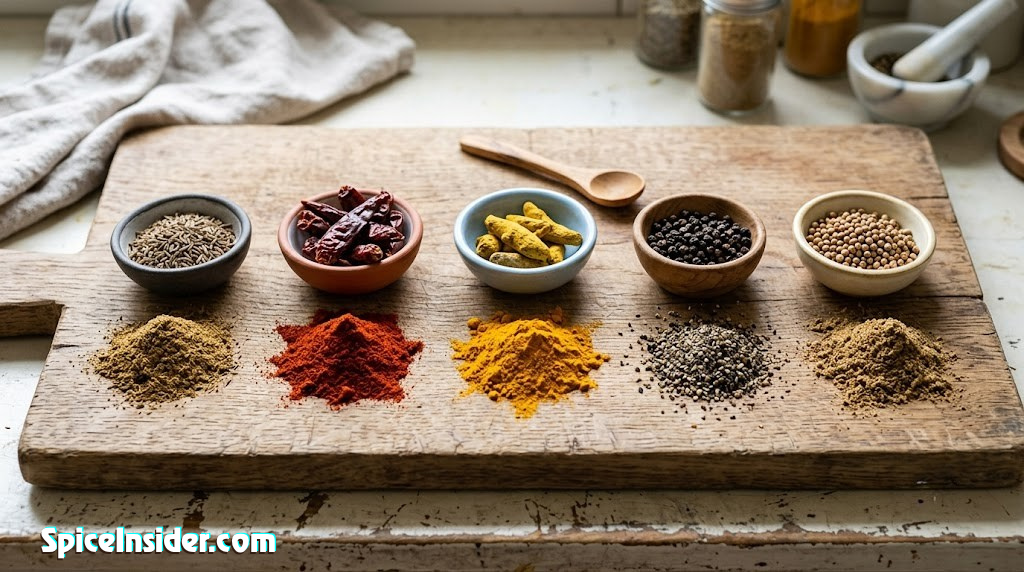
There is a specific moment a lot of home cooks remember: the first time they cracked fresh pepper, or grated a whole nutmeg, or toasted and ground their own cumin, and realized the jar they had been using for years tasted like a faint rumor of the real thing by comparison. That moment is really a question about format, not quality. The exact same plant, grown in the exact same place, behaves completely differently depending on whether it reaches your spoon whole or already milled into powder.
This guide pulls that question apart honestly. Not every spice loses the same amount when it is ground ahead of time, and not every recipe needs the slow-release complexity of a whole spice. Below, you will find the real differences in flavor, shelf life, and cost between whole and pre-ground spices, which ones are worth grinding fresh, which ones are perfectly fine to leave pre-ground, and how to set up a kitchen that uses both formats intelligently instead of treating one as universally “better.”
Whole spices keep their essential oils sealed inside an intact structure, so they stay aromatic for roughly 2 to 4 years. The moment a spice is ground, that structure is broken open, exposing far more surface area to air, light, and moisture. Pre-ground spices typically hold peak flavor for only about 6 months to 2 years, and they decline fastest in the first half of that window. The effect is strongest in oil-rich spices like pepper, cumin, cinnamon, cardamom, and cloves, and much smaller in spices like turmeric or paprika, where pre-ground is often a perfectly fine choice.
1. What’s Actually Different Between Whole and Ground Spices
A whole spice is, structurally, a tiny sealed container. Peppercorns, cumin seeds, coriander seeds, cardamom pods, cloves, and cinnamon bark all carry their flavor compounds inside oil cells, resin ducts, or fibrous layers that are mostly closed off from the outside air. That sealed structure is not an accident of nature designed for our convenience, but it works in our favor anyway: it is the reason a cinnamon stick can sit in a jar for years and still smell warm and sweet when you finally snap it in half.
Ground spice is the same plant material with that seal permanently broken. Milling a spice into powder does two things at once. First, it multiplies the surface area exposed to the surrounding air by an enormous factor, since a single peppercorn becomes hundreds of microscopic fragments, each with its own newly exposed surface. Second, it removes the physical barrier, whether that is a tough seed coat, a woody bark layer, or a papery pod wall, that was previously keeping oxygen and moisture away from the flavor compounds inside.
Picture two cinnamon sticks side by side. One stays wrapped in its bark, essentially a dormant little reserve of cinnamaldehyde, the compound responsible for cinnamon’s warmth, waiting patiently for someone to break it open. The other has already been ground into a fine powder, where every particle’s surface is sitting directly in contact with the air in your spice cabinet, slowly trading its aroma for the surrounding atmosphere every single day it sits there. Neither spice has gone “bad” in any unsafe sense. One has simply been asked to start giving up its flavor years earlier than the other.
This is the single idea that explains almost everything else in this guide: shelf life, flavor intensity, cost-per-use, and even which cooking method suits which format. Once you see grinding as “opening the seal early,” the rest of the comparison becomes a lot more intuitive.
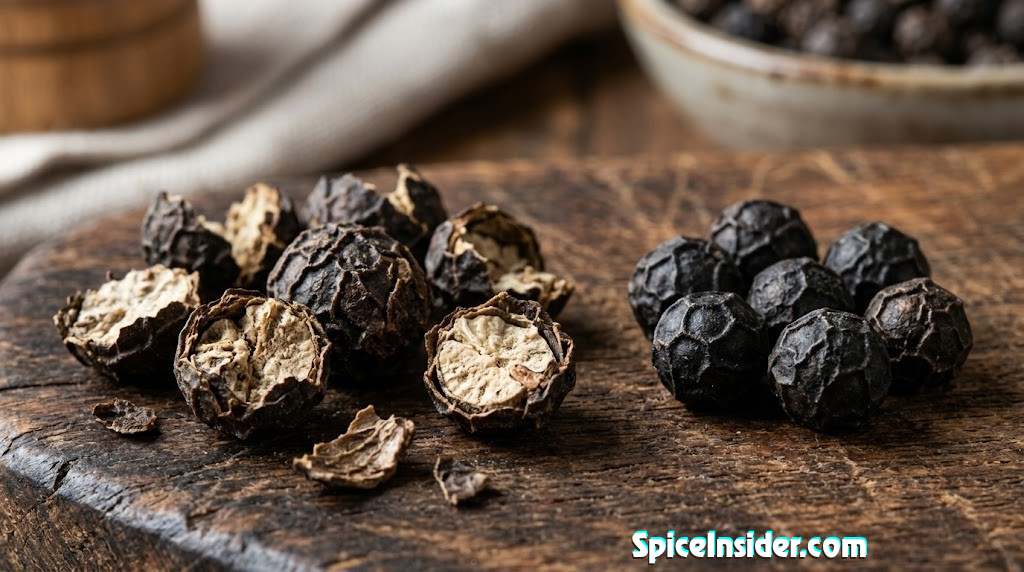
2. The Science of Flavor Fade: Volatile Oils and Oxidation
The flavor and aroma compounds in spices belong to a family of chemicals chemists call volatile organic compounds, and the word “volatile” is doing real work there. These molecules are volatile because they evaporate readily at room temperature, which is precisely how a spice’s aroma reaches your nose in the first place. Cloves owe their warm, almost medicinal scent largely to a compound called eugenol. Cinnamon’s sweetness and heat come from cinnamaldehyde. Cardamom, citrus peel, and many seed spices rely on a family of monoterpenes that contribute bright, almost floral top notes.
That same evaporative quality that lets us smell a spice is also what slowly empties it out. Inside an intact whole spice, those volatile compounds are physically shielded, surrounded by plant tissue with minimal contact with outside air. Once ground, every particle of that spice has its oils sitting essentially on the surface, with nothing standing between them and the atmosphere. They begin evaporating immediately, and the process accelerates whenever oxygen is present, since oxidation breaks volatile aromatic molecules down into duller, sometimes flat or papery-tasting byproducts.
The four accelerants
Four environmental factors speed up this loss, and all four happen to be common features of a typical kitchen:
- Heat increases the rate at which volatile molecules evaporate and speeds up chemical breakdown, which is exactly why storing a spice rack directly above a stove is one of the most common freshness mistakes home cooks make.
- Light, particularly direct sunlight and UV, degrades both the flavor compounds themselves and the pigments responsible for a spice’s color, which is why opaque containers outperform clear glass left on an open shelf.
- Air exposure drives oxidation directly, which is the core reason ground spices fade faster than whole ones in the first place.
- Moisture can trigger clumping and, in more severe cases, mold, and it also accelerates the breakdown of delicate aromatic compounds.
Heat versus aroma: not all flavor fades equally
There is a useful nuance hiding inside this chemistry. Black pepper’s sharp heat comes mainly from piperine, an alkaloid that is comparatively stable and slow to break down. Its complex, almost citrus-and-pine aroma, on the other hand, comes from a separate set of more fragile volatile terpenes that dissipate quickly once the peppercorn is cracked. That is precisely why pre-ground pepper still tastes hot, sometimes even harshly so, while tasting strangely one-dimensional, missing the floral lift that makes fresh-cracked pepper so distinctive. The pungency survives; the personality does not.
3. Shelf Life Showdown: How Long Each Format Really Lasts
Spices do not spoil the way dairy or produce does. Their water activity is far too low to support bacteria, yeast, or mold under normal dry storage, so eating a years-old jar of paprika will not make anyone sick. What actually happens is quieter: the flavor, aroma, and color slowly fade until the spice is functionally inert, contributing little beyond a faint dusty note and a bit of color. The timeline for that fade is the real question, and it differs sharply between whole and ground formats.
As a practical guideline gathered from spice industry sources and professional kitchens, whole spices typically hold strong flavor for 2 to 4 years when stored properly, while ground spices typically peak within the first few months and hold useful flavor for roughly 6 months to 2 years before becoming noticeably weaker. Treat the table below as a planning guide rather than an expiration deadline. Exact timing depends heavily on storage conditions, the specific variety of spice, and how the spice was processed before it reached your cabinet.
| Spice | Whole Format | Ground / Pre-Ground |
|---|---|---|
| Black pepper | 3–4 years | 1–2 years |
| Cumin seed | 3–4 years | 6–12 months |
| Coriander seed | 3–4 years | ~1 year |
| Cinnamon (stick) | 3–4 years | 6–12 months |
| Cardamom (pods) | 2–3 years | 6–12 months |
| Cloves | 3–4 years | 6–12 months |
| Nutmeg (whole) | 3–4 years | 6–12 months |
| Mustard seed | 3–4 years | ~1 year |
| Star anise / allspice | 2–3 years | 6–12 months |
| Celery seed | 4–5 years | 1–2 years |
Notice the pattern: nearly every whole spice outlasts its ground counterpart by a factor of three or four, regardless of which specific spice it is. That consistency is the strongest evidence that the surface-area mechanism described earlier, rather than anything unique to an individual spice, is doing most of the work.
A faster freshness test than a calendar
Best-by dates printed on a jar are a useful floor, not a hard ceiling, because freshness is fundamentally sensory rather than calendar-based. The fastest test takes about five seconds: rub a small pinch of the spice between your fingers and smell it immediately. A fresh spice releases a noticeable burst of aroma on contact. A tired one releases little or nothing, and that is a far more reliable signal than the date on the label.

Airtight Glass Spice Jars, 24-Piece Set
Whatever format you choose, airtight glass slows the clock on both. Labeled jars also make the rub-and-sniff test painless.
Check Price on Amazon4. Flavor and Aroma Side-by-Side: What You Can Actually Taste
The most useful way to think about the sensory difference is “burst versus layers.” Ground spice releases its full flavor almost instantly, since there is no remaining structure to slow it down, which makes it ideal for fast cooking and for finishing touches where you want immediate, predictable impact. Whole spice, by contrast, releases its flavor gradually as heat, moisture, and time slowly work it open, building in layers rather than arriving all at once. That slow release holds up far better across long cooking times, while a ground spice added at the start of a three-hour braise may have given up most of its character before the dish is even halfway done.
This is also why so many global cuisines deliberately use both formats inside the very same pot: whole spices bloomed in oil at the start of a curry, with a ground spice blend stirred in later to sharpen and finish it. The two formats are not really competitors so much as two different tools doing two different jobs.
Whole Spices, Ground Fresh
- Brighter, more complex aroma with noticeable top notes
- Slow, layered release suited to long cooking
- Longer shelf life, less frequent repurchasing
- You control the final texture and coarseness
Whole Spices, the Trade-offs
- Requires a grinder, mill, or mortar and pestle
- An extra step before every use
- Some spices are genuinely hard to grind fine at home
- Coarser, less uniform texture unless ground carefully
Pre-Ground Spices, the Upside
- Zero prep, ready to measure and use instantly
- Even, uniform texture every time
- Dissolves well into cold dressings and marinades
- No equipment required
Pre-Ground Spices, the Trade-offs
- Noticeably flatter aroma, especially after a few months
- Shorter shelf life means more frequent repurchasing
- You cannot fish it out of a finished dish the way you can a whole clove or cinnamon stick
5. Is Grinding Your Own Spices Actually Cheaper?
Whole spices generally cost less per ounce than their pre-ground counterparts, for a fairly simple reason: less processing and less packaging. Milling, sifting, and packing spices into small retail jars adds cost at every step, and that cost gets passed on. As one illustrative example, a 16-ounce bag of whole black peppercorns might run around $15, working out to roughly $0.94 an ounce, while a 3-ounce jar of pre-ground black pepper from the same general market tier might cost around $5, or roughly $1.67 an ounce. Exact numbers shift constantly by brand, retailer, and region, but that rough 60 to 80 percent premium for pre-ground shows up again and again across different spices and stores.
The comparison gets even more favorable for whole spices once you account for usable flavor rather than just sticker price. A pre-ground jar looks cheap sitting on the shelf, but a meaningful share of what you paid for evaporates before the jar is empty. By the time a jar of ground cumin is half used, the remaining half may be delivering noticeably less punch per teaspoon than it did on day one, which means you are effectively paying full price for a diminishing product. Whole spices hold their value far closer to 100 percent of the way through the container, which is the fairer way to compare cost: price per usable ounce, not price per listed ounce.
None of this is an absolute law. Bulk bins at international grocers and natural food stores can make whole spices remarkably cheap, and some store-brand pre-ground spices are inexpensive too, so it pays to shop around either way. But the general direction of the math, lower unit cost plus a longer effective lifespan, tends to favor whole spices for anything you cook with regularly. A dedicated grinder or a simple mortar and pestle is the only real added cost, and for a kitchen that goes through spices at a normal weekly clip, that one-time purchase typically pays for itself within the first handful of refills.

Cuisinart SG-10 Electric Spice and Nut Grinder
A simple press-top electric grinder that turns whole spices into usable powder in seconds, with a removable, dishwasher-safe bowl.
Check Price on Amazon6. Convenience vs. Control: When Pre-Ground Genuinely Wins
It would be misleading to frame this as a simple “whole spices win” story, because pre-ground spice earns its place in a kitchen for reasons that have nothing to do with laziness. Even cooks who care deeply about flavor keep a working shelf of pre-ground staples, and there are specific, legitimate situations where it is the better choice.
Baking is the clearest case. A cake or cookie batter needs perfectly even distribution of cinnamon or nutmeg throughout, and a commercially milled fine powder achieves that uniformity far more reliably than home-crushed seeds, which tend to be coarser and unevenly sized unless you grind with real care. Cold applications matter too: ground spice dissolves into a vinaigrette, a cold marinade, or a yogurt sauce far more readily than whole seeds or cracked pieces, which can sit gritty and undissolved at the bottom of the bowl. And on a genuinely rushed weeknight, the zero-prep nature of a pre-ground jar is not a minor convenience, it is the difference between cooking with seasoning and skipping it entirely.
There is also a category of whole spices that are simply difficult to grind well without the right tool. If you do not own an electric grinder yet, it is still entirely possible to break down whole spices using everyday kitchen equipment, and our guide on how to grind spices without a grinder walks through several reliable manual methods. But for fibrous, rock-hard spices like cinnamon bark or for rhizomes like turmeric, even a determined manual effort may not match the fineness a commercial mill achieves, which is a legitimate reason some spices stay pre-ground in nearly every kitchen, professional or home.
7. Where Fresh Grinding Makes the Biggest Difference
Not every spice rewards the extra step equally. The spices below share one trait: an unusually high concentration of volatile aromatic oils, which means they have the most to lose once ground and, correspondingly, the most to gain from being ground fresh, right before they hit the pan.
Fresh-cracked pepper carries citrus and pine notes alongside its heat. Pre-ground pepper keeps the heat but loses almost all of that complexity within months.
Freshly ground cumin has a nutty, almost pine-and-citrus complexity that flattens into a dusty, one-note warmth within a few months of grinding.
Coriander’s bright, citrusy top notes are among the most volatile of any common spice, which makes it one of the fastest to fade once milled.
A cinnamon stick is essentially a sealed reserve of cinnamaldehyde. Freshly grated or ground cinnamon is noticeably sweeter and more layered than jar-bought powder.
Once cracked open, cardamom’s citrusy, almost menthol-like aroma dissipates quickly, which is why whole pods are worth seeking out even though they take a little more effort to use.
A few passes of a whole nutmeg over a fine grater, or a quick crush of whole cloves, delivers a brighter, more fragrant result than either spice typically offers pre-ground.

Cole & Mason Derwent Refillable Pepper Mill
If you upgrade just one spice, make it pepper. A precision mechanism strips peppercorns instead of crushing them, for a cleaner grind every time.
Check Price on Amazon8. Spices That Are Genuinely Fine, or Even Better, Pre-Ground
It is worth saying plainly: you do not need to feel guilty about every pre-ground jar in your cabinet. Some spices either resist home grinding or simply do not lose much by being purchased already milled.
Turmeric
Fresh turmeric is a rock-hard rhizome that genuinely requires industrial-grade milling equipment to reach a smooth, palatable powder. A home grinder or mortar and pestle will struggle to match that fineness, and turmeric’s flavor profile leans more on color and a mild earthy bitterness than on fast-fading top notes, so pre-ground is the practical choice for almost everyone.
Paprika and chili powders
Paprika starts life as already-dried, already-ground chili peppers, so the “whole versus ground” question does not really apply in the same way it does to a seed spice. Most cooks will never grind their own paprika at home, and there is little reason to start.
Garlic powder and onion powder
These are dehydrated and granulated specifically to be shelf-stable and pourable. They are engineered around convenience rather than fresh-cut aroma, and a home grinder cannot replicate dehydrated granules from fresh cloves or bulbs anyway.
Ground ginger for baking
Fresh ginger root and dried ground ginger are almost different ingredients in cooking terms, used for different purposes. For baked goods that call specifically for dried ground ginger’s warm, slightly peppery flavor, the pre-ground jar is exactly the right tool, not a compromise.
9. Tools of the Trade: Mortar, Mill, or Machine
Choosing to grind your own spices immediately raises a second question: which tool. The honest answer depends on how often you cook, how much you grind at once, and how much texture control matters to you. For a full breakdown of features, capacity, and price tiers across the market, our complete guide to the best spice grinders is the place to start; the summary below covers the core trade-offs.
| Tool | Best For | Speed | Texture Control |
|---|---|---|---|
| Mortar and pestle | Small batches, pastes, occasional use | Slow | Excellent, fully manual |
| Electric blade grinder | Frequent cooking, larger batches | Fast | Good, depends on pulse timing |
| Dedicated pepper or spice mill | Single spice, table-side use | Fast | Adjustable, consistent |
A mortar and pestle is the lowest-cost, lowest-tech option, and for good reason it has remained in continuous use for thousands of years. It gives you complete control over texture, from a rough crack to a near-powder, and it never needs power or maintenance beyond a rinse. Its downside is effort and time, especially for larger batches or fibrous spices.
An electric blade grinder, which is what most people picture when they think “spice grinder,” trades a little of that tactile control for speed and consistency at scale. Inside this category, there is a meaningful design choice between blade and burr mechanisms, and our blade vs. burr grinder comparison breaks down which is better suited to spices specifically, since the two designs behave differently with oily, fibrous material than they do with something like coffee. We have put two popular models through hands-on testing: see our Cuisinart SG-10 review for a straightforward press-top design, and our Secura spice grinder review for a budget-friendly dual-bowl alternative.
One common shortcut worth a quick word of caution: a coffee grinder can technically double as a spice grinder, but doing so regularly raises real questions about flavor transfer and cleaning between uses, which our piece on grinding coffee in a spice grinder covers in detail if you are considering combining the two roles into one machine.

Secura Electric Coffee & Spice Grinder
A dual-blade, removable-bowl grinder that handles everyday spice batches without the higher price tag of some competitors.
Check Price on Amazon10. Toasting and Technique: Getting the Most Out of Whole Spices
Buying whole spices is only half the equation. How you handle them before and during grinding has a real, tasteable effect on the final result.
Toast before you grind
For seed spices in particular, cumin, coriander, and fennel being the clearest examples, a brief dry-pan toast before grinding deepens and rounds out the flavor in a way that is genuinely worth the extra ninety seconds. Heat encourages a light, controlled browning reaction that builds nutty, toasted notes on top of the spice’s existing aroma. Our step-by-step guide on how to toast spices before grinding covers timing and how to avoid the fine line between toasted and burnt, which can turn pleasantly nutty into unpleasantly bitter in a matter of seconds.
Grind size changes how a spice behaves
A coarse crack and a fine powder are not just a texture preference, they release flavor at different rates and suit different uses: coarse for a steak crust or a finishing texture, fine for baking or smooth sauces where grit would be noticeable. If your results keep coming out chunkier than you intend, our troubleshooting guide on why a spice grinder leaves chunks walks through the most common causes, from overfilling the bowl to grinding spices that are too oily for the blades to catch cleanly.
Getting a consistent grind from your machine
Learning your specific grinder’s quirks matters as much as the spice itself. Our general walkthrough on how to use a spice grinder covers batch size, pulse timing, and bowl-filling technique, and if your grinder consistently produces a coarser result than the recipe calls for even after following those steps, our guide to a spice grinder that won’t grind fine enough covers the most likely fixes, since the issue is sometimes the technique and sometimes the machine itself.
11. Storage and Maintenance: Making Either Format Last Longer
Good storage habits narrow the gap between whole and ground spices, even though they cannot erase it entirely. The fundamentals are the same four accelerants from earlier in reverse: keep spices in airtight containers, in a cool spot away from the stove, out of direct light, and away from humidity. Buying from bulk bins that are left open to ambient air, however appealingly cheap, tends to undercut a lot of that benefit before the spice even gets home.
A surprisingly common source of frustration is the grinder itself rather than the spice. Following our piece on spice grinder dos and don’ts avoids most of the avoidable wear and tear, including overloading the bowl and grinding spices that are simply too hard for a given machine’s motor.
Keeping aromas from mixing between spices
If you use one grinder for everything, residual oil and aroma from the last spice can bleed into the next batch, which is why a quick cleaning ritual between uses matters. A small amount of dry rice or a torn piece of bread run through the grinder absorbs leftover oils effectively, a trick covered in our guide to getting smell out of a spice grinder using rice or bread. For a deeper, more thorough clean, our how to clean a spice grinder guide and our piece on whether you can wash a spice grinder cover which parts are safe for water and soap and which should stay dry, and our dedicated guide to spice grinder odor removal tackles stubborn lingering smells that survive a normal wash.
When the machine itself is the problem
Electric tools eventually run into mechanical hiccups that have nothing to do with which spice you bought. A faint scorched smell during use is worth investigating right away through our guide on spice grinder motor burning smell, since it usually points to overfilling or overly long continuous runs rather than a doomed unit. A lid that will not budge is another frequent headache, and our piece on a stuck spice grinder lid covers the gentle methods that work before anyone reaches for force.

Priority Chef Granite Mortar and Pestle Set
No motor, no lid mechanism, no odor to chase out. Just heavy, honest granite that has worked the same way for centuries.
Check Price on Amazon12. Building a Smart Hybrid Spice Rack
The most useful conclusion is not “always buy whole” or “pre-ground is fine for everything.” It is a short, deliberate list, built once you know which spices actually reward the extra step.
Worth buying whole
- Black pepper, in a dedicated mill kept on the counter or table
- Cumin and coriander seed, toasted and ground in small batches as recipes call for them
- Cinnamon sticks and whole nutmeg, grated or ground fresh for baking
- Cardamom pods and whole cloves, cracked just before use
Perfectly fine pre-ground
- Turmeric
- Paprika and chili powder
- Garlic powder and onion powder
- Ground ginger, specifically for baking
Matching tools to how you actually cook
A cook who grinds spices occasionally, for one dish a week or so, gets excellent results from a mortar and pestle alone, with no machine to maintain. A cook who grinds spices several times a week benefits more from a dedicated electric grinder, simply for the time saved. Either way, durability matters more than any single feature once a tool is in regular use, and our guide to a spice grinder that doesn’t break is worth a look before buying if longevity, rather than speed or price, is the priority.
There is no single correct setup, only the one that matches how often you actually cook with spices and how much you value that extra layer of aroma on the dishes that benefit from it most.
Looking for a deeper dive on grinders specifically? Our full best spice grinder guide compares every model mentioned in this article side by side, with detailed scoring on speed, noise, capacity, and price.
The Final Verdict
Whole spices win on flavor depth, shelf life, and usually cost-per-use, but only for the spices where the underlying chemistry makes that win meaningful. Pre-ground spices win on convenience, even distribution, and a handful of cases, like turmeric and paprika, where the format genuinely matters less. The smartest spice rack is not a purist’s rack. It is one built around a clear-eyed read of where the difference actually shows up on the plate: invest the extra step in pepper, cumin, coriander, cinnamon, cardamom, and cloves, and stop worrying about the rest.
If you are ready to make the switch on the spices that matter most, start with a single, reliable tool rather than overhauling the whole cabinet at once. A pepper mill or a basic mortar and pestle is enough to feel the difference on the very first use, and from there, the rest of the upgrade tends to take care of itself.
Frequently Asked Questions
Is it actually worth the effort to grind whole spices yourself?
For spices with high volatile oil content, such as pepper, cumin, coriander, cardamom, cinnamon, and cloves, yes, the aroma difference is dramatic and immediate. For spices built around color or even blending rather than aroma, like turmeric or paprika, the gain is smaller and pre-ground is a reasonable choice.
How much longer do whole spices last compared to ground?
As a general guideline, whole spices stay flavorful for roughly two to four years when stored well, while ground spices typically hold peak flavor for about six months to two years. Spices do not become unsafe after that point, they simply taste weaker.
Which spices benefit the most from being ground fresh?
Black pepper, cumin, coriander, cinnamon, cardamom, cloves, and nutmeg show the most noticeable difference, since their flavor depends on volatile oils that escape quickly once the spice is broken open.
Are there spices that are genuinely fine to buy pre-ground?
Yes. Turmeric, paprika, garlic powder, onion powder, cayenne, and ground ginger are either too hard to grind well at home or built around dehydration rather than fresh-cut aroma, so pre-ground versions work just as well for most cooks.
Does grinding your own spices actually save money?
Often yes, per usable ounce, because whole spices cost less to begin with and you are not paying for flavor that evaporates on the shelf before you finish the jar. A one-time grinder or mortar and pestle purchase usually pays for itself within the first few refills.
What is the best tool for grinding spices at home?
It depends on how often you cook and how much you are grinding. A mortar and pestle works well for small, occasional batches and gives the most texture control, while an electric spice grinder is faster and better suited to larger batches or frequent use.
Can you actually taste the difference in a finished, cooked dish, or only when raw?
Both, though the gap narrows the longer something cooks. In quick dishes and finishing touches, freshly ground spice is noticeably more vibrant. In long-simmered dishes like stews or curries, the difference is still present but less dramatic, since both formats have time to release their flavor.
Should I toast whole spices before grinding them?
For many spices, especially cumin, coriander, and fennel, a quick dry-pan toast before grinding deepens and rounds out the flavor. It is optional for milder spices like black pepper, and unnecessary for ones that will cook further in the dish anyway.
How should I store spices to make them last as long as possible?
Keep them in airtight containers in a cool, dark, dry spot, not above the stove or near a sunny window. Heat, light, air, and moisture are the four factors that speed up flavor loss the fastest.
Is pre-ground black pepper really that much worse than fresh-cracked?
For most palates, yes, it is one of the most noticeable gaps in the spice world. Pre-ground pepper still carries heat, since that compound is fairly stable, but it loses the citrusy, almost floral top notes that make fresh-cracked pepper so distinctive.
How can I tell if my ground spices have already gone stale?
Rub a small pinch between your fingers and smell it. If the aroma is faint, dusty, or absent, it is past its useful life. Color fading is another clue, since vibrant spices dull noticeably as their oils break down.
Can I substitute ground spice for whole in a recipe, or the other way around?
Usually, with adjustments. As a rough rule, roughly three to four times more whole spice by volume is needed to match the strength of its ground form, since grinding releases flavor that whole pieces give up more slowly. Add ground versions later in cooking and whole versions earlier.