Best Vanilla Bean Brands: Our Top Picks for Rich, Aromatic Flavor
We compared plump Madagascar and Tahitian vanilla beans across grade, moisture content, aroma, and price per pod to help you find the pack that actually delivers on flavor — not just the label.


Plump, oily pods with a deep, syrupy aroma — the benchmark we measured every other brand against.
Check Latest Price →Why the Brand of Vanilla Bean You Buy Actually Matters
Vanilla is one of the most labor-intensive crops in the world. Every pod is hand-pollinated, hand-harvested, then cured and dried over several months before it ever reaches a warehouse. That process is exactly why “vanilla beans” sold under different brands can vary so wildly in quality — some pods arrive plump, oily, and pliable enough to tie in a knot, while others show up brittle, split, and nearly scentless. The brand printed on the package is really a proxy for a dozen decisions made months earlier: which region the vanilla was grown in, how it was cured, how long it sat in a warehouse before shipping, and how it was packaged for the trip to your kitchen.
That’s the gap we set out to close with this guide. Rather than ranking vanilla beans on packaging or price alone, we looked at pod plumpness, oil content, seed yield, aroma intensity, and how consistent each pack was from bean to bean. A single dried-out pod in an otherwise good batch is annoying; a whole bag of them is a wasted purchase. Below, you’ll find seven brands worth your money, a breakdown of how Madagascar and Tahitian beans differ, and a plain-language explainer on vanilla bean grading so you can shop confidently even when you’re not buying one of our picks.
If you’re building out a broader spice collection alongside your vanilla, it’s worth browsing our guides to the best saffron brands and best cinnamon for baking — both ingredients live in the same “buy quality once, use it for years” category as whole vanilla beans.
How We Tested and Chose These Vanilla Beans
We ordered current inventory from each brand rather than relying on manufacturer photos, since vanilla bean moisture content shifts noticeably depending on how long stock has been sitting in a warehouse. Every pack was evaluated against the same criteria:
| Criteria | What We Looked For |
|---|---|
| Plumpness & Pliability | Pods that bend and nearly wrap around a finger without cracking |
| Aroma | Deep, syrupy, slightly smoky scent versus flat or hay-like |
| Seed Yield | How many visible caviar-like seeds scrape out per pod |
| Moisture Content | Beans that are supple, not brittle or overly wet/moldy |
| Consistency | Variation in size and quality across a 25–50 count bag |
| Packaging | Airtight, light-blocking packaging that protects against drying out |
| Value | Price per usable bean, not just price per bag |
We also cross-checked each brand’s stated origin and grade against what arrived, since mislabeling is common in the vanilla trade. A bag labeled “Grade A Madagascar” should be visibly different from a bargain-bin bag of Grade B beans — if it isn’t, that’s a red flag worth noting in a review, and we called it out where relevant.
Quick Comparison: Best Vanilla Bean Brands at a Glance
| Brand | Origin | Best For | Count | Form |
|---|---|---|---|---|
| Vanilla Bean Kings | Madagascar | Best overall value pack | 50 beans | Whole pods |
| FITNCLEAN VANILLA (Grade A) | Madagascar | Best for extract-making | 50 beans | Whole pods |
| FITNCLEAN VANILLA (Organic) | Madagascar | Best organic-certified pick | Multi-count | Whole pods |
| ESSENCE FOOD & BEVERAGE | Tahiti | Best for floral/fruity baking | 25 beans | Whole pods |
| Organic Madagascar Vanilla Beans | Madagascar | Best budget starter pack | Multi-count | Whole pods |
| Native Vanilla | Madagascar | Best for quick everyday use | Jar | Bean paste |
| JL Gourmet Imports | Madagascar | Best premium single-origin | Multi-count | Whole pods |

Best all-around plumpness-to-price ratio in this roundup.
See Price on Amazon →The 7 Best Vanilla Bean Brands, Reviewed
Here’s a closer look at each brand, including what stood out, where it falls short, and who it’s genuinely worth buying for.
Vanilla Bean Kings — 50 Organic Madagascar Vanilla Beans
Vanilla Bean Kings is the brand we kept coming back to after testing every pack in this guide side by side. The beans arrive genuinely plump — thick enough that you can feel the oil coating your fingers after splitting just one or two pods. At a 50-count size, this is one of the more generous packs available, which matters if you make your own extract or bake in volume, since homemade vanilla extract typically calls for 5–6 beans per 8-ounce bottle of alcohol.
What separates this brand from cheaper Madagascar packs is consistency. Out of the pods we opened, the vast majority scraped out full, dark caviar with almost no dry or hollow sections — a common failure point in lower-grade beans. The packaging also does its job: a resealable, light-blocking pouch that keeps humidity from escaping too quickly once opened.
Pros
- Consistently plump, oily pods
- Generous 50-count size for the price
- Strong, syrupy aroma straight out of the bag
- Resealable, light-blocking packaging
Cons
- A handful of shorter pods mixed into larger orders
- Best value is at the 50-count size; smaller counts cost more per bean
Our top overall pick for plumpness, aroma, and value.
Check Price on Amazon →
FITNCLEAN VANILLA — 50 Organic Grade A Madagascar Vanilla Beans
FITNCLEAN’s Grade A pack is built specifically with home extract-makers in mind, and it shows in the bean size — these run noticeably long, which is exactly what you want when you’re steeping split pods in vodka or bourbon for months at a time. Grade A designation means these beans arrive with higher moisture content than Grade B “extract grade” beans typically sold pre-split, so you’re getting beans meant for both baking and infusing, not just one or the other.
We found the seed yield here to be excellent, with dense, fragrant caviar in nearly every pod tested. If you’re deciding between whole beans and vanilla extract or vanilla bean paste, a 50-count bag like this is the more economical long-term choice if you go through vanilla regularly, since one bag can seed several batches of homemade extract.
Pros
- True Grade A moisture — ideal for extract infusion
- Long pods with dense seed caviar
- Organic certification on the label
- Large 50-count size stretches across projects
Cons
- Slightly pricier than non-organic Madagascar packs
- Needs airtight resealing after opening to avoid drying out fast
The pack we’d grab first for a batch of homemade vanilla extract.
Check Price on Amazon →
FITNCLEAN VANILLA — Organic Madagascar Vanilla Beans
This is FITNCLEAN’s smaller-count organic offering, and it’s a good middle-ground option if you don’t want to commit to a 50-pod bag but still want the certification and quality control the brand is known for. The beans we tested were noticeably softer and more pliable than typical grocery-store vanilla, which usually signals fresher curing and shorter time sitting in distribution before reaching the customer.
Flavor-wise, this pack leans into the classic Madagascar profile: rich, creamy, and slightly boozy in aroma, which is the flavor most people picture when they think “vanilla.” It performs especially well in custards, ice cream bases, and buttercream, where the vanilla is often the star rather than a background note.
Pros
- Soft, pliable pods on arrival
- Classic creamy Madagascar aroma profile
- USDA-style organic labeling
- Good option if you don’t need 50 beans at once
Cons
- Smaller count means a higher price per bean than the 50-pack
- Pod length varies more than the Grade A pack above
A softer, fresher-cured pod for everyday baking.
Check Price on Amazon →
ESSENCE FOOD & BEVERAGE — 25 Plump Tahitian Vanilla Beans
Tahitian vanilla is a different animal from Madagascar vanilla, and this pack is a solid way to try it if you’ve only ever baked with the Madagascar variety. Tahitian beans (technically a different species, Vanilla tahitensis) carry a lighter, more floral and almost cherry-like aroma rather than the deep, boozy richness of Madagascar pods. ESSENCE’s beans arrived plump and glossy, with a noticeably fruitier scent than any other pack in this roundup.
Because Tahitian beans tend to have a lower vanillin content than Madagascar beans, they’re often preferred for delicate applications — fruit-forward desserts, custards, panna cotta, and cocktails — where you want fragrance without the vanilla completely overpowering other flavors. If you’re pairing vanilla with citrus or berries, this is the profile that tends to shine.
Pros
- Distinct floral, fruity Tahitian aroma
- Plump, glossy pods with good oil content
- Great for delicate desserts and cocktails
- A nice way to diversify beyond Madagascar vanilla
Cons
- Lower vanillin content means less “classic” vanilla punch
- 25-count is smaller than most Madagascar packs on this list
The floral, fruit-forward alternative to Madagascar vanilla.
Check Price on Amazon →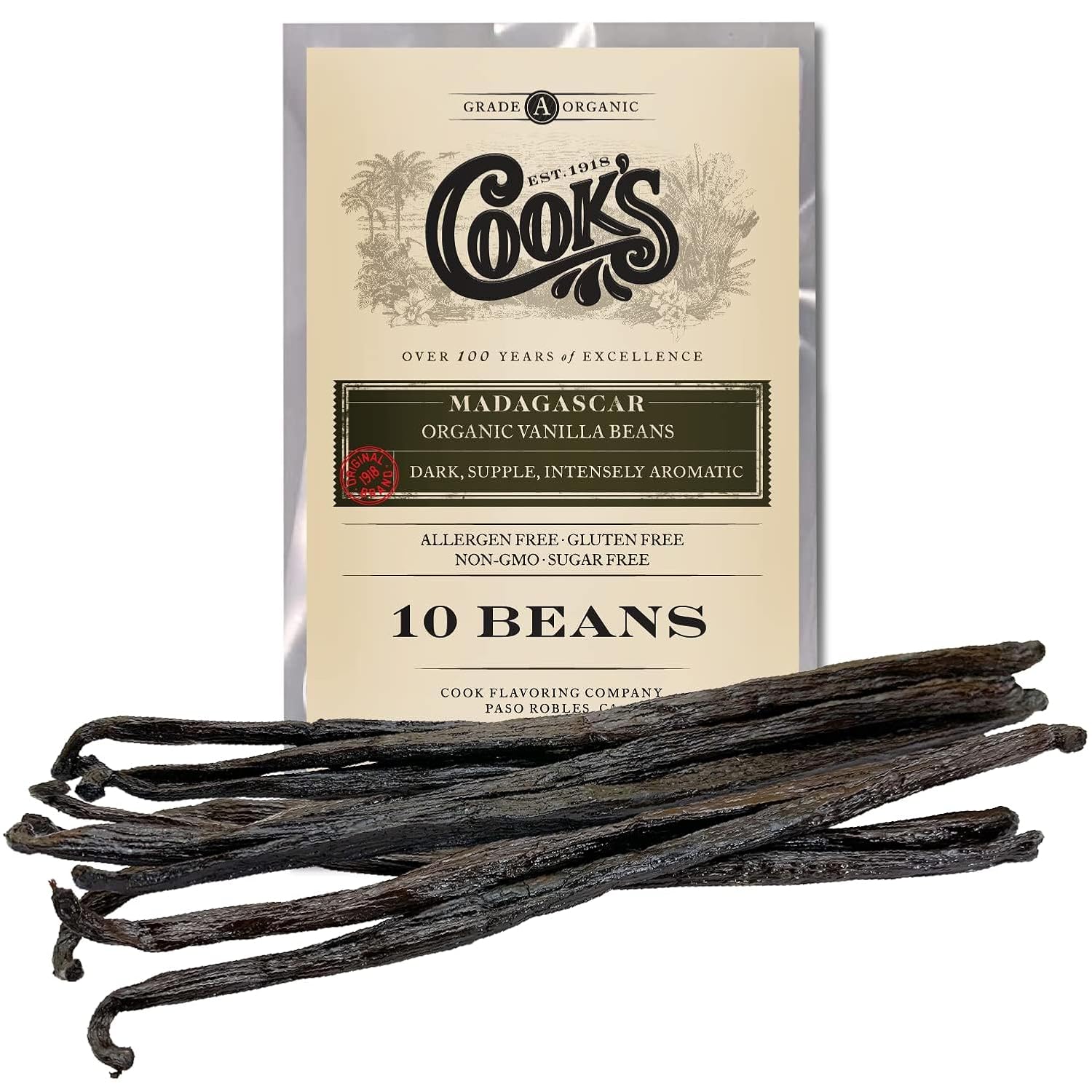
Organic Madagascar Vanilla Beans — Budget-Friendly Pack
Not everyone wants to commit to a 50-count bag on a first try, and this smaller Madagascar pack is a sensible entry point. The beans are a step down in plumpness from our top two picks, but they’re still well within an acceptable range — pliable enough to bend without snapping, with a solid, if slightly less intense, aroma.
This is a good option for someone testing whole vanilla beans for the first time before committing to a larger 50-count purchase, or for someone who bakes occasionally rather than in bulk. It also makes a reasonable gift-adjacent purchase if you’re building a starter spice kit alongside staples like turmeric powder or whole black peppercorns.
Pros
- Lower cost of entry for first-time buyers
- Still organic-labeled Madagascar origin
- Reasonably pliable, usable pods
Cons
- Slightly less plump than our top two picks
- More noticeable size variation between pods
A lower-commitment way to try whole vanilla beans.
Check Price on Amazon →
Native Vanilla — Vanilla Bean Paste
Not everyone wants to scrape a pod every time a recipe calls for vanilla, and that’s exactly the gap Native Vanilla’s paste fills. It’s made by blending real Madagascar vanilla bean seeds into a thick, syrupy base, so you get the visual flecks of caviar and a flavor closer to whole bean than to standard extract, but with the measuring convenience of a jar and spoon.
We found the paste to be noticeably thicker and more concentrated than most grocery-store versions, with visible seed specks throughout — a good sign that the manufacturer isn’t skimping on real bean content. It substitutes 1:1 for vanilla extract in most recipes, but it’s especially nice in applications where you want the visual “vanilla bean speckled” look, like custards, ice cream, or frosting.
Pros
- Real visible vanilla seeds throughout the paste
- 1:1 substitute for extract — no scraping required
- Thick, concentrated texture and strong aroma
- Great for recipes where speckled seeds matter visually
Cons
- More expensive per ounce than whole beans long-term
- Not a substitute if a recipe specifically needs a whole scraped pod
The easiest way to get real vanilla bean flavor without scraping a pod.
Check Price on Amazon →
JL Gourmet Imports — Madagascar Vanilla Beans Grade A
JL Gourmet Imports positions itself as a specialty importer rather than a general spice brand, and the beans reflect that focus. These are single-origin Madagascar pods with true Grade A moisture content — supple enough to tie in a loose knot without cracking, which is one of the clearest physical signs of a well-cured, properly stored bean.
Aroma was the standout here: an intensely rich, almost caramelized scent that carried strongly even through the packaging before opening. For bakers and chefs who care about traceability and consistency batch to batch, this is the pick that felt most like a specialty ingredient rather than a commodity spice.
Pros
- Exceptionally plump, knot-tie-able pods
- Intense, caramelized Madagascar aroma
- Consistent single-origin sourcing
- Excellent for professional or serious home baking
Cons
- Premium pricing reflects the premium quality
- Smaller packs may not suit high-volume extract-making
The most premium, specialty-grade pick in this roundup.
Check Price on Amazon →Madagascar vs. Tahitian Vanilla: What’s the Real Difference?
Most vanilla sold in North America falls into one of two camps: Madagascar (technically Bourbon vanilla, Vanilla planifolia) and Tahitian (Vanilla tahitensis). They’re closely related botanically but produce noticeably different flavor compounds, and picking the right one for a recipe can make a bigger difference than most people expect.
| Trait | Madagascar (Bourbon) | Tahitian |
|---|---|---|
| Flavor Profile | Rich, creamy, boozy, classic “vanilla” taste | Floral, fruity, faintly cherry or anise-like |
| Vanillin Content | Higher — stronger, more dominant flavor | Lower — more delicate, aromatic |
| Best Uses | Cookies, cakes, custards, ice cream bases | Fruit desserts, panna cotta, cocktails |
| Typical Price | Moderate | Often slightly higher due to lower global supply |
| Where It’s Grown | Madagascar, primarily the Sava region | French Polynesia, mainly Tahiti |
Neither is objectively “better” — it comes down to what you’re making. If a recipe is vanilla-forward, like a classic vanilla bean ice cream or sugar cookies, Madagascar’s intensity usually wins out. If vanilla is meant to support a lighter, fruitier dessert, Tahitian’s floral notes tend to complement rather than dominate the other flavors.
Understanding Vanilla Bean Grades (A vs. B)
Vanilla beans are typically sold under two grades, and understanding the difference will save you from buying the wrong pack for your purpose.
Grade A (“Gourmet” or “Prime”)
Grade A beans have higher moisture content, usually somewhere around 30–35%. They’re supple, glossy, and easy to split and scrape. These are the beans you want for baking, where you’re extracting the seeds directly into a batter, custard, or dough and using the pod itself (often steeped in milk or sugar) for extra flavor.
Grade B (“Extract” Grade)
Grade B beans are drier, often because they’re either lower-moisture beans by nature or leftover pods that have already been used once for extraction and re-dried. They’re typically cheaper per bean and are marketed specifically for making vanilla extract, since the alcohol in an extract recipe rehydrates and extracts flavor from the pod over weeks of steeping — moisture content matters less when the beans will be soaking for months.
All seven brands featured above are Grade A or labeled as suitable for both baking and extract-making, which is part of why they made this list — Grade B-only beans weren’t included since they’re a narrower-use product.
Whole Bean vs. Extract vs. Paste: Which Should You Buy?
If you’re new to cooking with real vanilla rather than imitation extract, it helps to understand what each form actually gives you, since they’re not interchangeable in every application. We cover this in more depth in our dedicated guide to vanilla extract vs. vanilla bean paste, but here’s the short version:
| Form | Best For | Shelf Life | Convenience |
|---|---|---|---|
| Whole Bean | Custards, ice cream, infusions, homemade extract | 1–2 years, stored properly | Lower — requires splitting and scraping |
| Extract | Everyday baking — cookies, cakes, quick breads | Indefinite (alcohol-based) | Highest — just measure and pour |
| Bean Paste | Recipes wanting visible seeds without scraping | 1–2 years | High — measure like extract, no scraping |
Whole beans give you the most control and the freshest flavor, but they take more effort. If you bake often and want convenience without sacrificing real vanilla flavor, a paste like the Native Vanilla option above is a strong middle ground.
How to Store Vanilla Beans So They Don’t Dry Out
Even the best vanilla beans on this list will dry out and lose flavor if they’re stored poorly. Vanilla pods are essentially a preserved fruit — they want to stay slightly humid, away from light, and away from temperature swings.
Best Practices
- Keep them airtight. Once a bag is opened, transfer beans into a small glass jar or vacuum-sealed bag rather than leaving them in a clipped-shut pouch.
- Avoid the refrigerator. Cold, dry refrigerator air pulls moisture out of vanilla pods faster than room-temperature storage.
- Store in a dark place. A pantry or cupboard away from direct sunlight prevents the pods from bleaching and drying prematurely.
- Wrap in parchment first. Loosely wrapping pods in parchment paper before sealing them in a jar helps regulate humidity without trapping excess moisture, which can encourage mold.
If you’re organizing vanilla alongside other whole spices, our guides on storing bulk spices and organizing spices in your kitchen cover container types and shelf placement that work well for whole beans too. A dedicated spice organizer can also help keep vanilla pods separated from stronger-smelling spices, since vanilla can pick up competing aromas if stored too close to something pungent.
How to Use Whole Vanilla Beans
Splitting and Scraping
Lay the bean flat on a cutting board and use a sharp paring knife to slice it lengthwise, cutting just deep enough to open the pod without cutting all the way through. Open the two halves flat, then run the dull edge of the knife along the inside of each half to scrape out the tiny black seeds — the “caviar” that carries most of the flavor.
Infusing Milk, Cream, or Sugar
Both the scraped seeds and the empty pod carry flavor. Add both to warm milk or cream for custards and ice cream bases, letting the mixture steep for at least 20–30 minutes before straining. Spent pods can also be buried in a jar of granulated sugar for a few weeks to make vanilla sugar — nothing goes to waste.
Making Homemade Vanilla Extract
Split 5–6 beans per 8 ounces of vodka, bourbon, or rum, then seal in a glass bottle away from light. Shake gently once a week and let steep for at least 8 weeks, though many home extract-makers let it go 6 months or longer for maximum depth. This is one of the most cost-effective ways to use a 50-count bag of beans like the Vanilla Bean Kings or FITNCLEAN Grade A picks above.
What You Should Actually Pay for Vanilla Beans
Vanilla is one of the most price-volatile spices on the market, since global supply is concentrated in a small number of growing regions that are vulnerable to weather events like cyclones. That volatility is part of why prices can swing significantly year to year, and why a “good deal” this season might look different from a good deal a year from now.
As a general guide, a fair price for Grade A Madagascar vanilla beans typically works out to somewhere in the range of $1–$2 per bean when bought in bulk counts like 25 or 50, with smaller counts running higher per-bean due to reduced economy of scale. Tahitian vanilla often carries a modest premium over Madagascar beans of comparable grade, reflecting the smaller global supply. If a listing seems dramatically cheaper than everything else on this page, that’s usually a sign of lower moisture content, shorter pod length, or beans nearing the end of their shelf life — not necessarily a bargain.
Common Mistakes When Buying Vanilla Beans
- Buying based on bag size alone. A 50-count bag of dry, brittle beans is worse value than a 10-count bag of plump, oily ones — always weigh quality signals alongside quantity.
- Ignoring grade labeling. Buying Grade B beans for a recipe that calls for scraping fresh seeds into batter will leave you with dry, hard-to-scrape pods and a disappointing result.
- Storing beans in the fridge. This is one of the most common ways people accidentally dry out beans they just paid a premium for.
- Assuming all “Madagascar vanilla” is equal. Region, harvest timing, and curing method all affect quality even within the same origin label — which is exactly why brand and seller reputation matters as much as the country of origin.
- Not checking pod pliability before buying in person. If you’re ever buying from a store display rather than online, gently bend a bean (without breaking it) — it should flex, not snap.
Pairing Vanilla With Other Pantry Spices
Vanilla rarely works alone in a well-built spice cabinet. It pairs especially well with warm baking spices and a handful of savory or floral spices that show up more than people expect. Cinnamon is the most obvious partner — our guide to Ceylon vs. cassia cinnamon breaks down which type works best alongside vanilla in baking versus in drinks. Nutmeg is another classic pairing, especially in custards and eggnog-style desserts — see our best whole nutmeg roundup if you want to grate it fresh rather than buying pre-ground.
On the savory side, a pinch of vanilla can round out the sweetness in dishes that use smoked paprika or a touch of turmeric, particularly in glazes and marinades where a background sweetness balances heat. And if you’re scraping whole beans regularly, a quality mortar and pestle or spice grinder is worth having on hand for grinding dried spent pods into vanilla powder rather than throwing them away.
Frequently Asked Questions
How many vanilla beans equal one teaspoon of extract?
As a rough substitution, one whole vanilla bean (seeds scraped and used) is roughly equivalent to one tablespoon of vanilla extract in most recipes, though this can vary slightly depending on the bean’s size and potency.
Why are some vanilla beans so much more expensive than others?
Price differences usually come down to origin, grade, and global supply conditions. Madagascar supplies the bulk of the world’s vanilla, so its price fluctuates with weather events there, while Tahitian and other rarer origins carry a premium due to smaller harvest volumes.
Can I use vanilla beans past their “best by” date?
Yes, in most cases. Vanilla beans don’t spoil the way fresh produce does — they simply dry out and lose potency over time. As long as there’s no visible mold, a bean past its printed date is usually still usable, just less aromatic.
What does it mean if a vanilla bean has white crystals on it?
Small white crystals on the surface of a vanilla bean are usually vanillin crystals — sometimes called “frost” — which naturally form on very high-quality, well-cured beans. This is different from mold, which typically appears fuzzy and is often accompanied by a musty smell rather than a sweet one.
Is Grade A or Grade B better for baking?
Grade A is generally better for baking, since its higher moisture content makes it easier to split, scrape, and incorporate seeds directly into batters, doughs, and custards. Grade B is typically reserved for extract-making, where dryness matters less.
How long does homemade vanilla extract need to steep?
Most recipes recommend a minimum of 8 weeks, but many home extract-makers let their batches steep for 6 months to a year for a deeper, more rounded flavor. The longer it steeps, the more concentrated the extract becomes.
Can I reuse a vanilla bean pod more than once?
Yes. After scraping the seeds or steeping a pod in extract, the spent pod can often be reused for a second, lighter infusion, added to a jar of sugar to make vanilla sugar, or dried and ground into vanilla powder.
What’s the difference between organic and non-organic vanilla beans?
Organic-certified vanilla beans are grown and cured without synthetic pesticides or fertilizers, following certification standards. Flavor differences are typically minimal between organic and conventional beans of the same grade and origin — the certification is more about growing practices than taste.
Why did my vanilla beans arrive dry and brittle?
This usually points to either lower-grade beans, beans that have been sitting in warehouse or shipping conditions for an extended period, or improper storage after packaging. Reputable brands with good turnover and airtight packaging, like the picks featured in this guide, are less likely to have this issue.
Do vanilla beans need to be refrigerated after opening?
No — refrigeration is generally discouraged, since the dry air in a refrigerator can pull moisture out of the pods faster than room-temperature storage. A cool, dark pantry in an airtight container is the better choice.
How can I tell if a vanilla bean is high quality before buying?
Look for pods described as plump, pliable, and oily rather than dry or brittle. If buying in person, a good bean should bend without snapping. Online, check reviews for mentions of moisture content and consistency, and prefer sellers who clearly state the grade and origin.
Is Tahitian vanilla stronger or weaker than Madagascar vanilla?
Tahitian vanilla generally has a lower vanillin content, making it milder and more floral rather than as intensely “vanilla-forward” as Madagascar beans. It’s not weaker in aroma, just different in character — more perfumed and fruity than deep and creamy.
Final Verdict: Which Vanilla Bean Brand Should You Buy?
If you only take one recommendation from this guide, make it this: for most home bakers, Vanilla Bean Kings’ 50-count Madagascar beans deliver the best combination of plumpness, aroma, and price per pod of everything we tested. If you specifically plan to make homemade extract, lean toward the FITNCLEAN Grade A pack for its longer pods and higher moisture content. And if you want to explore a different flavor profile entirely, the ESSENCE Tahitian beans are a worthwhile detour into floral, fruit-forward vanilla.
Whichever pack you choose, store it properly, and it will reward you with a noticeably richer flavor than anything you’ll get from a bottle of imitation extract.
Shop Our Top Pick on Amazon →