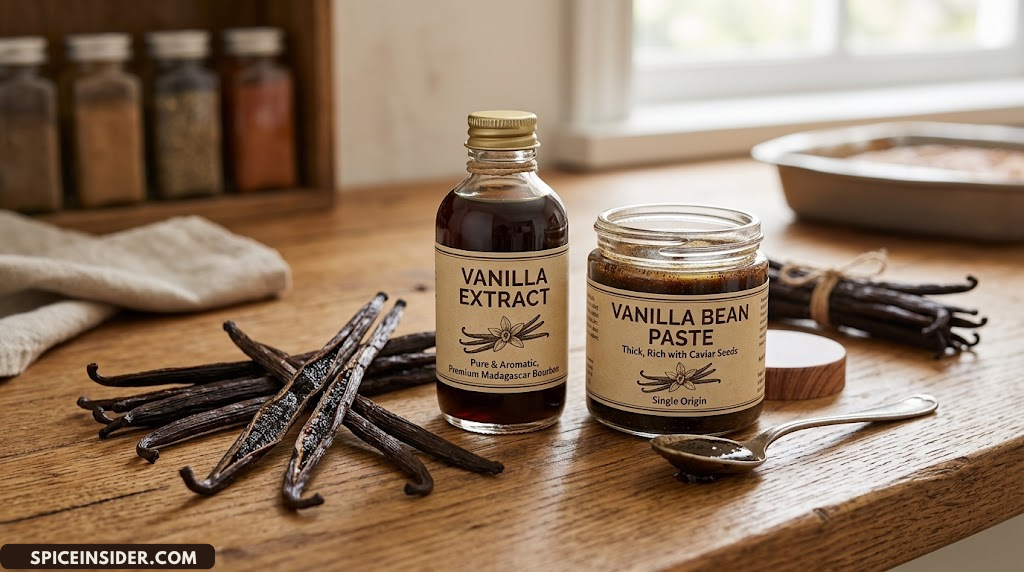
Vanilla Extract vs Vanilla Bean Paste: Which One Actually Belongs in Your Recipe?
They both smell like a bakery and both come from the same curing, fermenting pod — but vanilla extract and vanilla bean paste behave very differently once they hit a mixing bowl. Here’s exactly how they differ, when to reach for each one, and how to swap between them without wrecking a recipe.
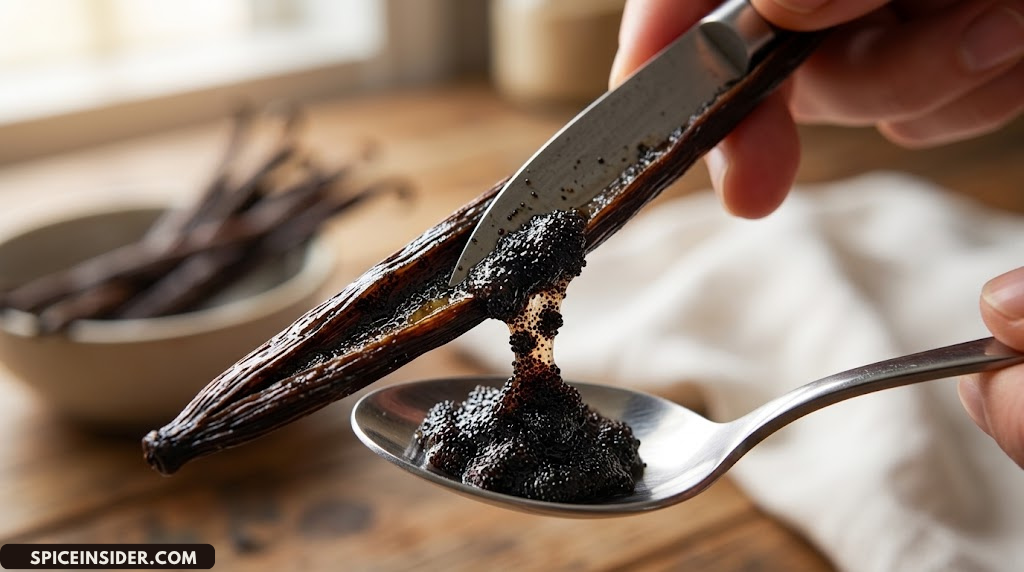
Quick answer: Vanilla extract is a thin, alcohol-based liquid made by steeping vanilla pods in alcohol and water — it dissolves invisibly into batters and doughs. Vanilla bean paste is thicker, sweeter, and studded with real vanilla seeds (“caviar”), making it the better choice when you want both bold flavor and visible flecks in custards, ice cream, or frosting. They can often substitute for each other 1:1, but the results look and taste subtly different. Read on for the full breakdown of how each is made, when each one earns its keep, and exactly how to swap between them without second-guessing your next batch.
Walk down the baking aisle and you’ll see at least three vanilla products fighting for the same shelf space: extract, paste, and whole beans. For most home bakers, the real decision comes down to two of those — extract and paste — because both are shelf-stable, both measure like a liquid, and both promise “real vanilla” on the label. But they are not interchangeable in every situation, and understanding why will change how your baked goods taste and look.
This guide breaks down exactly how vanilla extract and vanilla bean paste are made, how their flavor and texture diverge, which recipes favor one over the other, and how to convert between them without guesswork. Along the way we’ll also cover where the vanilla beans behind both products actually come from, how to spot a well-made bottle or jar on a crowded store shelf, and the small mistakes that quietly undercut flavor even when you’re using the right product for the job. If you’re also curious about spice quality more broadly, our guides on choosing high-quality saffron and spotting real versus fake saffron cover a lot of the same “you get what you pay for” territory that applies to vanilla too.
What Is Vanilla Extract?
Pure vanilla extract is made by chopping or splitting cured vanilla beans and steeping them in a mixture of alcohol and water for weeks or months. The alcohol pulls out the pods’ aromatic compounds — most famously vanillin, but also hundreds of trace compounds that give real vanilla its complexity — and the result is a dark, thin, pourable liquid. In the United States, the FDA requires “pure vanilla extract” to contain at least 13.35 ounces of vanilla bean per gallon and a minimum of 35% alcohol by volume; anything weaker or made with synthetic vanillin has to be labeled “vanilla flavoring” or “imitation vanilla” instead.
Because it’s alcohol-based, vanilla extract disperses completely and invisibly into batters, doughs, and creams. There are no visible flecks, no thickening effect, and very little added sweetness — it’s a flavoring agent, full stop. That neutrality is exactly why it has become the default vanilla product in nearly every recipe that calls simply for “vanilla” without further specification.
Pure vs. Imitation vs. Double-Strength Extract
Not all bottles labeled “vanilla extract” are equal. Pure extract uses real vanilla beans exclusively. Imitation extract substitutes synthetic vanillin (often derived from wood pulp lignin or petrochemical sources) and tends to taste flatter, sometimes with a slightly bitter or one-note finish once baked. Double-strength or “vanilla extract, double fold” contains roughly twice the bean concentration of standard extract and is popular with professional bakers who want a more assertive flavor without adding extra liquid volume to a recipe. If you’re building a home baking pantry from scratch, our roundup of the best vanilla bean brands is a useful companion to this guide, since bean quality upstream determines extract quality downstream.
How Vanilla Extract Is Actually Made
The process starts with cured vanilla pods, which are themselves the product of months of hand-pollination, harvesting, blanching, sweating, and sun-drying long before they ever reach a bottling facility. Producers chop or split the cured pods and submerge them in a mixture of food-grade alcohol (usually a neutral grain spirit) and water inside large percolation tanks. Over a period that can run anywhere from a few weeks to several months, the alcohol slowly draws out vanillin along with hundreds of secondary flavor and aroma compounds locked inside the pod’s cellular structure.
Longer maceration times generally produce a rounder, more complex extract, which is part of why artisan and small-batch producers often charge more — they simply let the beans steep longer than mass-market manufacturers can afford to. Once the steeping period ends, the liquid is filtered to remove solid pod fragments, occasionally blended with extract from a different harvest or origin to standardize flavor, and bottled. Some brands stop here; others age the finished extract further in barrels or tanks to let the flavor mellow, similar to how aging affects other food products.
This slow, alcohol-based extraction is also why vanilla extract behaves so predictably in recipes: the alcohol acts as a carrier that distributes flavor evenly through a batter, then largely cooks off in the oven, leaving behind only the aromatic compounds. It’s a similar principle to how other concentrated flavorings work — for example, the way ground spices need proper technique to release their full aroma, something we cover in our guide to toasting spices before grinding.
Shop Vanilla Extract on Amazon
What Is Vanilla Bean Paste?
Vanilla bean paste is a thicker, syrup-like product made by blending vanilla extract with the scraped seeds (often called “caviar”) of the vanilla pod, plus a natural thickener — typically sugar, corn syrup, or a food-safe gum like xanthan. The result looks a little like a dark, speckled honey, and a spoonful delivers both the aromatic punch of extract and the visual drama of hundreds of tiny black seeds.
Because it already contains sugar and thickener, vanilla bean paste is noticeably more viscous than extract — it clings to a spoon instead of running off it. Most brands are formulated so that one teaspoon of paste equals roughly one vanilla bean or one teaspoon of extract, which is what makes it so popular with bakers who want the look of scraped beans without the cost or prep time of buying whole pods.
How Vanilla Bean Paste Differs From Vanilla Bean Powder
It’s worth separating vanilla bean paste from vanilla bean powder, which is simply dried, ground vanilla pod with no added liquid, sugar, or alcohol. Powder is popular in recipes where you don’t want to introduce any extra moisture — dry rubs, spice blends, or delicate meringues — while paste is built specifically for recipes that already call for a liquid or semi-liquid vanilla addition. If you regularly work with dried spices in powder form, the same logic that applies to grinding whole spices versus buying pre-ground applies here too: freshness and particle size change how strongly a spice performs.
What to Look for on a Vanilla Bean Paste Label
Not every jar labeled “vanilla bean paste” contains the same ratio of real vanilla to filler. The ingredient list, read in order of quantity, tells the real story. A high-quality paste typically lists vanilla extract and vanilla bean seeds near the top, with sugar or corn syrup as supporting ingredients and a small amount of a thickener like xanthan gum further down. If sugar or corn syrup appears as the very first ingredient, ahead of vanilla extract or vanilla beans, you’re likely looking at a product that leans more heavily on sweetness than genuine vanilla flavor.
It’s also worth checking whether the label specifies a vanilla bean origin — Madagascar, Tahiti, Uganda, or Indonesia are the most common — since origin genuinely affects flavor character the same way it does with other high-value spices. Shoppers who already compare origin claims when buying saffron or premium cinnamon will recognize the pattern: specificity on the label is usually a good proxy for a producer who’s confident in their sourcing.
Key Differences at a Glance
Before diving into flavor and technique, here’s a fast comparison table covering the practical differences you’ll notice in your kitchen.
| Attribute | Vanilla Extract | Vanilla Bean Paste |
|---|---|---|
| Base ingredients | Vanilla beans, alcohol, water | Vanilla extract, vanilla seeds, sugar/thickener |
| Consistency | Thin, watery liquid | Thick, syrupy paste |
| Visible seeds | No (unless labeled “with seeds”) | Yes, throughout |
| Alcohol content | 35%+ ABV (pure extract) | Little to none in the final product |
| Added sweetness | None | Slight, from sugar/corn syrup |
| Typical price per ounce | Lower | Higher |
| Best for | Baked goods, cooked applications | Custards, ice cream, no-bake, visual dishes |
| Shelf life (unopened) | Indefinite | 1–2 years typical |
Vanilla Bean Origins and How They Affect Both Products
Both vanilla extract and vanilla bean paste start life as the exact same crop: the cured pod of the Vanilla planifolia orchid, or occasionally its Tahitian cousin, Vanilla tahitensis. Where those pods were grown has a bigger effect on the final flavor than most shoppers realize, and it applies equally whether the pod ends up as liquid extract or thick paste.
- Madagascar (Bourbon vanilla): The world’s most widely used vanilla, prized for a classic, creamy, slightly sweet profile with warm, almost buttery undertones. Most mass-market extract and paste is Madagascar-sourced.
- Tahiti: A different species entirely, with a more floral, fruity, almost cherry-like aroma. Pastry chefs often reach for Tahitian vanilla in delicate desserts where its perfume-like quality can stand out.
- Mexico: The original home of cultivated vanilla, offering a spicier, slightly woody character that many bakers describe as more “classic” or old-fashioned.
- Uganda and Indonesia: Increasingly common origins as Madagascar supply has faced periodic shortages and price spikes; flavor tends to be bold but slightly less refined than top-tier Bourbon vanilla, often reflected in a lower price point.
Because vanilla pricing is volatile — driven by weather events, labor-intensive hand-pollination, and speculative buying — both extract and paste prices can swing noticeably from year to year. This mirrors the volatility seen in other hand-harvested spices; our breakdown of how to identify real saffron covers a similar dynamic, where scarcity and labor cost create an opening for diluted or fraudulent products to enter the market. The lesson carries over directly to vanilla: buying from a transparent, reputable source matters more with vanilla than with almost any other pantry spice.
Flavor Profile Face-Off
Tasted side by side, straight off a spoon, vanilla bean paste usually reads as rounder and slightly sweeter than extract, largely because of the added sugar and the concentrated seed content. Extract, by contrast, carries more of a sharp, boozy top note when tasted raw — a note that mellows out almost completely once it’s baked or heated, since most of the alcohol evaporates during cooking.
Once both are folded into an actual recipe, the gap narrows considerably. In a baked cake or cookie, most tasters can’t reliably tell the difference between extract and paste in a blind test, because heat drives off the alcohol in extract and the sugar in paste is a rounding error against the recipe’s total sugar. The difference becomes obvious again in no-bake or barely-cooked applications — panna cotta, whipped cream, buttercream, or vanilla bean ice cream — where the paste’s concentrated seed flavor and lack of raw alcohol taste give it a cleaner, more “pure vanilla” finish.
Vanilla’s flavor complexity comes from more than vanillin alone; cured beans contain hundreds of secondary aromatic compounds that read as floral, woody, or slightly smoky depending on the bean’s origin (Madagascar, Tahitian, and Mexican vanilla all taste noticeably different). Because paste concentrates actual seed material, it tends to showcase more of that origin character than a standard extract does. Shoppers who care about this level of nuance often end up cross-shopping the same way spice enthusiasts compare Ceylon versus cassia cinnamon — same base ingredient, meaningfully different final flavor depending on sourcing and processing.
Why Curing Time Changes the Flavor of Both Products
Freshly picked vanilla pods are almost flavorless and grassy-smelling — nearly all of the flavor develops during the curing process, a weeks-long cycle of blanching, sweating in insulated boxes, and slow sun-drying that triggers enzymatic reactions inside the pod. Longer, more careful curing produces darker, oilier, more fragrant pods, and that difference carries straight through into whichever finished product the pod becomes. A rushed or poorly cured bean will produce a thinner, less complex extract or paste no matter how long it’s steeped or how skillfully it’s blended afterward.
This is part of why price and quality correlate so strongly with vanilla, more so than with many other spices. A bargain-bin extract or paste isn’t necessarily fake, but it was very likely made from lower-grade, shorter-cured beans that simply don’t carry as much aromatic potential to begin with — no amount of clever formulation can add back flavor that was never locked into the bean in the first place.
Texture & Appearance
This is where the two products diverge the most, and it’s often the deciding factor for bakers choosing between them. Vanilla extract is fully translucent once mixed in — it will never leave a visual trace in a finished dish. Vanilla bean paste, on the other hand, is prized specifically because it leaves those instantly recognizable black flecks throughout a custard, glaze, or scoop of ice cream, signaling “made with real vanilla bean” the moment someone looks at the dish.
That visual cue has become a small but real marketing advantage in home baking and professional pastry alike: a vanilla bean-flecked crème brûlée or a batch of vanilla bean sugar cookies reads as more premium than an identical recipe made with plain extract, even when the flavor difference is subtle. If presentation matters for your dish — think wedding cakes, plated desserts, or anything photographed for social media — paste earns its higher price tag through appearance as much as through taste.
Texture tip: Because paste is thicker, it can slightly change the hydration of very delicate recipes (macarons, meringues) if swapped in at a high ratio. In those recipes, weigh rather than measure by volume when substituting.
Mouthfeel Beyond the Visual
Texture differences aren’t purely cosmetic — they affect how each product behaves as you’re actually cooking. Extract pours thin and mixes in almost instantly, even into cold liquids like heavy cream, which is why it’s the go-to for last-minute additions to whipped cream or a quick glaze. Paste, being closer to a thick syrup, needs a bit more stirring to fully incorporate, especially into cold or dense mixtures, and can leave faint streaks if under-mixed into something like frosting. Neither issue is a real problem once you know to expect it, but it’s a small technique adjustment worth knowing before your first attempt with paste.
Best Uses for Vanilla Extract
Extract earns its place as the everyday workhorse because it’s cheap, shelf-stable, and disappears completely into a recipe. Reach for it in:
- Cakes, muffins, and quick breads — where the batter’s own color and crumb hide any visual trace anyway.
- Cookies — chocolate chip, sugar, snickerdoodle, and most drop cookies rely on extract as the standard vanilla note.
- Frostings and glazes that are already colored or flavored — chocolate buttercream, lemon glaze, spiced icing — where visible specks would clash rather than complement.
- Savory-leaning baking — some bread and pastry recipes use a small amount of extract to round out flavor without announcing “vanilla” as a dominant note.
- High-volume or budget-conscious baking — bake sales, large batches, or recipes that call for a full tablespoon or more per batch.
If you bake often enough that vanilla extract is a pantry staple rather than an occasional purchase, it’s worth applying the same freshness discipline you’d use with any ground spice. Our guide to storing bulk spices properly and organizing a working spice cabinet both apply directly to keeping vanilla extract away from heat and light, which slowly degrades its aroma over time even though the alcohol keeps it technically safe indefinitely.
Extract is also the more forgiving choice for beginner bakers, since its thin consistency makes it nearly impossible to accidentally overmeasure in a way that throws off a batter’s balance the way an overly thick ingredient sometimes can. If you’re just starting to build confidence in the kitchen, keeping a reliable bottle of pure extract on hand covers the overwhelming majority of recipes you’re likely to encounter before you ever need to think about paste at all.
Best Uses for Vanilla Bean Paste
Paste shines whenever a recipe is light in color, minimally cooked, or meant to showcase vanilla as the star flavor rather than a background note. Good candidates include:
- Vanilla bean ice cream and custard bases — the classic use case, where the specks are practically expected.
- Panna cotta and pastry cream — both are pale, barely cooked, and benefit from paste’s cleaner finish and visible seeds.
- Whipped cream and vanilla bean buttercream — a small amount of paste turns plain whipped cream into something that looks intentionally elevated.
- Simple syrups and cocktails — paste dissolves cleanly into warm syrup and leaves a pretty fleck pattern in cocktails like a vanilla old fashioned.
- Fruit macerations and glazes — a spoonful stirred into sliced peaches or a glaze for a tart adds both flavor and visual polish.
Because paste is concentrated and a little goes a long way, most cooks find one small jar lasts through many recipes, which partly offsets its higher up-front price per ounce.
Paste also performs well in recipes where vanilla shares the spotlight with another bold flavor, since its rounder, less alcoholic taste doesn’t compete the way raw extract sometimes can. Vanilla bean paired with citrus zest, brown butter, or warm spices like cinnamon and nutmeg tends to taste more integrated when paste carries the vanilla note, which is one reason it shows up so often in professional pastry recipes that layer multiple flavors into a single dessert.
Shop Vanilla Bean Paste on Amazon
How to Substitute One for the Other
The good news is that most recipes forgive a swap without any math. The standard rule most brands print on their labels is a straightforward 1:1 substitution — one teaspoon of vanilla bean paste equals one teaspoon of vanilla extract equals one whole vanilla bean’s worth of seeds.
Extract → Paste
Swap in an equal amount of paste. Because paste carries a small amount of sugar, you can optionally reduce the recipe’s total sugar by a small margin (roughly a teaspoon of sugar removed per tablespoon of paste added) in very sugar-sensitive recipes like delicate custards, though most bakers skip this step without any noticeable issue.
Paste → Extract
Swap in an equal amount of extract. You will lose the visible specks, so this direction of substitution matters most for appearance-focused recipes — expect the dish to taste nearly identical but look plainer.
Whole Vanilla Bean → Either
One whole vanilla bean, scraped, is roughly equivalent to one tablespoon of paste or one tablespoon of extract, though bean potency varies by size and origin. If you’re working with whole pods often enough to want a dedicated tool for scraping and processing them, a good mortar and pestle or a compact spice grinder can help turn dried pod trimmings into usable vanilla powder rather than throwing them away.
| You have | Recipe calls for | Use instead |
|---|---|---|
| Vanilla bean paste | 1 tsp vanilla extract | 1 tsp vanilla bean paste |
| Vanilla extract | 1 tsp vanilla bean paste | 1 tsp vanilla extract |
| Whole vanilla bean | 1 tbsp paste or extract | Seeds scraped from 1 bean |
| Vanilla bean paste | 1 whole vanilla bean | 1 tbsp paste |
One nuance worth knowing: because paste contains a small amount of sugar and thickener, swapping a large quantity of paste in for extract in a very liquid-sensitive recipe — think a thin pancake batter or a delicate soufflé base — can occasionally introduce a slightly denser result than the recipe’s original tester intended. In practice this is rarely noticeable below about two tablespoons of substitution, but if you’re converting a recipe that calls for a larger amount of vanilla, it’s worth doing a small test batch first rather than assuming the swap is perfectly invisible at every scale.
Price & Value Comparison
Vanilla is one of the most labor-intensive crops in the world — pods are hand-pollinated, hand-harvested, and cured over months — which explains why both products carry a premium compared to most other baking staples. That said, extract is consistently the cheaper option per ounce, since it doesn’t require whole cured pods for every batch and scales more efficiently in large-batch production.
Paste costs more per ounce for a few compounded reasons: it requires whole vanilla pods to be scraped by hand or machine for the seed content, it’s typically produced in smaller batches, and the thickening and blending process adds another manufacturing step. However, because paste is used in smaller amounts for visual-forward recipes and one small jar tends to last a long time, the real-world cost difference is often smaller than the per-ounce price suggests.
If you’re building out a full pantry of premium spices rather than just vanilla, it’s worth applying a value mindset across the board — the same logic used when comparing turmeric powder or smoked paprika brands applies here: buy the smallest size that lets you finish the container before flavor fades, rather than the largest size purely for a lower per-ounce price.
It also helps to think in terms of cost-per-recipe rather than cost-per-bottle. A standard 4-ounce bottle of pure vanilla extract typically yields well over 20 teaspoon-sized measurements, spreading the cost thin across dozens of batches of cookies or cakes. A comparable 4-ounce jar of vanilla bean paste yields a similar number of uses, but because paste-worthy recipes (ice cream, custard, buttercream) are often made less frequently than everyday cookies, that jar can sit in the fridge for months between uses — which is exactly why checking the shelf-life guidance on the label matters before you buy the largest size available.
Buying whole vanilla beans and making a batch of homemade extract is sometimes framed as the “cheapest” option, but the math only works out if you already have a use for the pods’ leftover fiber after scraping, and if you’re patient enough to wait out a multi-week steeping period. For most home bakers, a quality bottled extract or jarred paste remains the more time-efficient choice.
Shelf Life, Storage & Freshness
Vanilla extract’s high alcohol content makes it essentially shelf-stable forever when stored in a cool, dark cabinet with the cap sealed tightly — it won’t spoil, though its aroma can fade gradually over several years of exposure to light and air. Vanilla bean paste, by contrast, is a food product with added sugar and typically a lower or negligible alcohol content, so it behaves more like a specialty condiment: expect a solid 1–2 years of quality after opening if refrigerated or kept tightly sealed in a cool pantry, per most manufacturer guidance printed on the jar.
Common storage mistakes with either product include leaving the cap loose (which lets aroma compounds evaporate), storing near the stove or oven where heat accelerates flavor breakdown, and leaving bottles in direct sunlight on an open shelf. If you keep a working collection of baking extracts and pastes, treating them the way you’d treat whole nutmeg or whole peppercorns — sealed, labeled, and out of direct light — will meaningfully extend how long they taste their best. Clear labeling also helps prevent mix-ups between look-alike bottles; our guide on labeling spice jars covers simple systems that work well for liquid extracts too.
Because vanilla bean paste contains sugar and a small amount of moisture, it’s worth knowing what actual spoilage looks like versus normal aging. A slight darkening or thickening over time is expected and doesn’t mean the paste has gone bad. Signs that a jar should be discarded include visible mold on the surface, a sour or fermented smell that wasn’t there originally, or separation that doesn’t recombine when stirred. Standard vanilla extract essentially never spoils in this way thanks to its alcohol content, though a musty or weak aroma after several years signals it’s simply past its peak flavor, not unsafe to use.
Pros and Cons Breakdown
Vanilla Extract — Pros
- Lower cost per ounce
- Disappears invisibly into any batter
- Effectively unlimited shelf life
- Widely available in every grocery store
- Simple 1:1 measuring, no scraping required
Vanilla Extract — Cons
- No visual “real vanilla” cue in finished dishes
- Raw alcohol taste if used uncooked in large amounts
- Imitation versions can taste flat or synthetic
Vanilla Bean Paste — Pros
- Visible seeds signal premium quality
- Rounder, cleaner flavor in no-bake recipes
- Concentrated — a little goes a long way
- No raw alcohol taste when used uncooked
Vanilla Bean Paste — Cons
- Higher price per ounce
- Contains added sugar/thickener
- Shorter practical shelf life once opened
- Less widely stocked than standard extract
Which One Should You Buy?
If you only keep one vanilla product in your pantry, extract remains the more versatile, budget-friendly default — it works in essentially every baked recipe and never goes to waste. If you bake often enough to justify a second bottle, vanilla bean paste earns its keep specifically in custards, ice cream, whipped cream, and any dessert where you want both the flavor and the unmistakable look of real vanilla bean.
Many serious home bakers end up keeping both: extract for everyday cakes and cookies, paste reserved for the recipes where presentation matters. When shopping for either, bean origin and sourcing transparency matter more than brand name alone — the same due-diligence approach used when vetting top vanilla bean brands applies directly to choosing a quality extract or paste, since both are ultimately only as good as the beans that went into them.
Once you’ve settled on your vanilla products, keeping the rest of your baking spice drawer in order pays off just as much. A dedicated set of spice organizers keeps small jars like vanilla bean paste from getting buried behind bulkier containers, and if your baking extends into spice blends and grinding your own cinnamon or nutmeg, comparing a blade versus burr grinder is worth doing before you invest in new equipment.
As a simple rule of thumb: if you’re standing in the baking aisle trying to decide between the two and can only pick one, ask what you’re making most often. Weekly cookies and cakes point toward extract. Occasional custards, ice cream, or dinner-party desserts point toward paste. And if vanilla plays a starring role in your baking overall — think a home ice cream maker or a regular dessert blog — there’s a strong case for keeping both within reach rather than trying to force one product to do both jobs.
Common Mistakes to Avoid With Either Product
Overpouring Extract “For Extra Flavor”
Because extract is thin and inexpensive, it’s tempting to add a generous glug beyond what a recipe calls for. Past a certain point, extra extract doesn’t intensify vanilla flavor so much as it adds raw alcohol taste and thins out a batter’s hydration balance, which can affect texture in delicate bakes like cheesecake or custard.
Using Paste in Recipes That Need to Stay Pure White
Royal icing, white fondant, and similarly stark-white applications are one of the few places where paste’s visible specks work against the dish rather than for it. In these cases, a clear or very pale extract — sometimes labeled “clear vanilla extract” or “vanilla flavoring” — is the better choice precisely because it won’t introduce any color or fleck.
Storing Either Product Near the Stove
Heat is the single biggest enemy of vanilla’s aroma compounds. A cabinet next to the oven or stovetop might be convenient, but the repeated heat cycling will degrade both extract and paste faster than a cool, dark pantry shelf away from any appliance that generates ambient warmth.
Assuming All “Vanilla Flavor” Labels Mean the Same Thing
“Vanilla extract,” “vanilla flavoring,” “imitation vanilla,” and “vanilla bean paste” are four distinct legal categories with different composition rules. Skimming past the label and assuming they’re interchangeable is one of the most common ways home bakers end up disappointed by a flatter-than-expected flavor. The same care that goes into reading labels on turmeric powder or whole peppercorns to avoid fillers and additives applies just as much to the vanilla aisle.
Throwing Away Scraped Vanilla Pods
After scraping seeds from a whole bean for paste-making or a recipe, the leftover pod still holds meaningful flavor. Rather than discarding it, many cooks bury spent pods in a jar of sugar to make vanilla sugar, or dry and grind them into a coarse vanilla powder using the same equipment used for grinding spices without a dedicated grinder.
Frequently Asked Questions
Is vanilla bean paste stronger than vanilla extract?
Most brands formulate paste to be roughly equal in strength to standard extract on a 1:1 basis, though because paste concentrates real vanilla seed material, some bakers perceive it as slightly rounder and more complex in flavor rather than simply “stronger.”
Can I use vanilla bean paste and extract interchangeably in every recipe?
Almost always, yes, using a 1:1 swap. The main exception is delicate, low-liquid recipes like macarons, where paste’s added thickness and sugar can subtly change texture if not accounted for in the recipe’s total measurements.
Does vanilla bean paste contain alcohol?
It can contain a small residual amount carried over from the extract used in its formulation, but the overall alcohol content is far lower than in standard extract, since paste is bulked out with sugar and thickener rather than alcohol and water.
Why is vanilla bean paste more expensive than extract?
Paste requires whole cured vanilla pods to be scraped for their seed content, is typically produced in smaller batches, and includes an extra manufacturing step to blend and thicken the seeds with extract and sugar — all of which add to production cost.
Which one is better for ice cream?
Vanilla bean paste is generally preferred for ice cream because it delivers both a clean, concentrated flavor and the classic visible black specks associated with premium vanilla bean ice cream, without introducing raw alcohol taste since the base isn’t cooked at high heat.
Can I make vanilla bean paste at home?
Yes. Scraping the seeds from several whole vanilla beans and blending them with vanilla extract and a small amount of simple syrup or corn syrup produces a reasonable homemade approximation, though texture and thickness will vary depending on your ratio.
Does vanilla extract go bad?
Pure vanilla extract’s high alcohol content means it doesn’t spoil in the traditional sense and has no true expiration date, though its aroma intensity can gradually diminish over several years if stored improperly, such as near heat or in direct sunlight.
Is imitation vanilla the same as vanilla extract?
No. Imitation vanilla relies on synthetic vanillin rather than real vanilla bean extraction, and while it’s cheaper, it typically lacks the layered, complex aroma that comes from the hundreds of secondary compounds present in true vanilla bean extract.
How much paste equals one vanilla bean?
Most manufacturers calibrate one tablespoon of vanilla bean paste to equal the seed content and flavor strength of one whole vanilla bean, making paste a convenient substitute when whole pods aren’t available or are too expensive.
Will vanilla bean paste change the color of my batter?
It can introduce faint dark specks throughout light-colored batters or creams, which most bakers consider a desirable visual cue rather than a flaw, though it may be worth using plain extract in pure white recipes like royal icing where any fleck would stand out.
Is Madagascar vanilla better than Tahitian vanilla for either product?
They simply taste different rather than one being objectively better: Madagascar vanilla tends to read as classic, creamy, and slightly buttery, while Tahitian vanilla leans more floral and fruity, so the “better” choice depends on the dessert and personal preference.
Do professional bakeries use extract or paste?
Many use both strategically — extract for high-volume items like cookies and cake batter where cost matters, and paste for showcase desserts like crème brûlée, panna cotta, and plated ice cream where the visible seeds and premium presentation justify the added cost.
Can I freeze vanilla bean paste to extend its shelf life?
Freezing isn’t necessary for most home use since paste already stores well for a year or more when sealed, but if you’ve bought a larger jar than you’ll use in that window, portioning it into a small freezer-safe container can preserve peak flavor for longer without noticeably affecting texture once thawed.
Why does my vanilla bean paste look darker than when I bought it?
Gradual darkening is a normal part of aging for a product built on real vanilla seeds and extract, similar to how other cured spice products deepen in color over time, and it doesn’t indicate spoilage as long as there’s no mold, off-smell, or unusual separation.
Conclusion: Two Forms of the Same Prized Spice
Vanilla extract and vanilla bean paste aren’t really competitors — they’re two tools built for different jobs. Extract is the reliable, budget-friendly default that vanishes into almost anything you bake. Paste is the specialty pick for the recipes where you want vanilla to be seen as well as tasted. Once you understand the 1:1 substitution rule and know which recipes actually benefit from paste’s texture and appearance, choosing between the two stops being a guessing game and becomes a simple matter of matching the tool to the dessert.
Whichever you choose, sourcing quality matters more than the format. A well-made extract from real cured beans will consistently outperform a cheap imitation, and the same goes for paste made with a generous ratio of actual vanilla seeds rather than mostly sugar and thickener. Start with a trusted brand, store it properly, and both products will earn their place in your baking pantry for years.
At the end of the day, the “extract versus paste” debate isn’t really a rivalry — it’s a reminder that even a single, familiar pantry ingredient can offer more than one way to show up in a dish. Once you’ve tasted the difference side by side and tried each in the recipes where it shines, you’ll likely find yourself reaching for one or the other almost instinctively, the same way experienced cooks intuitively know when to pull out a whole spice versus a ground one.
Shop Vanilla Extract & Paste on Amazon