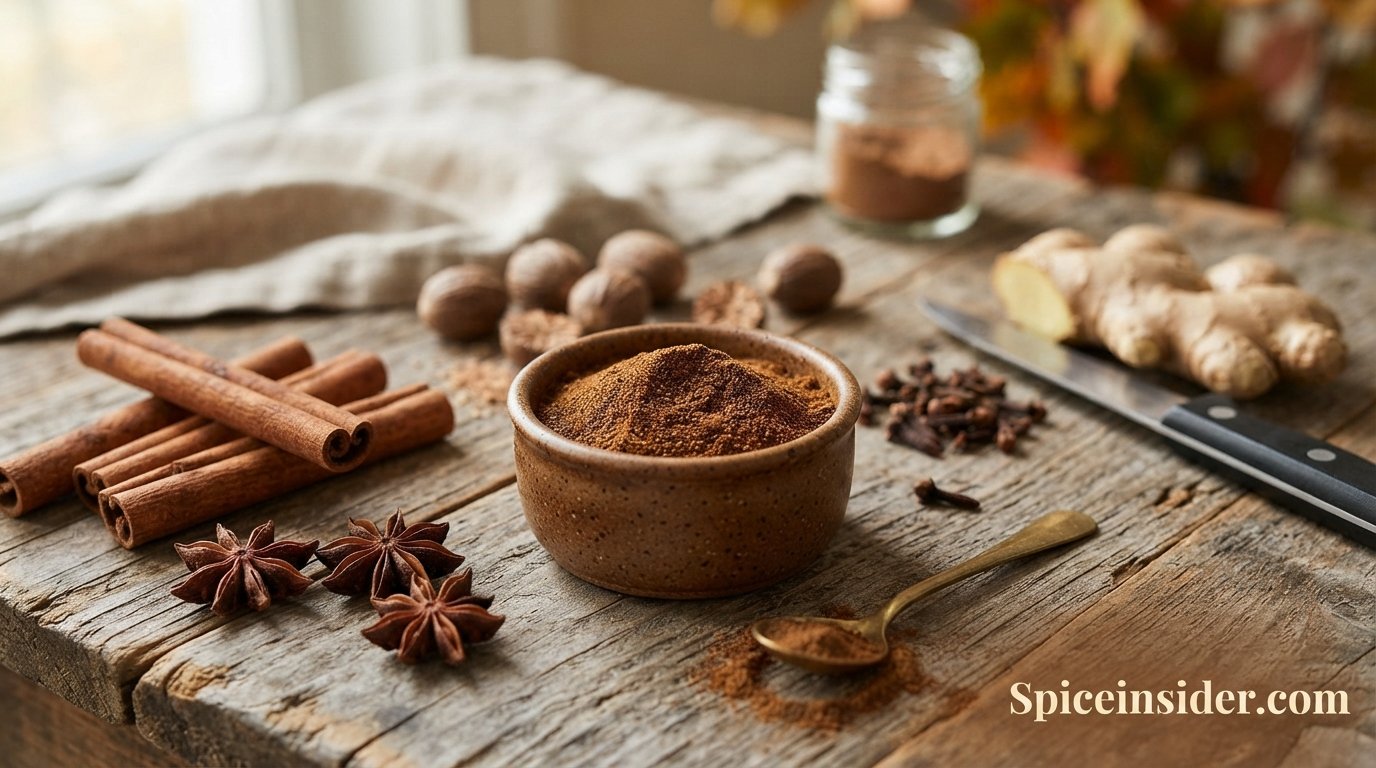
What Is in Pumpkin Pie Spice? The Complete Guide to the Blend, Ratios, and Smart Uses
Cinnamon, ginger, nutmeg, cloves, and often allspice: here is what each one does, how much of each belongs in the jar, and how to make a better blend at home.
Short answer: pumpkin pie spice is a blend of ground cinnamon, ginger, nutmeg, and cloves, and many versions add allspice too. There is no actual pumpkin in it. The name comes from what the blend was built to flavor: pumpkin pie.
Open the spice aisle in autumn and you will find that jar everywhere, and not just in the baking section. It shows up on lattes, granola, pancake mixes, and even roasted nuts. Yet most people who reach for it could not tell you what is inside, why those particular spices are paired, or whether the store version is any better than what they could stir together in two minutes.
This guide walks through the full picture. You will learn exactly what goes into the blend, what each spice contributes, the ratios that bakers actually use, how to make your own, and how to fix a batch that tastes off. If you cook with warm spices often, a good grinder is worth having, and our roundup of the best spice grinder options is a useful companion to this article.
1. What Pumpkin Pie Spice Really Is
Pumpkin pie spice is a pre-mixed seasoning designed to save bakers from measuring four or five separate jars every time they make pumpkin custard. Commercial blends began appearing in American kitchens in the early twentieth century, when spice companies noticed that home cooks kept combining the same handful of warm spices for their holiday pies. Selling the mixture ready-made was an easy win, and it stuck.
The blend belongs to a wider family of sweet baking spices that are warming rather than hot. Unlike chili powder or curry blends, which lean savory and pungent, pumpkin pie spice leans aromatic and sweet. Its job is to make pumpkin, squash, apples, and sweet potatoes taste more like themselves by adding warmth, depth, and a gentle bite that cuts through the richness of cream and sugar.
Why there is no pumpkin in the jar
This trips up a surprising number of people, especially those who see “pumpkin spice” on a coffee menu. The word pumpkin describes the intended use, not an ingredient. The jar contains only dried, ground spices. Pumpkin flavor in a finished pie comes from the puree itself, and the spice blend simply frames it.
Pumpkin pie spice vs. “pumpkin spice”
The two names are used interchangeably in grocery stores and recipes, and for practical purposes they are the same product. Some brands sell a “pumpkin spice” version that leans a little sweeter or has a slightly different clove level, but the ingredient list is nearly identical. When a recipe calls for either, you can use whichever jar you have.
Want to stock your pantry with quality baking spices? Browse top-rated pumpkin pie spice blends on Amazon.
Shop Pumpkin Pie Spice2. The Standard Ingredient List
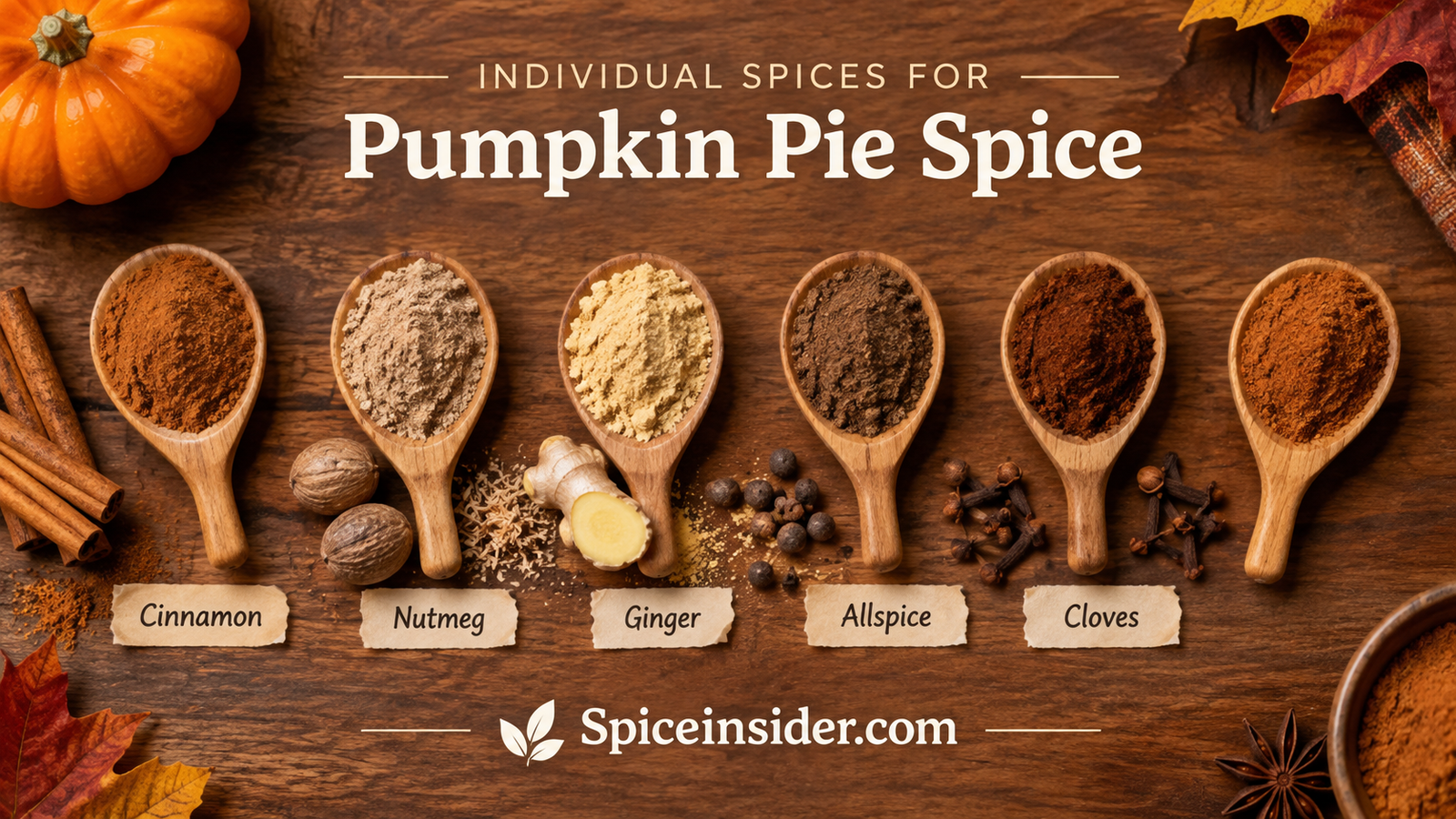
Ask ten different bakers for their formula and you will get ten slightly different answers, but the backbone never changes. The classic commercial blend lists cinnamon first, then ginger, then nutmeg, then cloves, and frequently allspice at the end. Spices on an ingredient label appear in order of quantity, so that ordering tells you cinnamon dominates and cloves are the smallest part.
| Spice | Role in the blend | Flavor notes | Typical share |
|---|---|---|---|
| Cinnamon | Backbone and sweetness | Warm, woody, sweet | About 50 to 60% |
| Ginger | Brightness and gentle heat | Zesty, peppery, citrusy | About 20 to 25% |
| Nutmeg | Sweet perfume | Nutty, floral, creamy | About 10 to 15% |
| Cloves | Deep, pungent bass note | Intense, medicinal, sweet | About 3 to 5% |
| Allspice (optional) | Bridge between all the others | Blend of cinnamon, clove, and nutmeg | About 5 to 10% |
These percentages are guidelines, not laws. Brands adjust them to suit a house style. A blend marketed as “bold” might push the ginger and cloves higher, while a “mellow” one might be nearly all cinnamon with just a whisper of the others.
Ingredients you should not see on the label
A pure blend has no added sugar, no salt, no fillers, and no artificial flavoring. If the label lists sugar, cornstarch, or “natural flavors,” you are buying something closer to a seasoned sugar than a spice mix. That may be fine for a latte topping, but it will throw off the sweetness of a recipe and dilute the spice. Read the label before you buy, especially with seasonal specialty products.
- Look forShort ingredient list with only spices
- AvoidAdded sugar, salt, or anti-caking agents in large amounts
- CheckWhether allspice is included so you know the clove level
- PreferSmall jars you will finish within several months
Compare pure, single-ingredient baking spices side by side and build your own blend from the ground up.
See Baking Spice Sets3. Cinnamon: The Backbone of the Blend
Cinnamon is the largest component by far, and it is the flavor most people identify first when they smell the jar. It comes from the inner bark of trees in the Cinnamomum family, which is dried into quills and then ground into powder. In a pumpkin pie spice blend, it provides the sweet, woody warmth that makes the whole mixture taste like autumn.
Cassia vs. Ceylon
Two main types of cinnamon are sold. Cassia, the common supermarket variety, is bold, spicy, and slightly hot. Ceylon, sometimes called “true” cinnamon, is milder, more floral, and more delicate. Most commercial pumpkin pie spice uses cassia because it stands up well to baking and costs less. If you want to understand the difference in depth, our comparison of Ceylon vs. cassia cinnamon covers flavor, price, and coumarin content.
Cassia in the blend
- Strong flavor that survives baking
- Affordable and widely available
- Classic “bakery” cinnamon taste
Watch out for
- Can taste sharp or bitter in large amounts
- Higher in coumarin than Ceylon
- Overpowers softer spices if unbalanced
How cinnamon shapes the finished pie
In a custard, cinnamon reads as sweetness even though it contains no sugar. That is why a pie with a good amount of cinnamon tastes richer than one without, even at the same sugar level. It also pairs naturally with the earthy, slightly vegetal flavor of pumpkin, rounding off any harshness. If you bake often with cinnamon, it is worth tasting a few brands to find one you love, and our guide to the best cinnamon for baking is a good starting point.
Upgrade the base of your blend with fresh, fragrant ground cinnamon.
Shop Ground Cinnamon4. Ginger: The Warm Bite
Ground ginger is the second-largest ingredient, and it is the spice that keeps the blend from tasting flat or cloying. Dried ginger root has a peppery, slightly citrusy heat that is very different from the fresh root. It adds sparkle to the mix and stops the sweetness of the cinnamon and nutmeg from feeling heavy.
Why dried ginger and not fresh
Fresh ginger is juicy, sharp, and bright. Drying it concentrates the compounds responsible for its heat, and it changes the flavor profile toward something warmer and more woody. In a dry spice mix, only the ground, dried form works. Fresh ginger would clump, introduce moisture, and spoil the blend within days.
How much ginger is too much
Ginger is potent. A blend with too much can taste medicinal or harsh, especially in a delicate pie custard. Most successful ratios keep ginger to roughly a quarter of the blend or less. If you prefer a spicier profile, for example in gingerbread-style cookies or a spiced cake, you can raise it. For classic pumpkin pie, restraint tends to win.
- FlavorPeppery, citrusy, warming
- Best inPies, spice cakes, cookies, oatmeal
- BalancesSweetness from cinnamon and sugar
- WatchOlder jars lose heat and turn dusty
Old ginger loses its punch faster than most people realize. If your jar has been open for more than a year and smells faint, it is time to replace it. A blend is only as good as its weakest ingredient.
Fresh, potent ground ginger makes a noticeable difference in homemade spice mixes.
Shop Ground Ginger5. Nutmeg: The Sweet Perfume
Nutmeg is the seed of a tropical evergreen tree, and it brings a nutty, floral, almost creamy sweetness to the blend. It is what gives pumpkin pie its unmistakable “holiday” aroma. On its own, nutmeg can feel intense, but in small quantities it lifts everything around it.
Pre-ground vs. freshly grated
Nutmeg is one of the spices where fresh really does taste better. Whole nutmeg keeps its oils sealed inside the seed, and grating it releases a fragrance that pre-ground versions rarely match. A microplane and a few whole seeds will last for years and improve nearly every recipe that calls for the spice. If you are shopping, our review of the best whole nutmeg explains what to look for in a good seed.
Nutmeg in large amounts
A quick safety note: nutmeg is safe in normal cooking amounts, but it contains compounds that can cause unpleasant effects in very large doses. Recipe-level quantities, a pinch or a fraction of a teaspoon per serving, are not a concern. Just avoid treating it as anything more than a seasoning.
Why bakers love it
- Creamy, sweet aroma
- Lasts for years as whole seeds
- Pairs with dairy, eggs, and squash
Drawbacks
- Pre-ground fades quickly
- Strong enough to dominate if overused
- Needs a grater for the best results
Whole nutmeg and a fine grater take your blend from good to bakery-level.
Shop Whole Nutmeg6. Cloves: The Deep Bass Note
Cloves are dried flower buds, and they are by far the most powerful spice in the mix. That is why they make up the smallest share. A tiny amount adds a deep, slightly medicinal sweetness that anchors the lighter, brighter flavors. Too much, and the entire blend tastes like a dentist’s office.
The compound behind the flavor
Cloves owe their character to eugenol, an aromatic compound that is strong enough to numb, which is why clove oil has a long history in dental care. In cooking, that same compound delivers a pungent warmth that lingers on the palate. It makes the difference between a blend that tastes complete and one that tastes thin.
Getting the amount right
Most homemade recipes use roughly half a teaspoon of cloves for every four or five teaspoons of cinnamon. If you are nervous, start smaller and taste a pinch of the blend on a spoonful of sugar or whipped cream. You can always add more cloves, but you can never take them out.
- IntensityVery high, use sparingly
- FlavorSweet, pungent, slightly numbing
- Best formWhole buds, ground fresh
- Common mistakeDoubling cloves “for depth”
Grinding whole cloves yourself is one of the easiest ways to improve the blend. Whole buds stay potent for years, while ground cloves fade fast. If you do not own a grinder yet, our guide on how to grind spices without a grinder shows several workable options.
Whole cloves keep their strength far longer than the ground kind.
Shop Whole Cloves7. Allspice, Mace, and Cardamom: The Supporting Cast
Beyond the four core spices, many blends include one or more supporting players. These are what separate a good pumpkin pie spice from a great one, and they explain why two brands can taste noticeably different even when their main ingredients match.
Allspice
Despite the name, allspice is a single spice: the dried berry of a Caribbean tree. Its flavor resembles a mix of cinnamon, cloves, and nutmeg, which is exactly why it is such a natural bridge inside a blend. Adding it smooths the transitions between the other flavors and gives the mixture a rounder finish.
Mace
Mace is the lacy outer coating of the nutmeg seed. It tastes like a softer, more citrusy version of nutmeg. Some bakers swap part of the nutmeg for mace to get a brighter, more refined aroma. It is harder to find but worth trying.
Cardamom
Cardamom is not traditional in American pumpkin pie spice, but a small pinch adds a floral, slightly citrusy note that many people love, especially in pumpkin bread and coffee drinks. A quarter teaspoon per full batch is plenty.
Other optional additions
- Black pepper: a tiny grind adds a subtle bite that plays well with ginger.
- Star anise or fennel: adds a faint licorice note for a more unusual profile.
- Orange zest powder: brightens the entire blend and pairs well with squash.
- Vanilla powder: rounds out sharpness, though it is not a traditional ingredient.
If you enjoy exploring unusual flavors, the tangy, lemony sumac spice is a fun contrast to keep on the shelf for savory dishes made with the same roasted squash.
Experiment with allspice, mace, and cardamom to create a signature blend.
Shop Allspice and More8. Classic Ratios and a Homemade Recipe
Making your own pumpkin pie spice takes about two minutes and costs less than most store-bought jars. It also lets you adjust the balance to match your taste. Here is a reliable starting recipe that yields about a quarter cup.
| Ingredient | Amount | Notes |
|---|---|---|
| Ground cinnamon | 3 tablespoons | Cassia for boldness, Ceylon for softness |
| Ground ginger | 2 teaspoons | Use a fresh jar |
| Ground nutmeg | 2 teaspoons | Freshly grated is best |
| Ground allspice | 1 teaspoon | Optional but recommended |
| Ground cloves | 1 teaspoon | Reduce to 1/2 teaspoon for a milder blend |
How to mix it
Add everything to a small bowl and whisk until the color is uniform. Transfer to a clean, dry jar with a tight lid. Label it with the date so you know when to use it up. If you keep a spice drawer with many jars, a simple system for how to label spice jars saves a lot of guessing later.
Three quick variations
- Bakery style: more cinnamon, half the cloves, extra nutmeg for a sweet, mellow profile.
- Bold and spicy: extra ginger plus a pinch of black pepper, ideal for cookies and spice cakes.
- Coffee shop style: cinnamon-forward with a pinch of cardamom, tuned for lattes and whipped cream.
The simple rule of thumb
If you do not want to memorize measurements, remember the ratio 4 : 2 : 1 : 1. That is four parts cinnamon, two parts ginger, one part nutmeg, and one part allspice or cloves. It is close enough to the commercial formula that you can scale it up or down using any measuring spoon.
Grab airtight spice jars and labels to keep your homemade blend fresh.
Shop Spice Jars9. Whole vs. Pre-Ground Spices: Does It Matter?
It matters more than most cooks expect. Ground spices lose their volatile oils quickly because grinding exposes far more surface area to air. A whole nutmeg or clove can stay fragrant for years, while the same spice ground and left in a cupboard fades within months.
Our breakdown of grinding whole spices vs. pre-ground goes further into the science, but the takeaway is simple: for spices that are potent and long-lasting when whole, like nutmeg and cloves, grinding your own gives a real flavor boost.
Toasting before grinding
Lightly toasting whole spices in a dry pan wakes up their oils and deepens their flavor. It is especially helpful for allspice berries and cardamom pods. Keep the heat low and pull them off as soon as they smell fragrant. Our tutorial on how to toast spices before grinding walks through timing and technique.
Choosing your grinding method
You have several options. A blade grinder is fast and cheap. A burr grinder gives more uniform particles. A mortar and pestle is slow but gives excellent control and no electronics. If you are torn between the electric options, read our comparison of blade vs. burr grinder for spices. If you prefer to work by hand, our picks for the best mortar and pestle and the best manual spice grinder cover the top options.
| Method | Speed | Consistency | Best for |
|---|---|---|---|
| Blade grinder | Very fast | Variable | Everyday batches |
| Burr grinder | Moderate | Very even | Fine, consistent powder |
| Mortar and pestle | Slow | Adjustable | Small, aromatic batches |
| Microplane (nutmeg) | Fast | Fine | Fresh nutmeg |
If you are new to the process, our beginner guide on how to use a spice grinder covers the basics. Some people wonder about using the same machine for coffee and spices, and we explain the tradeoffs in can you grind coffee in a spice grinder.
Keep the grinder clean
Cinnamon and clove aromas linger in a grinder. Wipe it out after each use, and follow our steps for how to clean a spice grinder. If a lingering smell persists, the trick with rice and bread to remove odors works surprisingly well.
A dedicated spice grinder turns whole spices into bakery-fresh blends.
Shop Spice Grinders10. Store-Bought vs. Homemade: Which Is Better?
Both have a place. Store-bought blends are convenient, consistent, and inexpensive, especially when you only need them once or twice a year. Homemade blends taste fresher, let you control every ingredient, and avoid the stale flavor that comes from a jar that sat on a shelf for months before you bought it.
| Factor | Store-bought | Homemade |
|---|---|---|
| Convenience | Ready instantly | Two minutes to mix |
| Freshness | Unknown age | You control it |
| Flavor control | Fixed | Fully adjustable |
| Cost per ounce | Low to moderate | Often lower with bulk spices |
| Consistency | Very consistent | Depends on your ratios |
Buy it when
- You bake pumpkin pie once a year
- You need a quick fix
- You want a predictable flavor
Make it when
- You bake with warm spices often
- You want peak freshness
- You have a picky palate or an allergy to avoid
What to look for on a store label
Choose a brand that lists only spices, buys in reasonable volumes, and packages in a tight container. Glass or tin jars protect flavor better than clear plastic that lets in light. If you buy in bulk to save money, read our advice on how to store bulk spices so they do not go stale before you use them.
Compare bestselling ready-made blends and find your favorite.
Compare Spice Blends11. Uses Beyond the Pie
Once you have a jar of pumpkin pie spice, you will find it useful in far more than one dessert. The mixture works anywhere warm, sweet spices belong, and a small amount goes a long way.
- BakingMuffins, quick breads, cookies, cakes, scones
- BreakfastOatmeal, pancakes, waffles, French toast, granola
- DrinksLattes, hot chocolate, chai, milk shakes
- SavoryRoasted squash, sweet potatoes, carrots, glazes
- SnacksCandied nuts, roasted chickpeas, popcorn
- DessertsIce cream, custard, rice pudding, whipped cream
Sweet and savory pairings
Roasted vegetables love warm spices. Toss cubed butternut squash with olive oil, salt, and a small pinch of the blend before roasting, and the caramelized edges take on a subtle bakery note. Pair it with a smoky counterpoint like the ones in our guide to the best smoked paprika, or add an earthy layer using the best turmeric powder to build a more complex roasted-vegetable seasoning.
Pair it with vanilla
Vanilla and warm spices are natural partners. A splash of real vanilla in a pumpkin custard softens the spice edges and adds depth. If you are choosing between forms, our comparison of vanilla extract vs. vanilla bean paste will help, and the best vanilla bean brands guide covers the premium end.
A luxurious twist
For a special occasion, try a pinch of saffron in rice pudding alongside the spice blend. It is an unexpected pairing that guests remember. If you want to try it, start with our list of the best saffron brands.
Stock up on whole vanilla beans, extracts, and other flavor partners.
Shop Vanilla12. Substitutes, Storage, and Troubleshooting
Running out mid-recipe is common, and fortunately pumpkin pie spice is one of the easiest blends to replace.
Best substitutes
| Substitute | How to use | Result |
|---|---|---|
| Apple pie spice | 1 : 1 | Sweeter, with cardamom, milder |
| Cinnamon + nutmeg + ginger | 2 parts : 1 : 1 | Very close to the original |
| Allspice + cinnamon | 1 : 3 | Simple and quick |
| Chai spice | 1 : 1 | Spicier, with pepper and cardamom |
How to store the blend
Keep it in an airtight container away from heat, light, and moisture. A drawer or cabinet far from the stove is ideal. An organized setup makes a difference, and our roundups of the best spice organizers and tips on how to organize spices in your kitchen can help you avoid buying duplicates.
How long does it last?
Ground blends stay at their best for roughly six months to a year. They do not spoil in a harmful way, but the flavor fades. To test freshness, rub a pinch between your fingers. If the aroma is weak or dusty, replace it.
Fixing a blend that tastes off
- Too bitter or medicinal: too many cloves. Add more cinnamon and nutmeg to dilute.
- Too sharp: too much ginger. Balance with extra cinnamon.
- Flat and dull: stale spices. Replace the oldest jar and freshly grind nutmeg.
- Gritty texture: uneven grind. Sift the blend through a fine strainer.
Keep your spices tidy and fresh with a well-designed spice rack.
Shop Spice OrganizersFrequently Asked Questions
What is in pumpkin pie spice?
Pumpkin pie spice is a blend of ground cinnamon, ginger, nutmeg, and cloves. Many versions also include allspice. It contains no pumpkin.
Is there actually pumpkin in pumpkin pie spice?
No. The name refers to its intended use in pumpkin pie and other pumpkin dishes. The jar holds only dried, ground spices.
What is the difference between pumpkin pie spice and pumpkin spice?
Very little. The two names describe essentially the same blend, though brands may adjust the ratios slightly.
Can I make pumpkin pie spice at home?
Yes. Combine roughly 3 tablespoons cinnamon, 2 teaspoons ginger, 2 teaspoons nutmeg, 1 teaspoon allspice, and 1 teaspoon cloves. It takes about two minutes.
What can I use if I do not have pumpkin pie spice?
Mix cinnamon, ginger, and nutmeg, with a pinch of cloves or allspice. Apple pie spice also works in a pinch.
How much pumpkin pie spice goes in a pie?
Most standard recipes call for one to two teaspoons for a nine-inch pie. Start with one and adjust to taste.
Is pumpkin pie spice the same as apple pie spice?
They are similar but not identical. Apple pie spice is usually milder and often includes cardamom, while pumpkin pie spice leans on ginger and cloves.
How long does pumpkin pie spice last?
Ground blends stay flavorful for about six months to a year when stored airtight, away from heat and light.
Does pumpkin pie spice go bad?
It does not become unsafe quickly, but the flavor fades. If it smells weak or dusty, replace it.
Is pumpkin pie spice gluten-free?
Pure blends made only from spices are naturally gluten-free. Always check the label for added fillers or facility warnings if you need to avoid gluten.
Can I use pumpkin pie spice in savory dishes?
Yes. A small pinch works well on roasted squash, sweet potatoes, carrots, and in glazes for pork or chicken.
Should I grind my own spices for the blend?
It is worth doing for nutmeg and cloves, which taste noticeably fresher when ground just before mixing.
Conclusion: A Simple Blend With a Lot of Depth
Pumpkin pie spice looks like a simple jar, but it is a carefully balanced mixture. Cinnamon supplies the warm, sweet core. Ginger adds brightness and bite. Nutmeg contributes fragrance, cloves give depth, and allspice ties them together. Understanding what each ingredient does turns you from someone who follows a recipe into someone who can adjust it with confidence.
Whether you buy a reliable jar or blend your own from fresh spices, the key is freshness and balance. Start with the classic ratio, taste as you go, and shape the mixture to your preferences. Once you do, you will find yourself reaching for it long after the holidays are over.
Ready to bake? Get everything you need for the perfect blend in one place.
Shop Spices on Amazon