Best Turmeric Powder: Organic Picks That Actually Deliver Color, Flavor, and Curcumin Punch
A deep, honest look at the organic turmeric powders worth keeping in your spice rack — tested against color, aroma, grind consistency, and value.

Why Turmeric Powder Quality Matters
Turmeric is one of those pantry staples that looks the same in every jar until you actually cook with it. Crack open two different bags side by side and the differences jump out immediately — one is a deep, almost burnt-orange color with a warm, peppery aroma, while the other is pale, dusty, and smells like cardboard. That gap comes down to curcumin content, harvest quality, drying method, and how finely the root was milled before packaging.
Because turmeric is graded largely on color and aroma rather than a universal certification, shoppers are often at the mercy of marketing claims. “Organic” tells you something about how the crop was grown, but it says nothing about curcumin percentage, particle size, or whether the batch was blended with cheaper filler turmeric to stretch a harvest. That’s exactly the gap this guide is meant to close.
We pulled together eight of the most talked-about organic turmeric powders on the market right now and evaluated them the way a home cook actually would — color saturation, aroma strength, texture underfoot (or under spoon, rather), how they perform in golden milk versus curry versus a simple roasted vegetable dusting, and whether the price actually reflects the quality inside the bag. If you’re also stocking your spice drawer with other staples, our guides to the best saffron brands and best smoked paprika pair naturally with this one.
How We Chose These Turmeric Powders
Not every “organic” label on a turmeric bag means the same thing in practice, so we leaned on a few consistent criteria to keep the comparisons fair across all eight products.
What We Prioritized
- Certified organic sourcing (USDA Organic or equivalent)
- Rich, saturated orange-gold color
- Strong, peppery-earthy aroma straight out of the bag
- Fine, consistent grind with no clumping
- Transparent sourcing (single-origin vs. blended)
- Value per ounce relative to quality
What Knocked Products Down
- Dull or brownish color instead of vivid gold
- Weak or musty smell
- Gritty or inconsistent texture
- Vague sourcing with no origin information
- Packaging that lets in moisture or light
- Price that doesn’t match the quality delivered
With that framework in mind, here’s how each of the eight turmeric powders actually performed.
1. FGO Organic Turmeric Powder

FGO has built a reputation among home cooks for turmeric that actually smells the way turmeric is supposed to smell — sharp, peppery, and a little bit sweet — rather than the flat, dusty scent that plagues a lot of bulk-bin turmeric. The color is a rich burnt-orange rather than a pale mustard-yellow, which is usually the fastest visual tell for curcumin concentration.
What stands out most in daily use is how little you need to get a noticeable effect. A half teaspoon in a pot of golden milk gives it a genuinely deep color instead of the washed-out pastel you get from weaker powders. It performs equally well folded into scrambled eggs, roasted cauliflower, or a simple turmeric-ginger tea.
Pros
- Vivid color and strong aroma
- Fine, lump-free texture
- Resealable bag helps preserve freshness
- Competitive price for the quality
Cons
- Bag isn’t fully opaque, so light exposure is a concern long-term
- Sourcing region isn’t listed on the label
2. Organic Spice Resource Turmeric Root Powder

This one leans toward bulk buyers — it’s sold in larger portions than most competitors, which makes it a natural fit if you’re cooking a lot of curries, stews, or turmeric-heavy dishes on a weekly basis rather than sprinkling it occasionally.
The grind is slightly coarser than FGO’s, which some cooks actually prefer for slow-cooked dishes where the powder has time to fully hydrate and release its flavor. It’s less ideal for something like a smoothie where a finer grind blends more seamlessly.
Pros
- Great value per ounce for bulk cooking
- Solid color and aroma
- Works well in long-simmered dishes
Cons
- Slightly coarser grind than top picks
- Packaging is basic and not resealable
Best for bulk cooking and curry-heavy kitchens.
3. HQOExpress Organic Ground Turmeric Powder
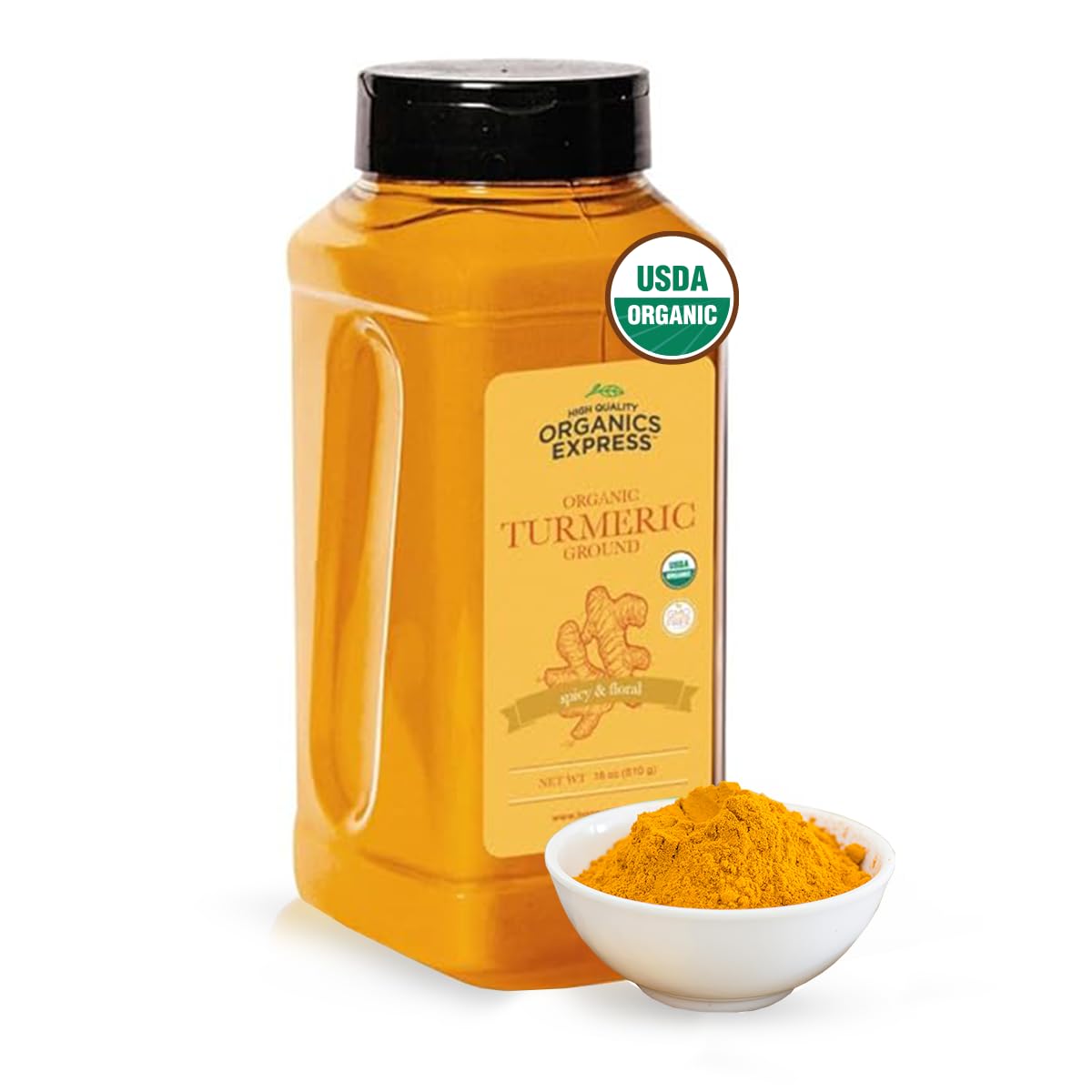
HQOExpress positions itself as a straightforward, no-frills organic turmeric, and that’s more or less what you get — a reliable, mid-range powder without much marketing flourish, but also without any glaring weaknesses.
Where it lands in the middle of the pack is color saturation — it’s noticeably better than the weakest performers in this roundup but doesn’t quite match FGO’s depth of orange. For everyday cooking, most people won’t notice the difference.
Pros
- Consistent, dependable quality
- Kosher certification
- Fair price point
Cons
- Color is good but not top-tier
- Aroma fades faster once opened
4. Organic Turmeric Powder 1 Pound Jar by Jiva Organics

Jiva Organics sources from India, and it shows in the flavor profile — this powder has a slightly sharper, more pungent bite than some of the milder Western-blended options, which fans of authentic curry and dal recipes tend to prefer.
The jar packaging is a nice touch for kitchen organization, since it stacks and stores more predictably than a floppy bag, though it does take up more shelf space. If you’re building out a full spice cabinet, our guide on how to organize spices in the kitchen is worth a look.
Pros
- Authentic, pungent flavor profile
- Convenient jar packaging
- Great for traditional Indian cooking
Cons
- Jar takes up more cabinet space than a bag
- Slightly pricier per ounce
5. Simply Organic Ground Turmeric Root

Simply Organic is one of the more widely recognized names in the natural grocery aisle, and their turmeric lives up to the brand’s reputation for consistency. It won’t blow you away with intensity, but it also never disappoints.
The smaller bottle size makes it a good low-commitment option if you’re not sure how often you’ll actually reach for turmeric, though it works out to a higher per-ounce cost than the bulk options on this list.
Pros
- Trusted, established brand
- Consistent quality batch to batch
- Easy to find in stores nationwide
Cons
- Smaller quantity for the price
- Not the most intense color on this list
6. Healthworks Superfoods Organic Turmeric Powder

Healthworks markets this more toward the wellness and smoothie crowd than the traditional cooking crowd, and the fine, almost powdery texture backs that positioning up — it dissolves cleanly into liquids without leaving gritty residue at the bottom of the glass.
If your primary use case is turmeric shots, smoothies, or golden milk lattes rather than curry pastes, this is one of the more purpose-built options in the lineup.
Pros
- Dissolves smoothly in liquids
- Great for smoothies and lattes
- Clean, mild taste
Cons
- Milder flavor may be too subtle for savory cooking
- Color is good but not the deepest on this list
7. McCormick Gourmet Organic Ground Turmeric

McCormick’s organic line is the safest, most familiar pick on this list — the kind of turmeric you can grab at almost any major grocery store without hunting through a specialty aisle. It’s a solid, middle-of-the-road performer.
It doesn’t have the standout intensity of FGO or the bulk value of Organic Spice Resource, but for someone who just wants a reliable jar of turmeric without doing much research, it checks the box.
Pros
- Easy to find almost anywhere
- Reliable, familiar quality
- Good entry point for new turmeric users
Cons
- Smaller jar size
- Higher price per ounce than bulk options
The familiar, easy-to-find grocery store option.
8. Anthony’s Organic Turmeric Root Powder

Anthony’s built its reputation on batch testing and transparency, and that carries over into this turmeric powder. It’s marketed with an emphasis on purity — no additives, no anti-caking agents, just ground turmeric root.
The texture is fine and consistent, and the color holds up well against the stronger performers in this list. It’s a strong pick for anyone specifically avoiding additives or fillers in their spices.
Pros
- No additives or anti-caking agents
- Batch-tested for purity
- Strong color and aroma
Cons
- Bag packaging isn’t resealable
- Mid-range pricing
Best for purity-focused shoppers avoiding additives.
9. HANDPICK Organic Turmeric Powder

HANDPICK is the newer name on this list, and it leans into small-batch sourcing language. In practice, the powder performs closer to the mid-pack — solid color, decent aroma, nothing that separates it from the pack in either direction.
It’s a reasonable choice if you come across it on sale, but it doesn’t offer a strong enough reason to seek out over the higher-ranked options above unless price is the deciding factor.
Pros
- Decent overall quality
- Small-batch sourcing story
Cons
- Doesn’t stand out versus competitors
- Limited information on origin
A solid mid-pack option worth grabbing on sale.
Turmeric’s Role in the Kitchen and Beyond
Turmeric has been used in South Asian cooking and traditional wellness practices for thousands of years, long before curcumin became a buzzword on supplement labels. In the kitchen, it functions as both a flavoring agent and a natural colorant, giving curries, rice dishes, and broths their signature golden hue without any artificial dye. That dual role — flavor and color — is part of why quality varies so widely between brands: a powder that’s weak in curcumin will still color a dish but won’t deliver the same depth of flavor or the subtle warmth that a fresher, more potent batch provides.
Beyond the plate, turmeric has attracted a lot of attention in wellness circles for curcumin, the primary active compound responsible for its color and much of its research interest. It’s worth being clear-eyed here: culinary amounts of turmeric powder, the kind you’re sprinkling into a curry or stirring into golden milk, are a normal part of a varied diet, but they’re a different category from concentrated curcumin supplements. If you’re considering turmeric for reasons beyond flavor, it’s worth discussing dosage and interactions with a healthcare provider, particularly if you’re on blood thinners or other medications, since curcumin can interact with certain drugs at higher doses.
What we focused on in this guide is squarely the culinary side — which powders taste, smell, and cook the way turmeric is supposed to, and which ones fall short. That’s a more actionable lens for most home cooks than chasing specific curcumin percentages that vary by harvest and aren’t always verified on the label anyway.
It’s also worth noting that curcumin makes up only a small percentage of turmeric root by weight, generally somewhere in the low single digits, which is part of why supplement companies isolate and concentrate it separately rather than relying on culinary turmeric powder alone to hit therapeutic-level doses. For cooking purposes, that distinction rarely matters — you’re seasoning food, not dosing a supplement — but it’s a useful bit of context if you’ve ever wondered why a jar of turmeric next to a bottle of curcumin capsules can look like completely different products despite coming from the same plant.
How Turmeric Is Grown, Harvested, and Processed
Growing Regions
Turmeric is a rhizome, botanically related to ginger, and it thrives in warm, humid climates with well-drained soil. India remains the largest producer by a wide margin, and within India, certain regions have built strong reputations for quality. Alleppey turmeric, grown in Kerala, is particularly well regarded for its naturally higher curcumin content and deep color compared to turmeric grown in other regions. Some of the brands in this roundup source specifically from these higher-curcumin regions, while others blend turmeric from multiple growing areas, which can dilute both color and potency even if the final product is still technically accurate to label as “organic.”
Harvesting and Curing
After the rhizomes are harvested, they go through a curing process that involves boiling and then drying, which helps develop the characteristic color and aroma while also making the root easier to grind. Rushed or inconsistent curing is one of the more common reasons a batch of turmeric ends up dull or weak-smelling, even if the raw root itself was high quality to begin with. This is part of why two turmeric powders can list the exact same growing region on the label yet taste noticeably different once opened.
Grinding and Particle Size
Once cured and dried, the root is milled into powder. Particle size affects how the spice behaves in cooking: a very fine grind dissolves more readily into liquids and blends smoothly into batters or smoothies, while a slightly coarser grind can hold up better in long-simmered dishes where there’s time for the powder to fully hydrate. Neither is objectively “better” — it depends on what you’re cooking, which is part of why we noted grind texture separately for each product in the comparison table above.
Why Some Brands Blend Batches
Turmeric harvests vary year to year and region to region, so many spice companies blend multiple batches to maintain a consistent flavor and color profile across every jar or bag they sell. This isn’t inherently a red flag, but it does mean that brands offering true single-origin, single-harvest turmeric — which tends to have more batch-to-batch variation but often a more distinctive character — are taking a different approach than the large blended-batch producers most grocery store brands rely on.
Turmeric Powder vs. Fresh Root vs. Whole Dried Root
If you’ve spent any time in an international grocery store, you’ve probably seen turmeric in three different forms: the familiar ground powder, fresh knobby roots that look a lot like small ginger, and occasionally whole dried root pieces meant to be grated or ground at home. Each has its place.
| Form | Flavor Profile | Shelf Life | Best Use Case |
|---|---|---|---|
| Ground Powder | Concentrated, earthy, slightly bitter | 6–12 months for peak potency | Everyday cooking, quick prep |
| Fresh Root | Bright, citrusy, peppery | 2–3 weeks refrigerated | Juices, fresh pastes, garnish |
| Whole Dried Root | Deep, complex once ground | 1–2 years unground | Home grinding for maximum freshness |
For most home cooks, powder wins on convenience without sacrificing much in the way of flavor, provided you’re buying from a brand that takes freshness seriously. If you do want to explore grinding your own turmeric from whole dried root for maximum aroma, a good spice grinder makes the process fast, and our guide on how to use a spice grinder walks through the basics, while blade vs. burr grinder for spices covers which style tends to produce a finer, more consistent turmeric powder.
Common Mistakes People Make With Turmeric Powder
Buying Based on Price Alone
The cheapest turmeric on the shelf is often cheap because it’s been blended down with filler or sourced from a lower-curcumin growing region. It’s not that expensive automatically means better, but a price that seems too good relative to competitors is usually a sign of compromised quality somewhere in the supply chain.
Storing It in a Clear Jar on the Counter
It looks nice for a spice rack photo, but constant light exposure steadily degrades color and aroma. If you love the aesthetic of open glass jars, at least keep turmeric in a cabinet rather than on a sunlit windowsill.
Assuming All Organic Turmeric Is Equal
As covered earlier in this guide, organic certification speaks to growing practices, not curcumin concentration or grind quality. Two organic turmerics can perform very differently in the kitchen.
Not Blooming It in Fat
Sprinkling raw turmeric powder directly onto a finished dish is convenient, but it misses out on the flavor and color development that comes from briefly cooking it in oil or ghee first, since curcumin is fat-soluble.
Overbuying Before Finishing What You Have
Turmeric doesn’t spoil in an unsafe way, but a half-used bag sitting in the cabinet for two years isn’t doing your cooking any favors. Buying smaller quantities more frequently, rather than one giant bulk bag that sits for years, tends to produce better results in the dishes you actually cook.
Side-by-Side Comparison Table
For a quick overview before you commit to a bag, here’s how all nine turmeric powders stack up against each other on the factors that matter most.
| Brand | Color Intensity | Aroma | Grind Texture | Best For |
|---|---|---|---|---|
| FGO Organic | Excellent | Strong | Fine | Everyday cooking |
| Organic Spice Resource | Very Good | Good | Medium | Bulk / curry cooking |
| HQOExpress | Good | Moderate | Fine | Daily use, budget-friendly |
| Jiva Organics | Very Good | Strong, pungent | Fine | Traditional Indian dishes |
| Simply Organic | Good | Moderate | Fine | Trusted grocery pick |
| Healthworks | Good | Mild | Ultra-fine | Smoothies & lattes |
| McCormick Gourmet | Good | Moderate | Fine | Easy availability |
| Anthony’s | Very Good | Strong | Fine | Additive-free purity |
| HANDPICK | Good | Moderate | Medium | Budget / sale pick |
Turmeric Buying Guide: What Actually Separates Good From Great
Color Is the First Clue
A deep, saturated orange-gold color is one of the most reliable visual indicators of curcumin content. Pale, dusty-yellow turmeric has usually either been diluted, stored too long, or sourced from a lower-curcumin variety of the root. Hold the powder up to natural light if you can before buying, or check close-up product photos when shopping online.
Aroma Should Hit Immediately
Fresh, high-quality turmeric has a sharp, peppery, almost citrusy smell the moment you open the bag. If it smells flat, dusty, or like nothing at all, that’s usually a sign the batch is old or was harvested and dried poorly.
Origin Matters More Than Marketing Copy
Turmeric grown in regions like Alleppey, India is prized for naturally higher curcumin content compared to some other growing regions. Brands that are transparent about sourcing region tend to also be more careful about the rest of their supply chain. Vague labeling like “sourced globally” or no origin mentioned at all is often a sign the brand is buying whatever turmeric is cheapest at auction that season, blending it, and packaging it under a single label regardless of where it actually came from. That’s not automatically a dealbreaker for casual cooking, but it does explain why quality can vary noticeably from one purchase to the next with less transparent brands, even under the same product name.
Price Per Ounce, Not Just Sticker Price
A bulk bag priced higher than a small jar can still be the better value once you break the cost down per ounce. Before assuming a jar with a lower listed price is the cheaper option, do the quick math on cost per ounce, especially when comparing a compact spice-aisle jar against a bulk bag sold through an online specialty retailer.
Grind Consistency Affects Usage
A fine, consistent grind blends more evenly into liquids like golden milk or smoothies, while a slightly coarser grind can work better in slow-simmered dishes where the powder has time to hydrate and release flavor gradually.
Packaging Protects Freshness
Turmeric is sensitive to light, heat, and moisture. Resealable, opaque packaging preserves potency far longer than a thin bag that lets in light or a jar with a loose-fitting lid. If you’re mixing your own spice blends at home, our best spice grinder guide and how to grind spices without a grinder article are useful companions for turning whole roots into fresh powder yourself.
Storage & Freshness Tips
Even the best turmeric powder loses potency if it’s stored carelessly. A few habits go a long way toward preserving color, aroma, and flavor over the life of the bag or jar.
Do
- Store in an airtight, opaque container
- Keep away from direct sunlight and stovetop heat
- Use a dry spoon every time to prevent clumping
- Buy quantities you’ll realistically use within 6–12 months
Don’t
- Leave the bag open on the counter
- Store near the stove or oven where heat builds up
- Transfer with a wet or previously used spoon
- Assume “organic” means indefinite shelf life
If you’re reorganizing your whole spice collection around freshness, our guides on how to store bulk spices and how to label spice jars walk through the same principles applied across your entire cabinet.
Cooking & Usage Tips
Turmeric’s flavor and color both bloom differently depending on how it’s introduced to a dish, so a little technique goes a long way.
Bloom It in Fat First
Curcumin is fat-soluble, so cooking turmeric briefly in oil or ghee before adding liquid intensifies both the color and the flavor payoff compared to just stirring it into a finished dish.
Pair With Black Pepper
Piperine, the compound responsible for black pepper’s bite, is widely credited with helping the body make better use of curcumin. A pinch of freshly cracked pepper alongside turmeric is a simple habit worth building.
Watch the Staining
Turmeric stains fabric, countertops, and plastic containers persistently. Wipe up spills immediately and consider using glass or stainless containers for storage rather than porous plastic.
Don’t Overdo It
Turmeric has a slightly bitter, earthy edge at high concentrations. Start with a smaller amount than you think you need, taste, and build up rather than dumping in a heaping spoonful right away.
How Different Cuisines Use Turmeric
One of the reasons turmeric is worth having a genuinely good jar of, rather than settling for whatever’s cheapest, is how many different roles it plays across world cuisines. It’s rarely the star of the show on its own, but it quietly shapes the color and depth of an enormous range of dishes.
South Asian Cooking
In Indian, Pakistani, and Bangladeshi kitchens, turmeric is a near-universal base note in dals, curries, and rice dishes. It’s typically bloomed in hot oil alongside cumin seeds, mustard seeds, or other whole spices at the very start of cooking, which is where a fresher, more aromatic powder really shows its value compared to a stale one.
Southeast Asian Cooking
Turmeric shows up in Thai yellow curry pastes, Indonesian nasi kuning (yellow rice), and Malaysian rendang, often paired with lemongrass, galangal, and coconut milk. The color it lends to these dishes is as important as the subtle earthy flavor it contributes.
Middle Eastern and North African Cooking
Turmeric appears in spice blends alongside cumin, coriander, and paprika in dishes ranging from Moroccan tagines to various rice pilafs, where it’s often used more for color than as a dominant flavor.
Western Wellness Cooking
Golden milk lattes, turmeric shots, and smoothie add-ins have become a fixture of Western wellness culture over the past several years, usually pairing turmeric with black pepper, ginger, and a fat source like coconut milk to help with absorption and flavor balance.
Given how many different applications a single jar of turmeric ends up serving, it’s worth pairing it with a few other pantry staples that show up across the same recipes — our guides on best cinnamon for baking and Ceylon vs. cassia cinnamon are a natural next stop if you’re rounding out a well-stocked spice drawer.
If You Grind Your Own Turmeric: Keeping Your Grinder in Good Shape
Turmeric’s deep pigment is notorious for staining grinder blades, bowls, and gaskets a permanent yellow-orange, so anyone grinding whole dried turmeric root at home should be prepared for a bit of extra cleanup. It won’t harm the equipment, but it will visually stain plastic components over time.
A quick wipe-down immediately after grinding, rather than letting the residue sit, makes a noticeable difference in staining. If odor or residue does build up over time, our guide on how to clean a spice grinder and remove odor covers practical fixes, and how to get smell out of a spice grinder using rice or bread offers a couple of low-effort tricks that work surprisingly well between deeper cleanings.
If you’re noticing your ground turmeric coming out chunkier than expected, that’s usually a sign of a dull blade or an overloaded grinder bowl rather than anything wrong with the root itself — our spice grinder not fine enough troubleshooting guide walks through the most common causes and fixes.
Building Out a Well-Rounded Spice Cabinet Around Turmeric
Turmeric rarely works alone in a dish, which means the quality of everything sitting next to it in your spice drawer matters almost as much. A vivid, aromatic turmeric paired with stale, flavorless cumin or coriander still won’t produce a great curry, since the supporting spices are doing just as much work shaping the final flavor.
If you’re taking the time to source a genuinely good turmeric powder, it’s worth applying the same scrutiny to the rest of your core spices. Vanilla is one of the most commonly diluted spices on the market, so our best vanilla bean brands guide and companion piece on vanilla extract vs. vanilla bean paste are worth a read if baking is part of your kitchen routine. For savory cooking, freshly cracked pepper makes a noticeable difference alongside turmeric, and our best black peppercorns guide covers what separates a sharp, aromatic peppercorn from a dull one.
And if whole spices are becoming a bigger part of how you cook, having reliable tools on hand matters as much as the spices themselves. Beyond an electric grinder, a good mortar and pestle gives you more control over coarser grinds, while a dedicated manual spice grinder is a solid backup for smaller batches or travel. Keeping everything organized afterward is its own small project — our guide on best spice organizers covers a few practical systems for keeping a growing collection accessible instead of buried in the back of a cabinet.
Frequently Asked Questions
What’s the difference between turmeric powder and turmeric root?
Turmeric powder is simply dried, ground turmeric root. Fresh root has a brighter, more citrusy flavor and slightly different texture, while the powder is more concentrated, shelf-stable, and convenient for everyday cooking.
How long does turmeric powder stay fresh?
Stored properly in an airtight container away from light and heat, turmeric powder typically holds strong flavor and color for about 6 to 12 months, though it remains safe to use well beyond that with gradually diminishing potency.
Is organic turmeric powder actually better than non-organic?
Organic certification primarily ensures the crop was grown without synthetic pesticides or fertilizers. It doesn’t automatically guarantee higher curcumin content, but many organic producers also tend to be more transparent about sourcing and processing.
Why does my turmeric powder taste bitter?
A bitter edge is normal in concentrated turmeric, especially at higher curcumin levels. Using too much at once, or cooking it at very high heat for too long, can amplify that bitterness noticeably.
Can I substitute turmeric powder for fresh turmeric root in a recipe?
Yes, as a general rule about one teaspoon of turmeric powder replaces roughly one tablespoon of grated fresh turmeric root, though this can vary depending on the specific powder’s strength.
Does turmeric powder go bad?
It doesn’t spoil in a way that makes it unsafe, but it does lose color, aroma, and flavor potency over time, especially if exposed to light, air, or moisture.
What’s the best way to store turmeric powder long term?
An airtight, opaque container kept in a cool, dark cabinet away from the stove is the most reliable way to preserve turmeric’s color and aroma over many months.
Why is my turmeric powder clumping?
Clumping is usually caused by moisture exposure, either from a humid kitchen environment or from using a wet spoon to scoop the powder. Keeping the container sealed and always using a dry utensil prevents most clumping.
Is turmeric powder the same as curry powder?
No. Turmeric is a single spice, while curry powder is a blend that typically includes turmeric alongside coriander, cumin, fenugreek, and several other spices, giving it a more complex flavor profile.
Which turmeric powder has the strongest color?
Among the options covered in this guide, FGO Organic Turmeric Powder and Anthony’s Organic Turmeric Root Powder consistently showed the deepest, most saturated color when compared side by side.
Can I use turmeric powder in smoothies?
Yes, and a finer-ground powder like Healthworks Superfoods Organic Turmeric Powder tends to dissolve more smoothly into liquids without leaving gritty residue at the bottom of the glass.
How much turmeric powder should I use per day?
Culinary amounts, roughly a quarter to one teaspoon per dish, are generally considered a normal part of everyday cooking. Anyone considering larger, supplement-level amounts should talk to a healthcare provider first, especially if taking other medications.
Final Verdict
Across color, aroma, texture, and value, FGO Organic Turmeric Powder came out as the strongest all-around pick for everyday cooking, thanks to its vivid color and reliably strong aroma straight out of the bag. If you’re cooking in bulk or leaning heavily into curries and slow-simmered dishes, Organic Spice Resource Turmeric Root Powder offers excellent value for the quantity. And if purity and additive-free sourcing are non-negotiable for you, Anthony’s Organic Turmeric Root Powder is worth the slightly higher price.
Whichever bag ends up in your cabinet, the fundamentals stay the same: look for deep color, a sharp aroma, and packaging that actually protects freshness. Small details, but they’re the difference between a turmeric powder that sits forgotten in the back of the spice drawer and one you reach for every week.
It’s also worth remembering that no single turmeric will be the perfect fit for every use case. A powder built for smoothies and lattes isn’t necessarily the best choice for a slow-simmered curry, and a bulk bag meant for weekly cooking isn’t the most practical pick if you only reach for turmeric a few times a month. Matching the product to how you’ll actually use it matters just as much as chasing the single “best” option on paper, which is exactly why this guide broke each pick down by strengths and ideal use case rather than crowning one universal winner and calling it done.