Is Sugar a Spice? The Real Answer, the History Behind the Confusion, and How to Cook With Both
Sugar and spices share a shelf, a spoon, and a long trade history, but they are not the same thing. Here is exactly where the line falls and why it matters in your kitchen.
The Short Answer: Is Sugar a Spice?
If you have ever stood in front of your pantry wondering whether the sugar bowl belongs on the spice rack, you are in good company. The question comes up in classrooms, trivia nights, recipe forums, and grocery store aisles, because sugar behaves a lot like a spice in everyday life. It sits in a small container, it gets measured in teaspoons, it shows up in nearly every recipe that also calls for cinnamon or vanilla, and it is often sold in the same aisle as the seasonings.
But behaving like a spice and being a spice are two different things. Food scientists, regulators, and the spice trade all use definitions that revolve around one central idea: a spice is a plant material whose value comes from its aroma and flavor compounds. Sugar has no aroma compounds of its own worth mentioning. What it offers is sweetness, browning, texture, and preservation, which puts it in a different family altogether.
That is the same logic behind a question we get just as often, which is whether salt counts as a spice. Salt is a mineral, not a plant. Sugar is a plant-derived product, but a highly purified one, and the purification is exactly what disqualifies it. Once you understand why, you will be able to sort almost any pantry item into the right category without a second thought.
Key takeaways before we dig in
- Sugar is a sweetener and a nutritive ingredient, not a seasoning in the technical sense.
- Spices come from plants and are valued for volatile aromatic oils and pungent compounds.
- Sugar was once sold through spice merchants, which is a big reason the confusion still lingers.
- Many spices taste sweet, but sweetness in a spice comes from aroma, not from sugar.
- You can store sugar near your spices, but it deserves its own container and its own rules.
Browse whole spice sets and starter collections.
What Actually Counts as a Spice
To decide whether sugar qualifies, you first need a working definition of a spice. Different organizations word it differently, but they land in nearly the same place. In the United States, food regulations describe spices as aromatic plant substances, sold whole, broken, or ground, whose main function in food is seasoning rather than nutrition. The definition also says that nothing meaningful can have been stripped out, such as the flavor oils. International standards take a similar view, describing spices as plant products or mixtures used to flavor, season, and add aroma to food.
Two ideas sit at the center of those definitions. The first is that a spice is a plant material. The second is that its purpose is seasoning, not feeding you. That second point is subtle but important. Plenty of spices contain a little nutrition, but nobody eats a spoonful of cumin for calories. You use it because a small amount changes how a whole dish smells and tastes.
The plant parts that become spices
One handy way to think about spices is by the part of the plant they come from. Cinnamon is inner bark. Cloves are dried flower buds. Nutmeg is a seed, and its lacy outer covering is sold separately as mace. Ginger and turmeric are rhizomes, which are underground stems. Black pepper is a dried berry. Vanilla is the cured pod of an orchid. Saffron is made of the delicate stigmas of a crocus flower. Even less obvious examples, like sumac, made from dried berries, follow the same pattern.
Every one of those ingredients carries volatile aromatic compounds, essential oils, or pungent chemicals that make it recognizable by smell alone. That is the fingerprint of a spice. It is also why a jar of cinnamon can fill a room with fragrance the moment you open the lid, while a jar of sugar smells like almost nothing.
Spices are also defined by how we use them
Culinary tradition adds another layer. Spices are used in small amounts, are usually dried, and are added for character rather than bulk. This is one reason onions and garlic, which are aromatic but also eaten as vegetables, are treated as foods rather than spices in many rulebooks. Sugar fails the usage test in the opposite direction. In many recipes it is not a whisper of flavor but a structural ingredient. A cake without its sugar does not simply taste less sweet, it bakes differently, browns differently, and stays moist differently.
Cost and rarity have also shaped the idea of a spice over the centuries. Some spices are so labor intensive to harvest that they rank among the priciest foods on earth, and it is worth reading about the most expensive spice in the world to see how far the category can stretch. Sugar today is cheap and abundant, which is another way it has drifted away from what people think of as a spice.
A simple test: Ask two questions. Does it come straight from a plant part, dried or ground? Is its main job to add aroma and flavor in small amounts? If either answer is no, it is probably not a spice.
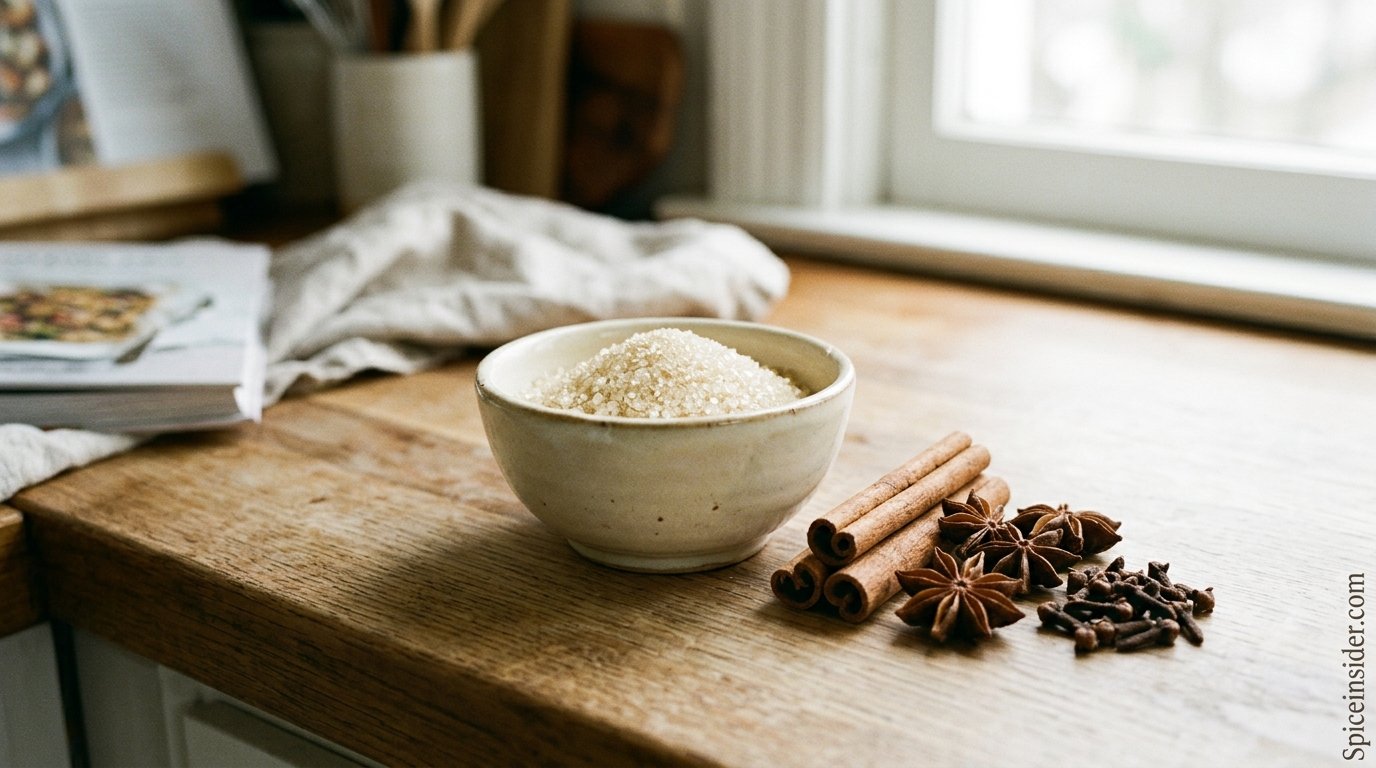
Whole cinnamon, cloves, and peppercorns show the category at its best.
What Sugar Really Is (and Where It Comes From)
Table sugar is sucrose, a simple carbohydrate made of one glucose unit joined to one fructose unit. It occurs naturally in many plants, but two crops supply most of the world’s commercial sugar: sugarcane, a tall tropical grass, and sugar beets, a temperate root crop. In both cases, the plant is crushed or sliced, the sweet juice is extracted, and that juice is cleaned, concentrated, and crystallized until only sugar crystals remain.
That process is the key to the whole question. A spice is valued because it keeps the flavor compounds that come with the plant. Sugar is valued because the manufacturing process removes almost everything except sucrose. What starts as green cane juice, full of minerals, plant compounds, and color, ends as clean white crystals with a neutral, purely sweet taste. Refined sugar is essentially one pure chemical compound, and the plant has been left behind.
Sugar is a nutrient, not a seasoning
Sucrose supplies roughly four calories per gram. When you add a tablespoon of sugar to a recipe, you are adding real energy to the dish, along with real bulk. Compare that to a pinch of paprika or a teaspoon of ground cumin, which contributes flavor while barely registering nutritionally. That contrast is exactly the distinction that regulators draw when they say a spice’s significant function is seasoning rather than nutrition.
Sugar has jobs that spices never do
Beyond sweetening, sugar does things in the kitchen that no spice can replicate. It feeds yeast in bread dough. It caramelizes into deep, toasty flavors at high heat. It helps meringues hold their structure, keeps baked goods tender by holding on to moisture, and preserves jams by lowering the water available to microbes. A spice adds character, but sugar changes chemistry.
None of this makes sugar lesser or greater than a spice. It just means the two belong in different categories, the same way flour, oil, and vinegar are all pantry staples that nobody would mistake for one another. If you keep both close at hand while cooking, you will notice quickly that they play very different roles in the same recipe.
Unrefined cane sugars keep more of their natural color and character.
Spice vs. Sugar vs. Herb vs. Seasoning: A Side-by-Side Comparison
Part of the confusion comes from the fact that kitchen vocabulary is loose. People use the words spice, seasoning, herb, condiment, and sweetener almost interchangeably in conversation, even though each one means something a little different. Sorting them out makes the sugar question much easier.
A herb is generally the leafy, green part of a plant, such as basil, parsley, or mint. A spice is usually everything else that is aromatic: seeds, bark, roots, buds, and fruits. A seasoning is a broader word for anything added to boost flavor, which can include spices, herbs, salt, and blends. A condiment is typically something added at the table, like mustard or hot sauce. A sweetener is anything used mainly to make food taste sweet, and that is where sugar lives.
| Feature | Spice | Sugar | Herb | Salt |
|---|---|---|---|---|
| Origin | Plant part (bark, seed, root, bud, fruit) | Juice of sugarcane or sugar beet, refined | Leaves of a plant | Mineral |
| Main purpose | Aroma and flavor | Sweetness, texture, browning | Fresh, green flavor | Salty taste, flavor enhancement |
| Aromatic oils | Yes, essential to its identity | No | Yes | No |
| Nutritional role | Minimal at normal amounts | Supplies calories | Minimal | Supplies sodium |
| Typical amount used | Pinches to teaspoons | Teaspoons to cups | Teaspoons to handfuls | Pinches to teaspoons |
| Counts as a spice? | Yes | No | Usually classed separately | No |
So where does sugar land?
Sugar is best described as a sweetener and a bulk ingredient. In everyday cooking language you can also call it a seasoning if you are using a pinch to balance acidity in tomato sauce, because in that case you are adjusting flavor. But being used as a seasoning in a particular moment does not make an ingredient a spice, just as using lemon juice to season a fish does not turn a lemon into a spice.
This is a helpful way to think about many borderline ingredients. Ask what the ingredient is, and then ask how you are using it. Vanilla is a spice however you use it, because it is a plant product with a signature aroma. Sugar is a sweetener however you use it, because it is a purified carbohydrate with a single dominant trait.
Why the vocabulary matters
Getting the categories right is not just trivia. It helps when you are reading a label, planning a pantry, following a recipe that asks for a certain amount of seasoning, or teaching a child how ingredients work. It also keeps you from making cooking mistakes, like measuring sugar by the pinch in a recipe that needs a precise amount, or treating a spice blend like a sweetener when it contains no sugar at all.
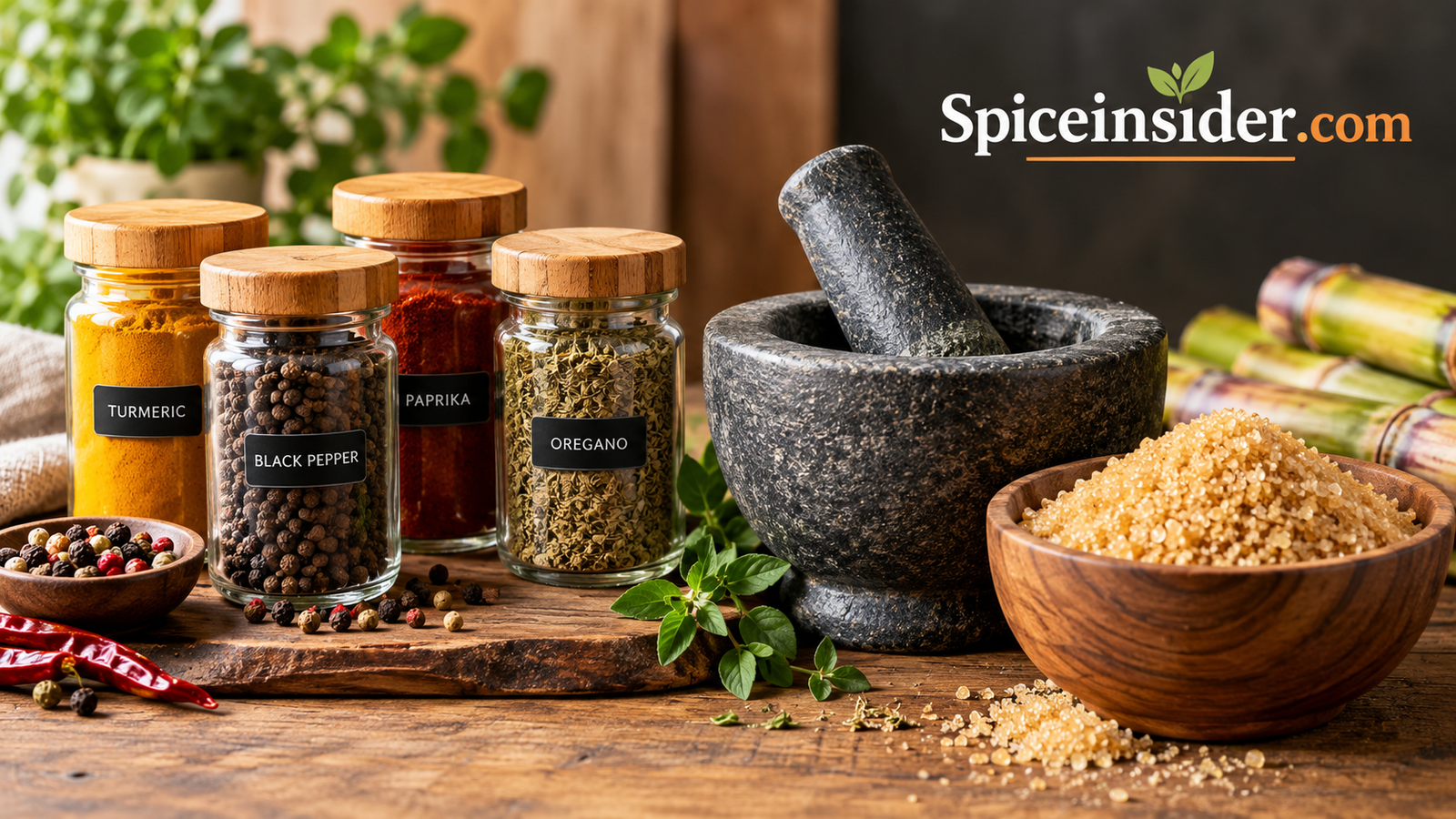
Labeled containers make it easy to tell spices, herbs, and sweeteners apart.
Why So Many People Assume Sugar Is a Spice
If the definitions are so clear, why does the question keep coming up? Several everyday habits and a bit of history all push in the same direction.
Sugar lives next to spices
In most grocery stores, sugar sits in the baking aisle right beside vanilla, cinnamon, and food coloring. At home, sugar often shares a cabinet with the spice jars. Physical proximity is a powerful teacher, and when two items always appear together, we quietly assume they belong together.
Recipes group them together
Ingredient lists in recipes often read like a single flavor group: flour, butter, eggs, then sugar, cinnamon, nutmeg, and salt. Many cooks mentally bundle everything that is not a main ingredient into a category called flavorings, and sugar tags along with the spices in that mental bundle.
Spice blends can contain sugar
Some commercial blends, like barbecue rubs and certain jerk seasonings, contain sugar, and brown sugar is a common ingredient in steak rubs. That makes sugar feel like an official member of the family. Other blends surprise people in the opposite way. For example, if you look into what is in pumpkin pie spice, you will find it is a mix of warm spices such as cinnamon, ginger, nutmeg, and cloves, with no sugar in it at all, even though it is used in sweet desserts.
Sweetness is not exclusive to sugar
Cinnamon, vanilla, and allspice taste sweet to most people even though they contain almost no sugar. The mind links sweetness with dessert and dessert with spices, so it becomes easy to merge the two ideas. A blend like Chinese five spice shows how spices can create the impression of sweetness through star anise and cinnamon, while the actual sweetener, if any, is added separately.
The word spice itself is fuzzy
Finally, in casual talk the word spice sometimes stands for anything that adds interest, as in the phrase spice up your life. That everyday metaphor stretches the word far beyond its culinary meaning, which makes it feel natural to apply it to any ingredient that seems to add something extra to a dish.
Warm spice mixes prove that dessert flavor does not require sweetener.
When Sugar Really Was Sold as a Spice
Here is where the story gets interesting, because the confusion is not entirely modern. In medieval Europe, sugar was a costly import that arrived through the same trade networks that carried pepper, ginger, cloves, and cinnamon. It was sold by the same merchants and stocked by the same apothecaries. In many historical records, sugar is listed right alongside spices, because to the people buying it, there was no practical difference.
Sugar was rare, precious, and fragrant in the marketplace sense, meaning it was exotic and expensive. Wealthy households used it sparingly, often as a flavoring in meat dishes and sauces, not as the main ingredient in dessert. Cooks of that era commonly combined sugar with spices in the same dish, which reinforced the idea that they were cousins. Sugar was even used as a medicine and as a display of status, sculpted into elaborate table decorations for feasts.
The trade that shaped the modern pantry
The spice trade shaped world history, from exploration routes to empires. Sugar joined that story and eventually became one of the most consequential commodities of all. As cultivation spread and production scaled up, sugar became cheaper and moved out of the luxury category. Over time it went from a rare treat sold by spice merchants to an everyday staple sold by the bag.
Spices took a different path. Some of them, like saffron, remained expensive because they are still harvested and processed largely by hand. If you are curious about how modern luxury spices compare, look at the best saffron brands, where you can see what a truly precious spice costs today. It also helps to know how to tell if saffron is real, because high prices have always invited imitation.
What the history really tells us
The historical link explains why people once treated sugar like a spice, but history does not decide the modern definition. Trade categories are about how goods are bought and sold, while culinary and regulatory categories are about what a substance is and how it works in food. Sugar left the spice trade long ago, and its identity today is firmly that of a sweetener.
Explore saffron threads and other premium spices.
Sweet Spices That Taste Like Dessert Without Being Sugar
Some of the strongest evidence that sugar and spice are different lies in a group of ingredients that taste sweet without sweetening anything in the chemical sense. These spices trigger your sense of sweetness through aroma. Your brain combines what you smell with what you taste, so a warm, fragrant spice can make a dish seem sweeter even when the sugar content has not changed.
Cinnamon
Cinnamon is the classic example. It is the inner bark of certain trees, and its aroma is strongly associated with baked goods. If you bake often, it helps to know which type you are buying. Our guide to the best cinnamon for baking covers the options, and the breakdown of Ceylon versus cassia cinnamon explains why one is delicate and citrusy while the other is bold and spicy.
Vanilla
Vanilla is famous for tasting sweet without containing much sugar itself. A vanilla pod contains hundreds of aroma compounds, and one of them, vanillin, is what we recognize as vanilla flavor. If you want to explore quality options, see the best vanilla bean brands, and if you are unsure which form to use, compare vanilla extract versus vanilla bean paste.
Nutmeg, cardamom, allspice, and star anise
Nutmeg brings a warm, slightly sweet aroma that shines in custards, eggnog, and cream sauces, and buying it whole and grating it fresh makes a noticeable difference. See the best whole nutmeg if you want to try it. Cardamom offers floral, citrus, and mint notes. Allspice tastes like a mix of cinnamon, nutmeg, and cloves. Star anise and fennel carry a gentle licorice sweetness.
| Sweet-tasting spice | Plant part | Flavor impression | Best in |
|---|---|---|---|
| Cinnamon | Inner bark | Warm, woody, sweet | Baking, oatmeal, curries |
| Vanilla | Cured seed pod | Creamy, floral, sweet | Custards, cakes, drinks |
| Nutmeg | Seed | Warm, nutty, faintly sweet | Cream sauces, pies |
| Cardamom | Seed pod | Floral, citrusy, cool | Pastries, chai, rice dishes |
| Star anise | Fruit | Licorice-like sweetness | Braises, broths, poached fruit |
| Allspice | Dried berry | Clove, cinnamon, and nutmeg notes | Jerk marinades, spiced cakes |
Using aroma to cut back on sugar
Because these spices influence how sweet a food seems, cooks often use them to make a recipe taste rich without adding more sweetener. A pinch of cinnamon in coffee, a scraped vanilla bean in yogurt, or nutmeg over baked apples can raise the perception of sweetness. This is a good example of the difference between the two ingredients. Spices shape perception, while sugar supplies the actual sweetness.
Vanilla beans, cinnamon sticks, and whole nutmeg keep their aroma longest.
The Many Kinds of Sugar and How They Differ
Part of the reason sugar feels like it might be a spice is that it comes in so many forms, each with its own color, flavor, and personality. Some of them, like jaggery and coconut sugar, keep hints of their source plant and taste a little more complex than plain white sugar. That complexity sometimes gets described in spice-like language, such as warm, toasty, or smoky. But none of these forms changes the underlying category. Every one of them is still a sweetener made mostly of sugar.
| Type | Source | Flavor | Common use |
|---|---|---|---|
| White granulated sugar | Sugarcane or sugar beet | Clean, neutral sweetness | Baking, drinks, general cooking |
| Brown sugar | Refined sugar with molasses | Caramel and molasses notes | Cookies, glazes, barbecue rubs |
| Turbinado or raw cane sugar | Partially refined cane juice | Light molasses, larger crystals | Topping baked goods, tea, coffee |
| Powdered sugar | Finely ground white sugar, often with a little starch | Neutral, dissolves quickly | Frosting, dusting, glazes |
| Jaggery | Boiled-down cane juice or palm sap | Deep, earthy, caramel-like | Indian sweets, curries, chai |
| Palm sugar | Sap of palm trees | Butterscotch and smoky notes | Southeast Asian curries, desserts |
| Coconut sugar | Sap of coconut palm blossoms | Mild caramel | Baking, sweetening drinks |
| Maple sugar | Boiled-down maple sap | Rich, woody, distinct | Toppings, candies, baking |
Unrefined does not mean spice
Jaggery, palm sugar, and raw cane sugars retain some of the plant compounds from their source, which is why they taste more interesting than white sugar. Still, these compounds are byproducts of sweetener production, not the point of the ingredient. You buy jaggery to sweeten a dish with character, not to season it in the way you would use cardamom or cumin.
Brown sugar and the spice rack
Brown sugar deserves a special mention because it is so often paired with spices. Its molasses content gives it a deeper flavor that matches beautifully with cinnamon, ginger, and cloves. That pairing is why gingerbread, spice cake, and barbecue rubs so often call for brown sugar. The two work as partners, and it is their difference that makes the partnership useful. The spice supplies aroma, the sugar supplies sweetness and moisture.
Choosing the right sugar for the job
If you are baking, the type of sugar changes texture and moisture, so follow the recipe closely. If you are sweetening drinks or sprinkling toppings, raw and coarse sugars add crunch and flavor. In savory cooking, jaggery and palm sugar can round out sour and spicy flavors in a way white sugar cannot quite match. Keeping two or three types on hand covers most kitchen needs.
Jaggery and palm sugar bring caramel depth to savory and sweet dishes.
How Sugar and Spices Work Together in Cooking
Even though sugar is not a spice, the two are natural teammates. Chefs and home cooks have been pairing them for centuries because each one fills a gap the other leaves open. Spice brings aroma, depth, and heat. Sugar brings sweetness, balance, and browning. Together, they create rounded flavors that neither could manage alone.
Balancing heat and acid
A small amount of sugar can soften the sharp edges of chili heat, vinegar, or tomato acidity. That is why many tomato sauces, curries, and hot sauces include a pinch of sugar. It does not make the dish sweet. It simply rounds the flavor so the spices come through more clearly. If you cook a lot of Indian dishes, a coarse, freshly ground blend paired with a touch of jaggery is a classic technique, and the right tools help. Our guide to the best grinder for Indian spices can help you choose one.
Building color and crust
Sugar caramelizes and helps foods brown, which is why it appears in so many spice rubs for meat. Pair it with a smoky, colorful spice such as smoked paprika and you get a deep, mahogany crust. Turmeric adds a bright golden hue and a gentle earthy bitterness that a touch of sugar can soften, and you can browse the best turmeric powder to find a fresh, vibrant one.
Toasting before you sweeten
Toasting whole spices in a dry pan before grinding them intensifies their aroma and adds a nutty, roasted note that pairs well with sugar in both sweet and savory recipes. If you are new to the technique, learn how to toast spices before grinding so you can do it without scorching them. Just remember that sugar burns quickly, so add it after the spices have been toasted, not before.
Benefits of pairing sugar with spices
- Softens harsh heat and sharp acidity
- Helps rubs and glazes brown and caramelize
- Rounds out bitter or earthy spices like turmeric and cumin
- Makes sweet spices like cinnamon and cardamom taste even richer
- Adds moisture and body to baked goods
Watch out for
- Too much sugar can mask delicate spices like saffron
- Sugar burns quickly on high heat, especially in dry rubs
- Sweet-heavy blends can taste flat without enough acid or salt
- Added sugar increases calories and may not suit every diet
A simple rule of thumb
Start with a small pinch of sugar, taste, and adjust. In savory dishes, you rarely want to actually taste the sweetness. If you can, the dish probably needs less. In desserts, the reverse is true, and spices are there to make the sweetness taste more interesting. Treat them as two separate tools and you will always know which one to reach for.
Smoked paprika and turmeric pair beautifully with a touch of sweetness.
Sugar Inside Spice Blends, Rubs, and Store-Bought Mixes
One of the most practical reasons to understand the difference between spices and sugar is reading labels. Not every jar labeled as a seasoning is pure spice. Many blends include sugar, salt, starches, anti-caking agents, and flavorings alongside the actual spices, and the balance varies widely from brand to brand.
Where sugar tends to hide
Barbecue rubs are the most common example, and many are built around brown sugar with a supporting cast of paprika, garlic powder, and pepper. Some jerk seasonings, teriyaki blends, taco seasonings, and chili mixes include sugar too. Spiced drink mixes, like chai powders and pumpkin latte blends, can be mostly sugar with only a little spice for flavor.
By contrast, classic dessert spice blends may contain no sugar at all. As mentioned earlier, pumpkin pie spice is normally just warm spices. Garam masala, Chinese five spice, and apple pie spice are also typically pure spice blends. The name of a blend tells you what it is meant for, not what is inside it.
How to read a blend label
- Check the order. Ingredients are listed from greatest to least by weight, so sugar near the top means it is a major component.
- Look for alternate names. Sugar may appear as brown sugar, cane sugar, dextrose, maltodextrin, or evaporated cane juice.
- Compare with a single spice. A single-ingredient jar of cinnamon should list only cinnamon.
- Watch serving size. A small serving can hide a meaningful amount of sugar when you use a generous spoonful.
- Consider making your own. Homemade blends let you control exactly how much sweetener goes in.
Why pure spices are different
A truly pure spice contains only the ground plant. That is why quality-minded cooks often prefer to buy whole spices and grind them fresh, and why comparing grinding whole spices versus pre-ground is worth your time. Freshly ground spices have more aroma and let you control what goes into every blend, including whether sugar is part of it.
Making a sweet-and-spicy rub at home
A basic homemade rub might combine equal parts brown sugar and smoked paprika, along with smaller amounts of salt, black pepper, garlic powder, and a pinch of cayenne. Because you are mixing it yourself, you can tune the ratio to taste. Use more sugar for a sticky, caramelized crust on ribs, or less for a savory rub on chicken. Store it in an airtight jar, and stir it before each use, because brown sugar can clump over time.
Small jars and mixing tools make homemade rubs easy.
Where Sugar Belongs in Your Spice Kitchen: Grinding, Storing, and Organizing
Even though sugar is not a spice, it still has to live somewhere in your kitchen, and that somewhere is usually near your spices. The good news is that a few smart habits keep both categories working well together without cross-contamination of flavors or moisture problems.
Storing sugar and spices separately
Sugar is hygroscopic, which means it attracts moisture and can harden into a rock if left open. Spices, on the other hand, lose aroma when exposed to air, heat, and light. Both do best in airtight containers stored in a cool, dark cabinet, but they should not share the same jar or even the same lid. Keep sugar in a sealed canister and your spices in small labeled jars.
A well-planned setup makes it easy to find what you need. Our guides on the best spice organizers and how to organize spices in your kitchen can help you find a layout that works. Clear labeling prevents mistakes, so learn how to label spice jars, and if you buy in volume, read up on how to store bulk spices so they stay fresh.
Can you grind sugar in a spice grinder?
Many cooks wonder whether a spice grinder can make powdered sugar or superfine sugar for cocktails and meringues. In general, yes, a small grinder can turn granulated sugar into a finer powder for quick jobs. Grind it in short pulses, since prolonged running can heat the sugar and make it clump. Because sugar leaves a sweet residue and strong spices leave behind their own aromas, use a grinder that you can clean well, and follow our guide on how to clean a spice grinder afterward. If odors linger, our tips on spice grinder odor removal can help.
If you are buying a grinder for the first time, our roundup of the best spice grinder is a good starting point, and how to use a spice grinder covers the basics. Choosing between designs is easier once you understand blade versus burr grinders for spices. For a traditional approach with excellent control, consider the best mortar and pestle.
Fixing common grinding problems
If your results are uneven, our article on why a spice grinder leaves chunks explains what is happening, and if the texture never gets fine enough, see what to do when your spice grinder is not fine enough.
Pantry setup checklist
- Keep sugar in a sealed canister, away from steam and moisture.
- Store spices in small airtight jars, away from the stove and sunlight.
- Label everything with the name and the date you opened it.
- Use a dedicated grinder or clean thoroughly between sweet and savory jobs.
- Add a food-safe moisture-control accessory if your sugar clumps in humid weather.
Grinders, organizers, and mortar and pestle sets in one place.
Common Myths, Label Tricks, and Quick Rules of Thumb
Before we wrap up, here are the most common misunderstandings about sugar and spices, along with quick rules you can use whenever the topic comes up.
Myth: If it sweetens food, it is a spice
Sweetness alone does not make something a spice. Honey, maple syrup, and fruit juice all sweeten food, and none of them are spices. The defining trait of a spice is aromatic plant material used for seasoning, not the ability to make food taste sweet.
Myth: Sweet-tasting spices contain sugar
Cinnamon, vanilla, and cardamom taste sweet because of aroma compounds, not because they are loaded with sugar. A teaspoon of cinnamon adds very little sweetener to a dish. That is why it is a favorite trick for making foods feel indulgent without adding much sugar.
Myth: Brown sugar is a spice because it has molasses flavor
Brown sugar gets its flavor from molasses, which is a byproduct of sugar refining, not from a spice. It is still a sweetener, just one with more character than white sugar.
Myth: Spice blends are always sugar-free
Some are, but many are not. Barbecue rubs, taco mixes, and drink powders often contain plenty of sugar, so check the ingredient list if you are watching your intake or need to control sweetness.
Myth: Storing sugar with spices is harmless
They can share a cabinet, but not a container. Sugar attracts moisture and can absorb strong smells, while spices release aromas that can leak into open containers. Separate airtight storage protects both.
Quick rules of thumb
- If it is a dried plant part valued for aroma, it is a spice.
- If it is a refined crystal or syrup valued for sweetness, it is a sweetener.
- If it is a leafy green plant, it is a herb.
- If it is a mineral, like salt, it is a seasoning but not a spice.
- If a jar says seasoning blend, read the label before assuming it is sugar-free.
- Grind spices fresh whenever you can, and keep grinder use tidy with our spice grinder dos and don’ts.
One more practical note on cleanup: sugar residue in a grinder can cake up, so it helps to know whether you can rinse the parts. Our article on whether you can wash a spice grinder answers that question and explains which models tolerate water.
Airtight canisters and cleaning brushes make upkeep simple.
Frequently Asked Questions About Sugar and Spices
Is sugar a spice or a seasoning?
Sugar is not a spice. It can act as a seasoning when you use a small pinch to balance flavors, but in the technical sense it is a sweetener. Spices are aromatic plant parts used mainly for flavor and aroma, while sugar is a refined carbohydrate used mainly for sweetness.
Why do some people think sugar is a spice?
It comes down to habit and history. Sugar sits beside spices in stores and pantries, appears next to them in recipes, and was once sold by spice merchants. Many spice blends also include sugar, which strengthens the impression that the two belong together.
What is the official definition of a spice?
Regulatory and industry definitions describe spices as aromatic plant substances, sold whole or ground, whose main role in food is seasoning rather than nutrition. The flavor-carrying components must remain intact. Sugar does not meet that description because it is refined to nearly pure sucrose and supplies calories.
Is brown sugar a spice?
No. Brown sugar is white sugar combined with molasses, or a less refined sugar that keeps some molasses. Its deeper flavor makes it a great partner for spices like cinnamon and ginger, but it remains a sweetener.
Is cinnamon sugar a spice?
Cinnamon sugar is a mixture, not a single ingredient. The cinnamon in it is a spice, and the sugar is a sweetener. Together they make a popular topping for toast, baked goods, and snacks.
Are vanilla and cinnamon sweet because they contain sugar?
Not really. They taste sweet to most people because of their aroma compounds, which the brain links with dessert. They contain little sugar themselves, and that is why they are handy for making foods seem richer without adding much sweetener.
Is salt a spice like sugar?
Neither salt nor sugar is a spice. Salt is a mineral and sugar is a refined plant sweetener. Both are seasoning-type pantry staples, but neither is an aromatic plant part.
Is sugar an herb?
No. Herbs are typically the leafy green parts of plants, like basil, mint, and parsley. Sugar is made from the juice of sugarcane or sugar beets, and it is refined into crystals.
Can I store sugar with my spices?
You can keep them in the same cabinet, but store them in separate airtight containers. Sugar attracts moisture and can absorb odors, while spices release strong aromas. Separate storage keeps both fresh and prevents flavor mixing.
Does adding sugar to a savory dish make it taste sweet?
Not if you use just a pinch. A small amount rounds out sharp acidity, bitterness, or heat without adding noticeable sweetness. If you can clearly taste the sweetness in a savory dish, you have probably added too much.
Do spice blends contain sugar?
Some do. Barbecue rubs, taco seasonings, and drink mixes often include sugar, while many classic blends, like pumpkin pie spice or garam masala, are pure spices. Always check the ingredient list to be sure.
Was sugar ever really considered a spice?
In medieval Europe, sugar was an expensive import sold by the same merchants who dealt in pepper, ginger, and cinnamon, so it was often treated like a spice in trade and cooking. As production grew and prices dropped, it became an everyday sweetener and left the spice category behind.
Conclusion: Sugar Is Sweet, Spices Are Aromatic, and Both Earn Their Place
So, is sugar a spice? The clear answer is no. Sugar is a refined sweetener made from sugarcane or sugar beets, valued for sweetness, structure, browning, and preservation. Spices are aromatic plant parts valued for the fragrance and flavor they bring in small amounts. The confusion is understandable, since the two share shelves, recipes, and a long trading history, but the definitions, the chemistry, and the kitchen roles all point to separate categories.
Understanding that difference makes you a more confident cook. You will read labels more carefully, balance flavors with more precision, store ingredients more sensibly, and know exactly which tool to reach for when a dish needs aroma, sweetness, or both. Treat them as teammates rather than twins, and your cooking will taste more balanced.
If you are ready to put that knowledge to use, start with a few great whole spices, a good grinder, and a tidy place to keep everything, then add the sugar that suits your recipes. Your pantry will be better organized, and your food will taste better for it.
Find spices, grinders, and storage that make every dish better.