What Is in Chinese Five Spice? The Complete Guide to the Blend, Its Flavor and How to Use It
Open a jar of Chinese five spice and the first thing you notice is the perfume: warm, sweet, faintly medicinal, with a licorice-like edge. This guide explains exactly what goes into it, why those spices work together, how to make your own, and how to cook with it without overpowering your food.
The Quick Answer: What Are the Five Spices?
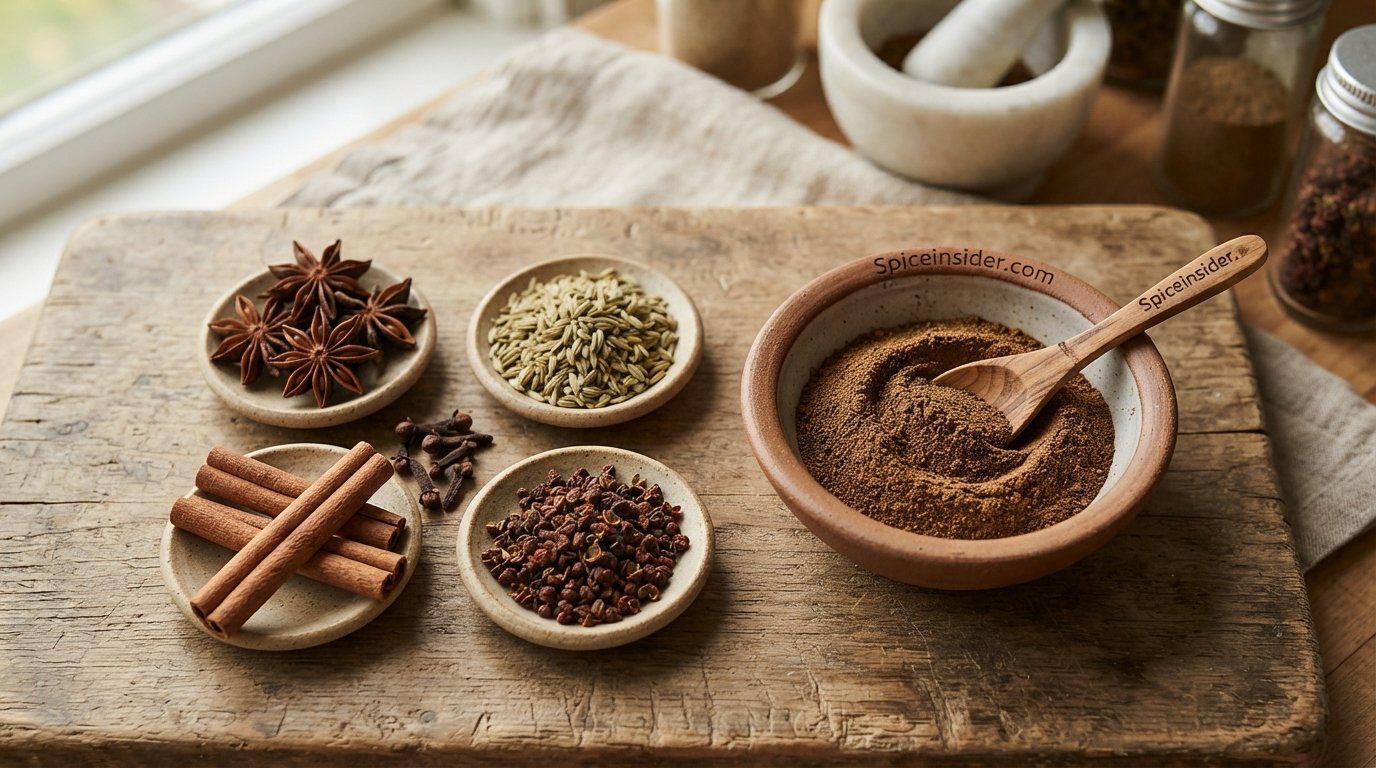
Traditional Chinese five spice powder is built on five ingredients: star anise, cloves, Chinese cinnamon (cassia), Sichuan peppercorns and fennel seeds. Together they cover sweet, warm, numbing, pungent and aromatic notes in a single spoonful, which is why the blend has such a distinctive, layered character.
| Spice | Main Flavor Role | Typical Share |
|---|---|---|
| Star anise | Sweet, licorice-like backbone | Largest part |
| Cassia cinnamon | Warm, sweet, slightly spicy | Large |
| Sichuan peppercorns | Citrusy, tingling, numbing | Medium |
| Fennel seeds | Soft anise sweetness | Medium |
| Cloves | Deep, pungent, medicinal warmth | Smallest (strong) |
Some commercial versions add ginger, licorice root, white pepper or dried orange peel, so the number “five” describes a concept as much as a strict recipe. If you love grinding spices fresh, our guide to grinding whole spices vs. pre-ground explains why whole-spice blends taste so much brighter.
Why These Five Work Together
Think of the blend as a small orchestra. Star anise and fennel carry the melody with their sweet anise note, cassia supplies the rhythm section of warm sweetness, cloves add a low, resinous bass, and Sichuan pepper plays the surprising high note that makes your lips hum. Remove any one and the balance tips: without cloves the mix feels flat, without Sichuan pepper it turns into a sweet dessert blend, and without star anise it loses its signature character.
This is also why the powder is so efficient. A quarter teaspoon can season a whole tray of vegetables because every spice contributes something different, so you are not relying on any single flavor to do all the work. Cooks in southern China have long treated it as a shortcut to complexity, especially for meats that need hours of slow cooking to develop depth.
What It Is Not
Five spice is not a curry powder, it contains no chili, and it is not the same as the “spice cake” mixes in the baking aisle. It is savory first and sweet second, which is the reverse of most Western warm-spice blends.
Shop Chinese five spice powder on Amazon
Check Prices on AmazonStar Anise: The Backbone of the Blend
Star anise is the dried, star-shaped fruit of an evergreen tree native to southern China and Vietnam. Its flavor comes mostly from anethole, the same compound found in fennel and anise seed, giving it a sweet, licorice-forward taste with a slight numbing warmth.
In five spice, star anise is usually the dominant player. Good pods are reddish-brown, whole and fragrant; broken, pale or dusty pods lose aroma quickly. The seeds inside are tasty, but the hard outer points hold much of the flavor, so grind the whole pod.
Choosing and Handling Star Anise
Fresh star anise smells sweet and almost candy-like the moment you open the bag. If the aroma is faint or dusty, the pods are old. Whole pods keep well for a year or longer in a sealed jar, while ground star anise fades within months, which is one of the strongest arguments for grinding your own blend.
Because the pods are hard and woody, break them into pieces before grinding and give them extra time in the grinder. Sift the powder afterward and re-grind any coarse bits. A quick dry toast, just until you smell the sweetness intensify, deepens the flavor without burning the delicate oils.
Star Anise Beyond Five Spice
Whole pods are stars of their own in Vietnamese pho broth, Chinese master stocks, mulled wine and poaching syrups for fruit. Drop one or two pods into a braise and remove them before serving. Just be careful to buy true Chinese star anise, since the toxic Japanese variety, which looks similar, is not sold as food. Reputable suppliers make this distinction easy.
Find whole star anise pods
See Star Anise on AmazonChinese Cinnamon (Cassia): Warmth and Sweetness
The cinnamon in five spice is almost always cassia, sometimes sold as Chinese cinnamon. It is bolder, spicier and less delicate than true Ceylon cinnamon, which is why it stands up to star anise and cloves. Cassia bark is thick and hard, and it brings the rounded, sweet-hot warmth you taste first.
Curious about the difference? Read our comparison of Ceylon vs. cassia cinnamon. For baked goods you may prefer a gentler bark, and our picks for the best cinnamon for baking cover that side of the shelf.
- Look for: thick, dark, hard sticks or high-quality cassia powder.
- Avoid: faded, flat-smelling powder that has sat for months.
Why Cassia and Not Ceylon?
Ceylon cinnamon is floral and delicate, which is lovely in pastries but tends to vanish beside star anise and cloves. Cassia has more cinnamaldehyde, the compound behind that bold, fiery cinnamon taste, so it holds its ground in a hearty braise or roast. Chinese cooks have used cassia for thousands of years, and it remains the traditional choice.
Forms and Grinding Tips
Cassia comes as thick quills or flat pieces of bark, and both are tougher than most people expect. Break sticks into small shards with a heavy knife or your mortar before they go in the grinder, otherwise they can jam the blades. Pre-ground cassia is convenient, but check its color: a rich reddish brown suggests better quality than a pale tan powder.
In your blend, cassia should be the second-largest part after star anise. If your mix tastes harsh or too woody, reduce it slightly. If it tastes thin, add a little more.
A Note on Coumarin
Cassia contains coumarin, which in large, regular doses may stress the liver. The amounts in a pinch of five spice are very small, so it is not a concern for normal cooking, but people who eat a lot of cinnamon daily may prefer to vary their sources.
Browse cassia cinnamon sticks
Shop Cassia on AmazonSichuan Peppercorns: The Tingle Factor
Sichuan peppercorns are not true peppercorns and are not hot like chili. They are the husks of a citrus-family shrub and deliver a lemony, floral fragrance followed by a buzzing, numbing sensation known as ma. This is the ingredient that makes Chinese five spice feel different from any Western warm-spice blend.
Use only the husks; the black seeds are gritty and bitter. Toasting them briefly in a dry pan wakes up the aroma, and our guide on how to toast spices before grinding walks through the technique. Note that some blends sold in certain regions substitute black pepper, so check the label.
Understanding the Numbing Sensation
The tingling comes from a compound called hydroxy-alpha-sanshool, which stimulates touch receptors around the mouth. It is not pain and not heat, but a light electric buzz, a bit like the fizz of sparkling water on your lips. Many first-timers find it strange, then addictive. In five spice it is deliberately subtle, giving a faint lift rather than the full numbing effect you get in a mapo tofu.
Buying Quality Peppercorns
Look for bright red-to-reddish-brown husks with few black seeds and a strong citrus fragrance. Dull, brownish, stale-smelling peppercorns will make a flat blend. Green Sichuan peppercorns are more citrusy and floral, and can be used if you like a brighter mix.
Preparing Them
Pick out any twigs and black seeds, then toast the husks gently for a minute or so. Cool them before grinding, and sift the powder through a fine strainer because the husks leave stubborn bits. Store the finished blend away from heat, since the volatile oils that create the tingle fade faster than the other spices.
If you cannot find them, white pepper plus a pinch of dried orange or lemon zest gives a rough approximation of the citrusy pungency, though not the tingle.
Get fresh Sichuan peppercorns
Shop Sichuan PeppercornsCloves and Fennel Seed: Depth and Balance
Cloves
Cloves are dried flower buds packed with eugenol, a pungent, almost numbing compound. They are the smallest part of the blend because a little goes a long way; too many and the mix tastes like a dentist’s office. Their job is to add deep, resinous warmth.
Fennel Seed
Fennel seed is gentler than star anise, with a green, sweet, slightly grassy character. It smooths the sharper edges of clove and Sichuan pepper and rounds out the licorice note. Some cooks swap in extra star anise, but fennel adds a softer, more complex sweetness.
Getting the Clove Ratio Right
The most common mistake in homemade five spice is too many cloves. Because eugenol is so strong, a teaspoon of cloves can dominate a whole tablespoon of everything else. If you are new to blending, start with even less than the recipe suggests and taste a small pinch of the ground mix on a warm piece of bread or in a spoon of hot oil. You want to notice the clove as a background warmth, not as the first flavor.
Pick plump, oily, reddish-brown cloves with the small round head intact. Cloves with pale, shriveled heads have lost much of their oil.
Fennel: The Peacemaker
Fennel seed bridges the gap between the sharp spices and the sweet ones. Choose green-tinged, aromatic seeds rather than dry brown ones. Toasting them for a moment brings out a nutty sweetness that pairs beautifully with pork and duck.
Fennel is also the easiest ingredient to adjust to your taste. If you dislike a strong licorice flavor, cut back both fennel and star anise and let cassia lead. If you love anise, increase the fennel slightly rather than the cloves.
Stock up on cloves and fennel seed
Shop on AmazonOrigins and the Five-Element Idea
The blend is tied to the Chinese philosophy of five elements and five flavors: sweet, sour, bitter, pungent and salty. The idea is that a dish balanced across all five tastes supports harmony in the body. Whether or not you follow the philosophy, the blend does hit a wide flavor range, with sweet and pungent notes up front and bitter, numbing and aromatic ones behind.
Historically, the powder was used for long-cooked meats, especially in southern and eastern Chinese kitchens, where slow braising and roasting suit its strong aromatics. From there it spread through Taiwanese, Vietnamese and Cantonese cooking and into Western pantries.
Five Flavors, Five Elements
In traditional Chinese thought, everything in the natural world corresponds to five elements: wood, fire, earth, metal and water. Each element is linked to a flavor: sour, bitter, sweet, pungent and salty. A dish that includes all five flavors is considered harmonious. Five spice powder is often described as an attempt to capture all of these in a single mix, although historians note that the exact spices vary by region and era.
From Chinese Kitchens to the World
As Chinese communities settled across Southeast Asia, Europe and the Americas, five spice traveled with them. It became a signature of Cantonese roast meats, Vietnamese braises and Taiwanese street food such as lu rou fan and fried chicken cutlets. Western cooks discovered it later, and today it appears in everything from barbecue rubs to caramel sauces and chocolate truffles.
A Shortcut Built on Tradition
Historically, cooks would toast and grind small batches at home or buy them from herbal shops, where the same spices doubled as traditional remedies. That link between kitchen and apothecary explains the blend’s slightly medicinal aroma and why it feels so different from purely culinary Western mixes.
Explore Chinese spice sets
See Spice Sets on AmazonWhat Does Chinese Five Spice Taste Like?
Expect sweet licorice first, then cinnamon warmth, a clove-like pungency, and a faint tingle on the tongue. It is aromatic rather than fiery. In small amounts it makes savory dishes taste rounder and more complex; in large amounts it tastes medicinal and bitter.
Pros
- Adds depth to meat quickly
- Works in rubs, braises and baking
- Long shelf life when kept whole
Cons
- Easy to overuse
- Licorice notes divide opinion
- Store-bought versions vary widely
A Taste Walkthrough
Take a tiny pinch on your tongue. The first impression is sweet and floral from the star anise and fennel. Next comes the toasty warmth of cassia, followed by a sharper, almost peppery bite from the cloves. Finally, a light tingle spreads across your lips from the Sichuan peppercorns. The whole experience lasts a few seconds, but it tells you exactly how the powder will behave in food.
How It Changes in Cooking
Heat mellows the sharp edges. In a long braise, the blend melts into the sauce, giving a background sweetness and aroma. In a dry rub on roasted meat, the surface spices toast and become deeper and slightly bitter, a good contrast to fatty cuts. Raw, or added at the end, it tastes brighter and more medicinal, so use it in tiny amounts.
Foods That Love It
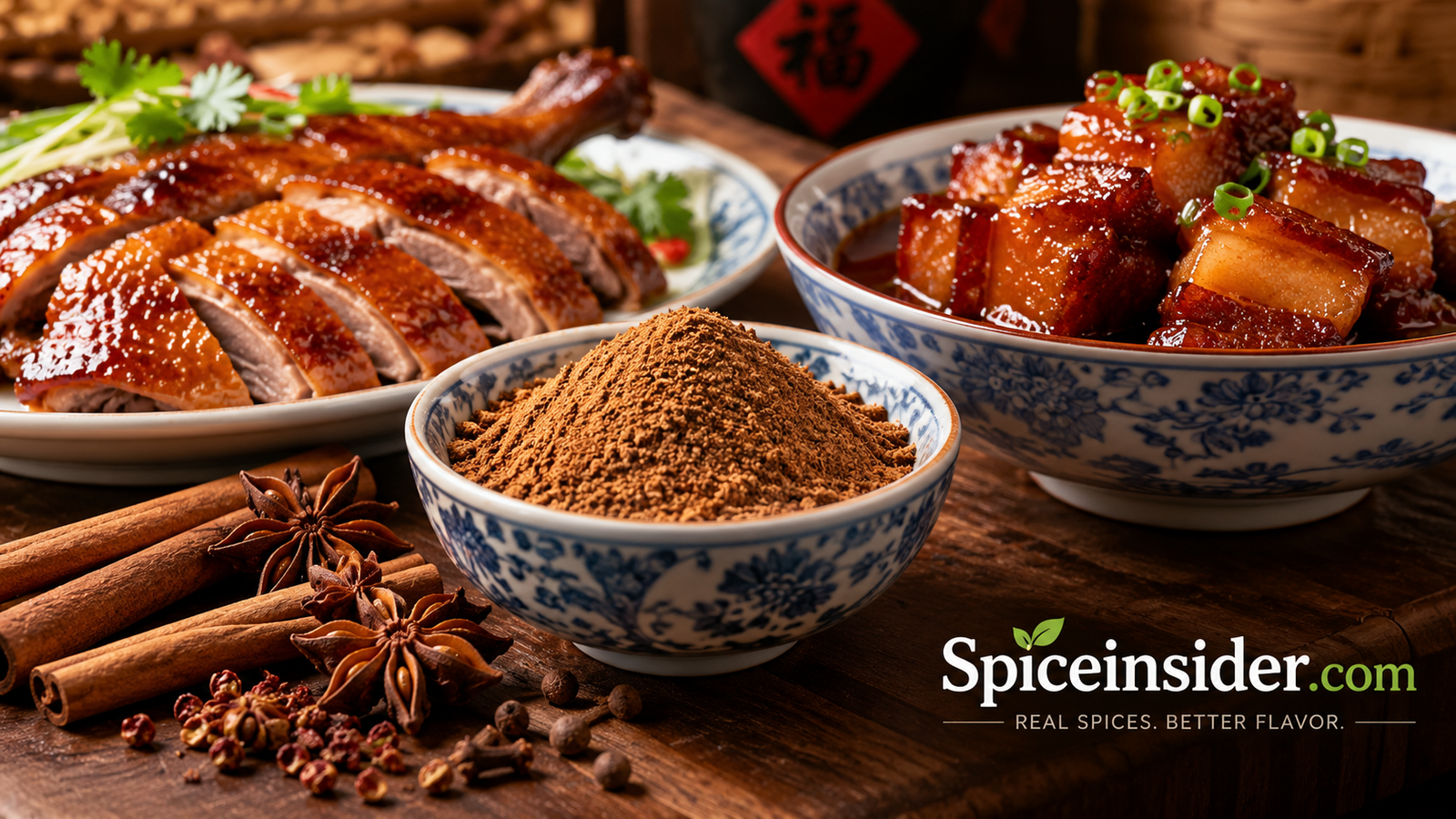
Fatty meats such as pork belly, duck and lamb are natural partners, because the fat carries the aromatic oils and tempers their intensity. Rich, sweet ingredients like hoisin, honey, brown sugar and soy sauce also pair well. Sweet root vegetables and squash, mushrooms and even chocolate can handle it if you keep the dose small.
Try a well-reviewed blend
Compare Blends on AmazonRegional and Brand Variations
There is no single official recipe. Cantonese versions lean sweeter; some Taiwanese blends add licorice root and white pepper; Western brands often replace Sichuan pepper with black pepper for milder heat.
| Version | Common Extras | Taste |
|---|---|---|
| Classic five | None | Balanced, tingly |
| Cantonese style | Dried tangerine peel | Sweeter, citrusy |
| Taiwanese style | White pepper, licorice | Mellow, herbal |
| Supermarket | Black pepper, ginger | Milder, less numbing |
If you cook a lot of regional cuisine, our roundup of the best grinder for Indian spices shows how similar whole-spice habits apply across cuisines.
Reading a Label
Because there is no legal standard, ingredient lists tell you more than the name on the front. A good jar lists whole spices in order of quantity, ideally starting with star anise or cassia. If black pepper or salt appears early, or if the list includes “spices” without naming them, you may be buying a cheaper, milder blend.
Finding Your Preferred Style
If you like bold, tingly flavors, choose a blend that includes Sichuan pepper. For a rounder, sweeter taste that pairs well with barbecue and baking, go for one with tangerine peel or licorice. If a recipe just says “five spice powder,” any well-balanced blend will work, but you may need to adjust the amount by taste.
Whole-Spice Sets and Pastes
Some shops sell whole five spice sets meant to be ground fresh, and these tend to be the most aromatic. You may also find five spice salt, a toasted mix of the spices with salt for dipping. Both are useful, but remember to reduce added salt in the recipe when using the latter.
Compare five spice brands
Browse BrandsMake Your Own Chinese Five Spice
Homemade is more fragrant than anything in a jar, and the recipe is easy to adjust.
- 5 whole star anise
- 1 tablespoon fennel seeds
- 1 tablespoon Sichuan peppercorns
- 1 teaspoon whole cloves
- 1 stick (about 3 inches) cassia cinnamon, broken up
- Toast everything in a dry pan over medium-low heat for 1 to 2 minutes until fragrant.
- Cool completely.
- Grind to a fine powder, then sift out large bits.
- Store in a sealed jar away from light.
Without a grinder, a mortar works well; see the best mortar and pestle options or learn how to grind spices without a grinder. If you prefer a hand tool, check the best manual spice grinder picks.
Tweaking the Recipe
The basic blend works for most cooks, but small adjustments let you customize it. For a sweeter mix, add a teaspoon of extra fennel and a strip of dried tangerine peel. For more warmth, add a little dried ginger. For a milder, more Western-friendly taste, cut the Sichuan pepper by half and add a pinch of white pepper.
Grinding Tips
Grind in short pulses, letting the machine rest so it does not heat the spices and cook off their oils. Tough pieces of cassia and star anise go in first, then the softer seeds. If your grinder has trouble, check our troubleshooting advice on spice grinders that do not break and keep it fresh with our guide to how to clean a spice grinder so the anise smell does not linger in your next batch of coffee or curry.
Making It Ahead
Homemade five spice tastes best in the first month or two. Make small batches, label the jar with the date, and keep a bag of the whole spices on hand to grind again when you run out. See our guide to how to label spice jars for a tidy system.
Get a grinder for your blend
Shop Spice GrindersHow to Cook With Chinese Five Spice
Start small: about half a teaspoon per pound of meat, then adjust. Bloom it in hot oil or mix it into a marinade so the flavors spread evenly.
- Roast duck and chicken: rub into the skin with salt before roasting.
- Red-braised pork: add with soy sauce, rock sugar and Shaoxing wine.
- Char siu: mix into the honey-hoisin marinade.
- Fried rice and noodles: a pinch at the end.
- Roasted vegetables: carrots, sweet potato and squash love it.
- Baking: a small pinch in gingerbread or apple desserts.
- Five spice salt: toast with sea salt for dipping fried chicken or tofu.
Step-by-Step: Simple Five Spice Roast Chicken
Mix one teaspoon of five spice with a teaspoon of salt, a teaspoon of sugar and a tablespoon of neutral oil. Rub it under and over the skin of a whole chicken or bone-in thighs, and let it rest in the fridge for at least an hour, ideally overnight. Roast at a high temperature until the skin is crisp and deeply browned. The sugar caramelizes, the spices toast, and the meat stays juicy.
Marinades and Sauces
Combine a half teaspoon of five spice with soy sauce, garlic, ginger, honey and a splash of rice wine for a quick marinade for pork, ribs or tofu. For a dipping sauce, stir a pinch into plum sauce or hoisin. It also works beautifully in a stir-fry sauce with mushrooms and beef.
Unexpected Uses
Try a pinch on roasted nuts, popcorn, caramel, roasted pumpkin, or in an apple crumble. Some bartenders infuse simple syrups with the whole spices for cocktails. When cooking sweet dishes, use about a quarter of what you would use in savory ones.
Stock your kitchen for Chinese cooking
Shop IngredientsFive Spice vs. Similar Blends
| Blend | Key Spices | Best For |
|---|---|---|
| Chinese five spice | Star anise, cassia, cloves, fennel, Sichuan pepper | Roasts, braises, marinades |
| Pumpkin pie spice | Cinnamon, ginger, nutmeg, cloves | Baking, lattes |
| Garam masala | Cumin, coriander, cardamom, pepper | Indian curries |
| Japanese shichimi | Chili, sansho, orange peel, sesame | Noodles, soups |
Many people confuse it with dessert blends. Our post on what is in pumpkin pie spice shows how different that mix is, and what is sumac spice covers another distinctive seasoning that often gets mixed up with blends. And yes, salt often arrives alongside these blends, so you may wonder is salt a spice.
Five Spice vs. Garam Masala
Both are complex, warming blends, but their spice profiles are worlds apart. Garam masala centers on cumin, coriander, cardamom and black pepper, giving an earthy, savory, slightly floral result. Five spice is sweeter and more anise-driven. Swapping them will noticeably change a dish.
Five Spice vs. Allspice
Allspice is a single berry that tastes like cinnamon, clove and nutmeg together. It can approximate part of five spice, but it lacks the anise and the tingle. It works as an emergency fix with a little fennel added.
When to Use Which
Use five spice for roasted poultry, pork and Chinese-style braises; garam masala for lentils, curries and rice dishes; pumpkin pie spice for baked goods and drinks; and shichimi for finishing noodles and soups. Keeping all four on hand gives you a global pantry with very little clutter.
Compare pantry blends
Explore BlendsBuying, Storing and Substitutes
Buy whole spices when possible and grind in small batches. Ground five spice keeps its best flavor for roughly six months, whole spices much longer. Keep it airtight, cool and dark. For bulk purchases, read how to store bulk spices, and keep jars tidy with the best spice organizers.
Substitutes
- Best swap: equal parts cinnamon, ground cloves and fennel with a pinch of black pepper.
- In a pinch: allspice plus a little anise or fennel.
- Quick option: pumpkin pie spice with a pinch of ground fennel (sweeter, less numbing).
Storing for Maximum Freshness
Heat, light, air and moisture are the enemies of aroma. Keep your five spice in an airtight glass or metal container, away from the stove and windows. Avoid storing it above the oven or dishwasher. If you buy in bulk, freeze a portion of the whole spices in a sealed bag and thaw only what you need.
How to Tell It Is Past Its Best
Rub a pinch between your fingers. If the smell is weak and dusty rather than sweet and pungent, replace it. Old five spice will not harm you, but it will make your food taste dull and tempt you to add too much.
Smart Buying
Small jars from a high-turnover shop, an Asian grocery or a trusted online seller are usually fresher than dusty supermarket jars. If you cook Chinese food only occasionally, buy whole spices and make small batches; if you use it weekly, a mid-size jar is fine. Whichever you choose, check the packing date when possible, and see our advice on storing bulk spices for longer-term storage tips.
Organize and protect your spices
Shop Spice JarsFrequently Asked Questions
What is in Chinese five spice?
Star anise, cloves, Chinese cinnamon (cassia), Sichuan peppercorns and fennel seeds. Some brands add ginger, licorice or white pepper.
Is Chinese five spice hot?
No. It is warm and aromatic rather than spicy. Sichuan pepper adds a tingle, not chili heat.
What does it taste like?
Sweet and licorice-like, with cinnamon warmth, a clove punch and a slightly numbing finish.
Is it the same as pumpkin pie spice?
No. Pumpkin pie spice uses cinnamon, ginger, nutmeg and cloves, without star anise or Sichuan pepper.
How much should I use?
About half a teaspoon per pound of meat, or a pinch for vegetables and rice. Increase slowly.
Can I make it without Sichuan peppercorns?
Yes. Use white or black pepper, though you will lose the tingling effect.
Is it gluten-free?
The pure spices are naturally gluten-free, but check labels for anti-caking agents or cross-contamination.
How long does it last?
Ground blends stay flavorful for about six months. Whole spices last a year or more if sealed properly.
Can I use it in desserts?
Yes, in small amounts. It works in gingerbread, poached pears, chocolate and apple dishes.
What is a good substitute?
Mix cinnamon, cloves, fennel and a pinch of pepper, or use allspice with a little anise.
Is star anise the same as anise seed?
No, they come from different plants, though both contain anethole, which gives the licorice flavor.
Should I toast the spices?
Yes, if using whole spices. Toasting boosts aroma and improves flavor.
Conclusion: A Small Blend With Big Personality
Chinese five spice is built from star anise, cassia cinnamon, Sichuan peppercorns, fennel and cloves, each doing a distinct job. Use it sparingly, buy it fresh or make it yourself, and it will lift roasts, braises and even desserts. Ready to try it? Grab a quality jar or the whole spices and start with a simple roast chicken rub tonight.
Ready to cook with five spice?
Shop Chinese Five Spice