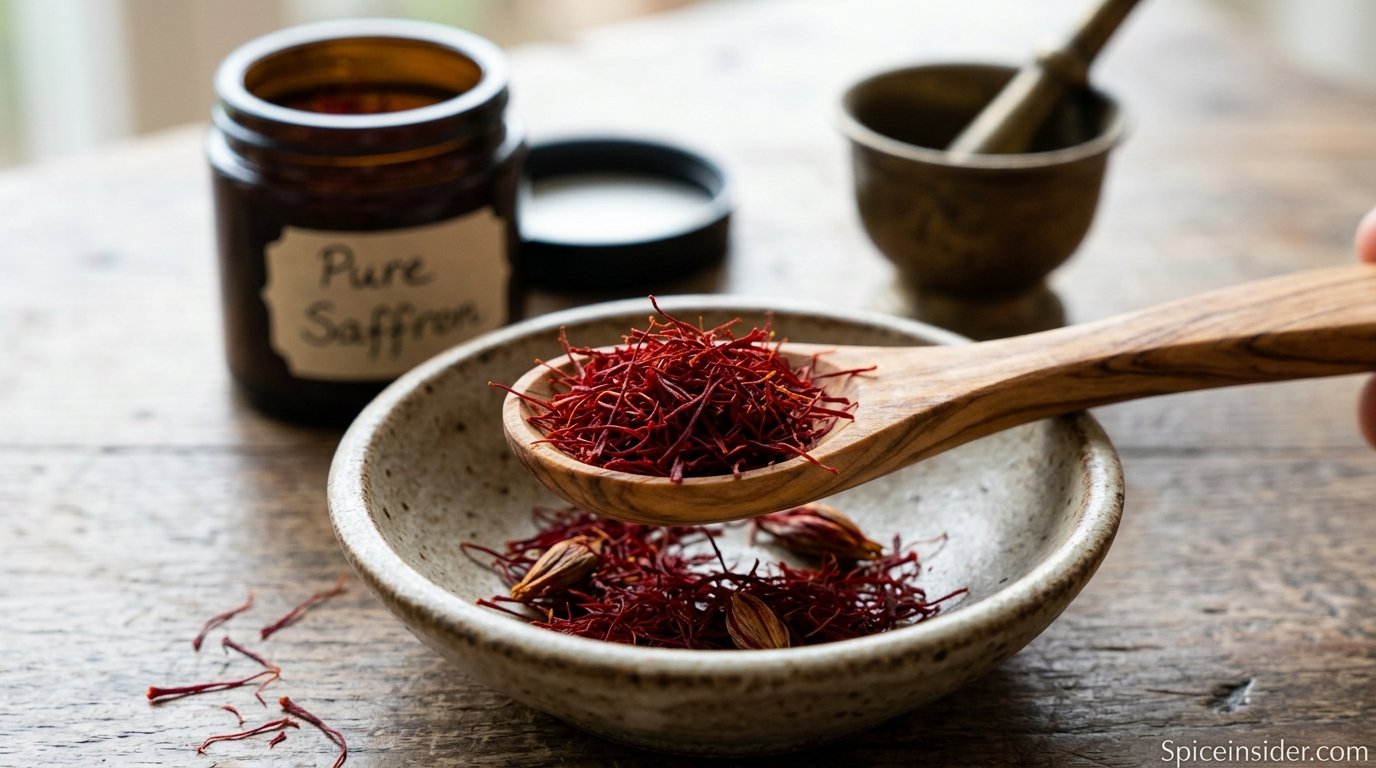
What Is the Most Expensive Spice in the World?
Meet saffron, the crimson threads that cost more than almost any other food you can put in your pantry, plus the real reasons behind the price and the runners-up that come close.
The Short Answer: Saffron Takes the Crown
The most expensive spice in the world is saffron. It is made from the dried stigmas of the Crocus sativus flower, harvested entirely by hand, and it can cost thousands of dollars per pound depending on origin and grade. Vanilla usually ranks second, with cardamom a distant third.
If you have ever stood in a grocery aisle and flinched at the price of a tiny glass vial of red threads, you already know the headline. Saffron is in a league of its own. Weight for weight, it often costs more than silver has at many points in modern history, and it certainly costs far more than any other seasoning most of us will ever cook with.
But “most expensive” is a slippery phrase, so it helps to be precise. When food writers, traders, and chefs say saffron is the priciest spice, they mean price per unit of weight for a spice you can buy in an ordinary shop. There are exotic ingredients that fetch dramatic prices at auction, but they are novelties rather than spices in regular commerce. Among the things people genuinely cook with, saffron wins, and it has held that title for centuries.
This guide walks through the full story. You will learn what saffron is, the astonishing labor behind each gram, where it is grown, how quality is graded, what comes in second and third, how counterfeiters cheat buyers, and how to get real value from every thread. If you have ever wondered whether a jar of saffron is a rip-off or a bargain, by the end you will know exactly how to judge it.
Ready to see what real saffron looks like? Browse top-rated saffron threads.
Shop Saffron on AmazonWhat Saffron Actually Is
Saffron comes from a small purple flower called Crocus sativus, often nicknamed the saffron crocus. Each bloom contains three thin, crimson stigmas, which are the female parts of the flower that catch pollen. Those three red threads are the spice. Everything else in the flower, including the purple petals and yellow stamens, is discarded or used for other purposes.
The plant itself is a sterile triploid, which means it cannot reproduce from seed. It spreads only through underground bulb-like structures called corms, which farmers divide and replant by hand. That single biological quirk explains a great deal about why saffron has never been easy to scale up. You cannot simply scatter seeds and wait. Every new plant descends from a corm that a person carefully dug up and put back in the soil.
The Three Compounds That Define Saffron
The flavor and color of saffron come from three main compounds, and knowing them helps you read quality labels later.
- Crocin gives saffron its intense golden-yellow dye. A few threads can tint an entire pot of rice.
- Picrocrocin delivers the slightly bitter, honeyed taste that separates saffron from cheap yellow imitators.
- Safranal creates the aroma, a mix of hay, metal, and floral sweetness that is hard to describe but easy to recognize once you have smelled the real thing.
Because these compounds degrade with light, heat, and time, freshness matters more with saffron than with most spices. That is one reason storage, covered later in this guide, is worth taking seriously.
A Very Old Ingredient
Saffron has been used for thousands of years. It appears in ancient frescoes, was prized as a dye and medicine, and traveled along trade routes that connected Persia, the Mediterranean, and South Asia. In medieval Europe it was valued so highly that fraud carried harsh penalties. That long history of luxury is baked into the way we still think about it today. If you enjoy the deeper story of spices themselves, our explainers on what sumac spice is and what goes into Chinese five-spice show how differently other blends and ingredients earned their places in the kitchen.
Want to taste the difference for yourself? Explore premium saffron options.
View Premium SaffronWhy Saffron Costs So Much
The price of saffron is not marketing. It is arithmetic, and the numbers are staggering once you lay them out.
The Harvest Math
Each crocus flower produces just three stigmas. Once dried, those threads weigh almost nothing. It typically takes well over a hundred thousand flowers to produce a single kilogram of dried saffron, and many sources put the figure at somewhere between 150,000 and 200,000 blooms. For a single ounce, you are looking at thousands of flowers, each one picked, opened, and stripped individually.
Think about that at kitchen scale. The little jar in your hand, holding perhaps a gram, represents the stigmas of several hundred flowers. Once you see it that way, the price stops looking absurd and starts looking almost modest.
A Harvest Measured in Days, Not Months
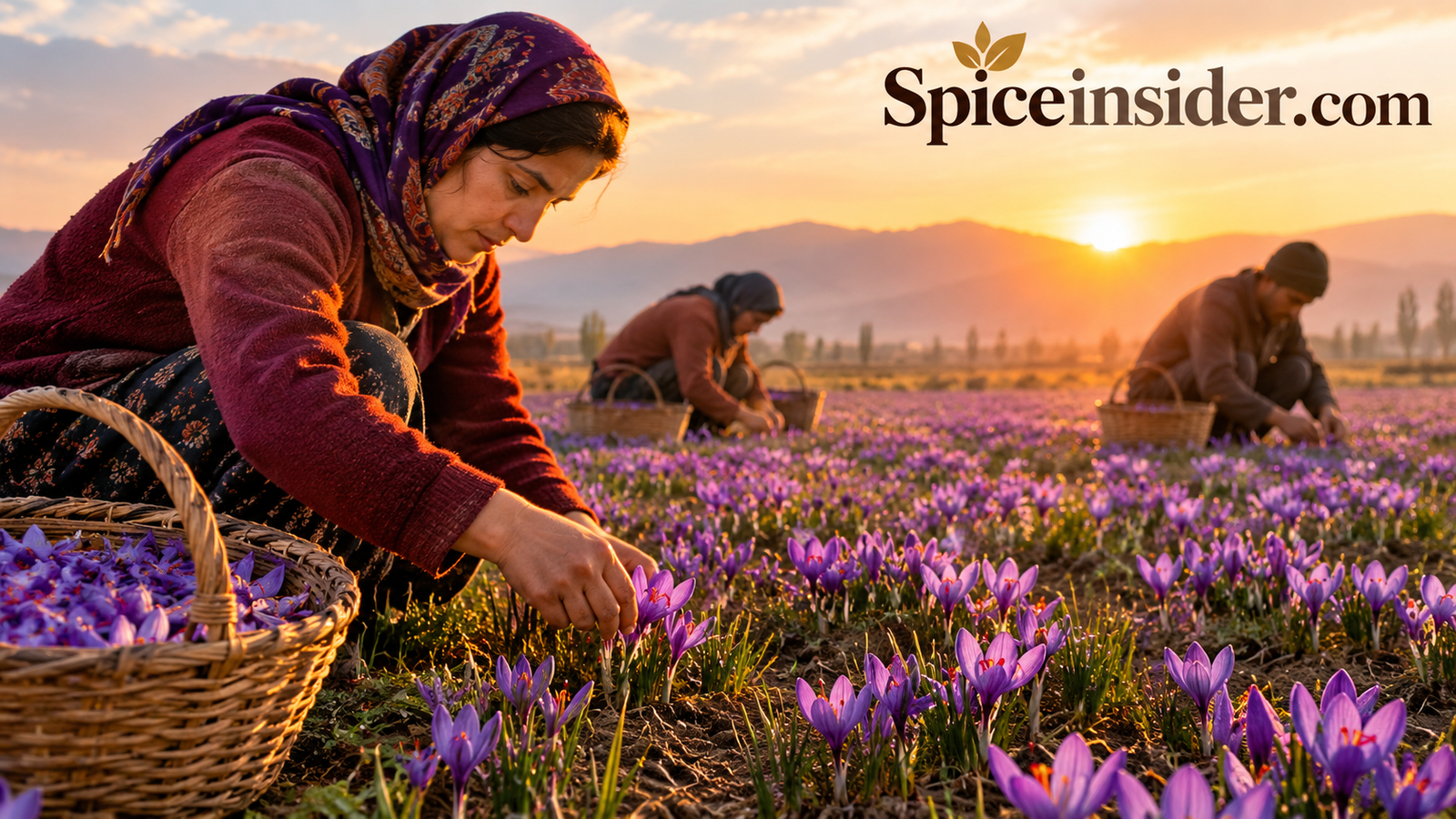
The saffron crocus blooms for only a short window each autumn, often just a few weeks. The flowers open at dawn and wilt quickly under the sun, so pickers head into the fields at first light. If flowers are left too long, the stigmas lose quality. There is no room to postpone the work, and there is no machine that can do it.
- Picking: Workers gather the flowers by hand in the early morning, before heat and sunlight can damage them.
- Separating: The three red stigmas are plucked out of each flower, usually the same day, by hand.
- Drying: The threads are gently dried, traditionally over low heat or in controlled conditions, which concentrates flavor and locks in color.
- Sorting and packing: Producers grade, sort, and seal the saffron to protect it from light and moisture.
No Mechanization Possible
Wheat, coffee, and even many delicate herbs can be harvested with machinery or at least partial automation. Saffron cannot. The flower is fragile, the stigma is tiny, and precision matters. Researchers have explored mechanical options for years, but hand harvesting remains the standard for quality saffron across every producing region.
Climate, Soil, and Yield Risk
The crocus needs a specific mix of dry summers, cool autumns, and well-drained soil. A bad season, an unexpected rainstorm, or a drought can slash the year’s crop. Because supply is limited and concentrated in a handful of regions, small changes in weather can ripple through global prices.
Labor, Trade, and Demand
Add to that the cost of skilled labor, careful packaging, transport, testing, and the overhead of avoiding adulteration, and you begin to see why the final price is so high. Demand is steady worldwide, driven by paella, biryani, risotto, and countless regional dishes, so there is little downward pressure.
Quick way to picture it: When you sprinkle a pinch of saffron into a pot, you are adding the labor of several flowers, each picked at dawn by a person who separated its three threads by hand.
Compare saffron sizes and price points before you buy.
Compare Saffron OptionsWhere Saffron Comes From
Saffron is grown in a surprisingly small number of places. One country dominates production by a wide margin, and a few others are prized for their distinctive styles.
| Region | Reputation | Typical Character |
|---|---|---|
| Iran | By far the largest producer, supplying the bulk of the world’s saffron | Deep red threads, strong color and aroma, wide range of grades |
| Spain | Historic premium brand, especially La Mancha | Balanced flavor, trusted for paella, often carries protected labeling |
| Kashmir (India) | Extremely prized and limited in volume | Rich color and aroma; frequently hard to find authentically |
| Greece | Small, cooperative-driven production | Consistent quality with protected designation |
| Afghanistan | Fast-growing producer with strong quality | Vivid color, increasingly recognized in international competitions |
| Morocco | Notable for Taliouine-area saffron | Fragrant, well suited to tagines and rice dishes |
Does Origin Really Matter?
Partly. Origin can hint at growing conditions, tradition, and how carefully the harvest is handled, but a fancy label does not guarantee quality. Some of the most vivid and aromatic saffron in the world comes from Iran, while some Spanish saffron is prized for tradition and consistent grading. The smart approach is to judge the threads themselves, not just the flag on the packaging.
Be a little skeptical of premium-looking labels. Spain is a well-known name, and so some cheaper saffron from other origins is repackaged and sold with a Spanish-sounding brand. Reading the fine print and buying from established sellers matters a great deal, which is why we put together our roundup of the best saffron brands.
Look for clearly labeled origin and grade on every jar.
Shop Spanish SaffronGrades and Quality Tiers
Not all saffron is created equal, and the price difference between grades can be dramatic. Understanding how saffron is graded helps you avoid paying top dollar for mediocre threads.
The ISO Categories
An international standard classifies saffron into categories, commonly labeled I, II, and III, based on lab-tested coloring strength, bitterness, and aroma. Category I represents the highest strength. Lower categories contain less color and flavor and often include more non-stigma material. When a seller lists the category or shares a lab result, that is a good sign of transparency.
Common Cut Names
Producers also use trade names for how the threads are cut and trimmed. These terms vary by country, but they generally describe how much of the pale yellow-white style is left attached to the red stigma.
| Term | What It Means | Best For |
|---|---|---|
| Negin | Long, thick, all-red threads with the pale style removed | Top-tier cooking and gifting |
| Sargol | All-red tips, shorter than negin | Strong color for everyday premium use |
| Pushal | Red threads with a small amount of style attached | Good value with solid flavor |
| Bunch (Dokhtar Pich) | Threads bundled together with more of the style | Budget-friendly, lower intensity |
| Powder | Ground saffron | Convenience, but the easiest form to adulterate |
Pros of Higher Grades
- Stronger color and aroma, so you use less per dish
- Cleaner flavor with less bitterness from the style
- More consistent results across recipes
Cons of Higher Grades
- Significantly higher upfront price
- Overkill for very small amounts or strong-flavored stews
- Harder to verify without lab reports or trusted sellers
A practical rule: if you plan to use a large pinch in a dish where saffron is the star, such as risotto alla milanese or a delicate rice pudding, pay for a higher grade. If it is one supporting player in a heavily spiced stew, a mid-tier grade may be perfectly fine.
Find negin and sargol-style saffron from trusted sellers.
Shop Negin SaffronThe Runners-Up: How Other Spices Compare
Saffron leads, but it is not the only spice that makes your wallet nervous. The table below gives a rough sense of how the most expensive spices rank. Actual prices swing with harvests, so think of this as an ordering rather than a price list.
| Rank | Spice | Why It Is Costly |
|---|---|---|
| 1 | Saffron | Hand-picked stigmas; well over 100,000 flowers per kilogram |
| 2 | Vanilla | Hand-pollinated orchids and months of curing |
| 3 | Cardamom | Labor-intensive harvest, limited growing regions |
| 4 | Mace and true nutmeg | Tropical trees, slow maturity, careful processing |
| 5 | Ceylon cinnamon | Delicate bark peeling and rolling by skilled workers |
| 6 | Long pepper and premium peppercorns | Limited supply and specialty cultivation |
What ties these spices together is labor. Nearly all of them require careful, skilled handwork, and many can only grow in narrow tropical or subtropical belts. Cheap spices tend to be easy to mechanize and grow across many climates. Expensive ones are the opposite.
Interestingly, the definition of a “spice” itself is a fun rabbit hole. If you have ever wondered about things that sit at the edge of the category, our pieces on whether salt is a spice and whether sugar is a spice take that question on directly.
Build a small premium spice collection with saffron, vanilla, and cardamom.
Browse Gourmet Spice SetsVanilla: The Second Crown
If saffron is the king of spices by price, vanilla is the queen. Real vanilla comes from the cured pods of a climbing orchid, and its cost is a direct result of how fussy the plant is.
Why Vanilla Is So Expensive
- Hand pollination: Outside its native Mexico, vanilla flowers rarely pollinate on their own. Farmers pollinate each bloom by hand, and each flower is open for only about a day. The technique widely used today was developed in the nineteenth century by a young enslaved boy named Edmond Albius on the island of Réunion.
- Long maturation: The pods take many months to ripen on the vine.
- Curing: After harvest, pods go through weeks or months of sweating, sun-drying, and conditioning to develop their signature aroma.
- Concentrated supply: A large share of the world’s vanilla comes from Madagascar, so cyclones, theft, or poor harvests can send prices soaring.
Vanilla vs. Saffron
By weight, saffron generally costs more. However, vanilla is used in larger quantities and turns up in more everyday products, from ice cream to perfume, so its impact on the average household budget can actually be larger. A single vanilla bean might be enough to flavor one dessert, whereas a pinch of saffron covers a whole pot of rice.
Choosing Vanilla Wisely
Vanilla comes in beans, extracts, pastes, and powders, and each behaves differently. If you bake often and are trying to choose, our guide to the best vanilla bean brands is a useful starting point, and the comparison of vanilla extract vs. vanilla bean paste will help you decide how much of the premium to spend on.
Stock up on real vanilla beans for baking and desserts.
Shop Vanilla BeansCardamom and Other Costly Spices
Cardamom: The Quiet Third Place
Cardamom, sometimes called the queen of spices in parts of South Asia, is typically ranked third most expensive. The pods grow on tall, leafy plants that flourish in humid, shaded highlands, with Guatemala and India among the major producers. The pods ripen unevenly, so workers must return to the same plants repeatedly and pick them by hand. The seeds inside then need careful drying to preserve their citrusy, resinous aroma.
Green cardamom is the classic sweet-savory workhorse, used in chai, pilafs, and Scandinavian pastries. Black cardamom is smokier and cheaper, used in hearty stews. If you enjoy freshly ground spices, cardamom is one you will notice a big difference in when it is ground just before use. Our guide on grinding whole spices vs. pre-ground explains why.
Mace and Nutmeg
The nutmeg tree gives us two distinct spices: the seed itself and the lacy red covering around it, known as mace. Trees take years to bear fruit, and processing requires patience. Mace in particular is scarce because each fruit yields only a small amount of it, which pushes its price well above that of nutmeg. If you are shopping for the whole seeds, check our picks for the best whole nutmeg.
Ceylon Cinnamon
True cinnamon from Sri Lanka is thinner, more delicate, and more expensive than the common cassia sold in most supermarkets. Harvesters peel the inner bark by hand and roll it into layered quills, a craft that takes real skill. To understand exactly how the two differ in flavor, safety, and price, read our breakdown of Ceylon vs. cassia cinnamon, and if baking is your goal, see the best cinnamon for baking.
Specialty Peppers and Rare Varieties
Long pepper, certain single-origin peppercorns, and other artisan spices can command surprising prices, especially when sold in small batches with traceable origins. These are niche compared with saffron, but they show the same pattern: rarity plus labor equals price.
Try green cardamom pods, whole nutmeg, or Ceylon cinnamon sticks.
Shop CardamomFake Saffron and How to Spot It
Where there is a high price, there is fraud. Saffron has been counterfeited for as long as it has been traded, and modern fakes can be convincing. Knowing the common tricks protects your money.
Common Adulterants
- Safflower petals: Often called “bastard saffron,” these look similar but taste and smell flat.
- Dyed corn silk or plant fibers: Colored to resemble red threads.
- Added weight: Threads coated in oil, syrup, or minerals to increase weight.
- Old or exhausted saffron: Threads that have already been steeped and re-dried.
- Powder cutting: Ground saffron mixed with turmeric, paprika, or other cheap powders.
Simple Checks You Can Do at Home
- Look closely: Real threads are deep red and slightly trumpet-shaped at one end. Uniform, perfectly straight, or bright orange-red threads are suspicious.
- Smell it: Genuine saffron smells sweet and hay-like with a hint of metal. A chemical or musty smell is a red flag.
- Try the water test: Drop a few threads in lukewarm water. Real saffron releases color slowly and gradually turns the water golden while the threads stay red. Fake threads often bleed red dye immediately and turn pale.
- Taste a thread: Real saffron is slightly bitter, not sweet or sour.
For a fuller walkthrough with more tests and cautions, see our dedicated guide on how to tell if saffron is real.
Red flag: If a seller offers “premium” saffron at a price that seems too good to be true, it almost certainly is. Real saffron simply cannot be sold cheaply in meaningful quantities.
Buy from sellers who publish grade, origin, and harvest details.
See Authentic SaffronHow to Buy Saffron Without Overpaying
The good news is that you do not need much saffron to make a dish shine, and a smart purchase can last a long time. Here is how to shop with confidence.
A Practical Buying Checklist
- Choose threads over powder. Threads are harder to fake and stay fresher longer.
- Check the origin and grade. Look for category I or clear grade names like negin or sargol.
- Look for a harvest date. Fresher is better because aroma fades over time.
- Prefer airtight, opaque packaging. Light is the enemy of saffron.
- Start small. One gram is often plenty for several dishes.
- Read reviews carefully. Look for comments about color release and aroma, not just shipping speed.
Price vs. Value
A more expensive jar of high-strength saffron may actually cost less per dish than a cheap jar that requires double the amount. Think about cost per serving, not cost per gram. A pinch of top-quality threads might add only pennies to each plate of paella.
| Buyer Type | Suggested Approach |
|---|---|
| Occasional cook | Small one-gram jar of mid-to-high grade threads |
| Frequent home chef | Two to five grams of sargol or negin, stored carefully |
| Gift shopper | Attractive glass tin or box with clear origin details |
| Restaurant or caterer | Bulk purchases from a vetted supplier with lab reports |
Start with a small jar and see how far a pinch goes.
Find a Starter JarUsing, Storing, and Stretching Saffron
Buying good saffron is only half the equation. How you handle it decides whether every thread earns its price.
How to Bloom Saffron
Never toss dry threads straight into a dish. Instead, steep them first so the color and flavor can fully release.
- Crush a small pinch of threads gently between your fingers or with a mortar and pestle.
- Add a few tablespoons of warm (not boiling) water, broth, or milk.
- Let it steep for at least 15 to 20 minutes, or longer for deeper color.
- Add the liquid, threads and all, to your dish near the end of cooking.
If you prefer to crush saffron finely, a good stone mortar makes the job easy, and you can compare options in our guide to the best mortar and pestle. Some cooks also like to lightly warm threads before crushing, using the same principles covered in how to toast spices before grinding. Just be gentle, because saffron burns easily.
If you do not own a dedicated grinder, our tips on grinding spices without a grinder can help, and if you want a proper tool, take a look at the best spice grinder or the best manual spice grinder.
Storing Saffron the Right Way
- Keep it in an airtight container, away from light, heat, and humidity.
- Store it in a cool cupboard rather than above the stove.
- Avoid opening the jar more often than necessary.
- Use it within a reasonable time for best aroma, though properly stored saffron can stay usable for a long while.
If you buy in bulk, our advice on how to store bulk spices applies directly, and a tidy setup from our roundup of the best spice organizers helps keep precious jars protected and easy to find.
Dishes That Show Saffron Off
- Spanish paella and other rice dishes
- Risotto alla milanese
- Persian saffron rice and tahdig
- Indian biryani and kheer
- French bouillabaisse
- Saffron buns, cakes, and ice cream
Grab a mortar and pestle to release every bit of saffron flavor.
Shop Mortar and Pestle SetsIs Saffron Worth the Money?
Honestly, it depends on what you cook and how much you value authenticity. For many home cooks, a small jar of quality saffron is one of the best-value luxuries in the pantry, because you use so little at a time. A single gram can flavor multiple family meals.
Reasons to Buy
- Unique flavor and aroma no substitute fully matches
- Beautiful golden color that transforms simple dishes
- A tiny amount goes a long way
- Adds a sense of occasion to celebrations
Reasons to Skip
- High upfront price per gram
- Risk of fakes if you buy carelessly
- Flavor fades if stored poorly
- Not needed for dishes where it would be drowned out
Budget-Friendly Alternatives
No substitute truly replicates saffron, but if you only want color or a warm, earthy touch, there are sensible workarounds. Turmeric provides golden color, though its flavor is different. Our guide to the best turmeric powder can help you choose a good one. For a smoky, rich red hue, a quality paprika works well, and our picks for the best smoked paprika are worth a look. Just remember that these change the flavor of a dish instead of imitating saffron, so treat them as their own ingredients.
If you are curious how other spice blends are built for different seasonal moods, see what is in pumpkin pie spice for an example of a blend that leans on affordable, aromatic staples.
Explore smoked paprika and turmeric as everyday color boosters.
Shop Paprika and TurmericFrequently Asked Questions
What is the most expensive spice in the world?
Saffron is the most expensive spice in the world. It is made from the hand-picked stigmas of the saffron crocus, and it costs far more per pound than any other commonly available spice.
Why is saffron so expensive?
Each flower yields only three tiny threads, and well over a hundred thousand flowers are needed for one kilogram of dried saffron. The harvest is short, fully manual, and dependent on weather, which keeps supply low and prices high.
What is the second most expensive spice?
Vanilla is usually considered the second most expensive spice. It requires hand pollination of orchid flowers and months of curing before the pods are ready to sell.
Is cardamom more expensive than vanilla?
Generally not. Cardamom typically ranks third, below saffron and vanilla, though prices for both can shift with harvest conditions and demand.
How many saffron threads do I need per dish?
Most recipes serving four to six people call for a small pinch, roughly 15 to 20 threads. High-grade saffron is potent, so it is better to start with less and add more only if needed.
How can I tell if saffron is real?
Look for deep red threads with a trumpet-shaped tip, a sweet hay-like aroma, and slow release of golden color in lukewarm water. Fake threads often dye the water red immediately. See our full authenticity guide for more detailed checks.
Is saffron powder as good as threads?
Powder is convenient, but it is easier to adulterate and loses aroma faster. Threads are the safer choice if you want to verify quality.
Which country produces the best saffron?
There is no single winner. Iran produces most of the world’s saffron, Spain and Greece are known for protected, traditional labels, and Kashmir is prized for rarity. Quality depends more on the specific producer and grade than on the country alone.
How long does saffron last?
Stored in an airtight, dark, cool place, saffron stays usable for a long time, though its aroma and color gradually fade. For the best flavor, aim to use it within a couple of years.
Can I substitute turmeric for saffron?
Turmeric can add golden color, but it does not replicate saffron’s delicate floral flavor and aroma. It works as a budget color substitute, not a true replacement.
Is vanilla extract cheaper than vanilla beans?
Extract is usually cheaper per use and easier to measure, while whole beans and paste offer more visible flecks and a fuller flavor. The best choice depends on the recipe and your budget.
Is expensive saffron always better?
Not always. Higher grades generally mean stronger color and aroma, but price alone does not prove authenticity. Rely on clear grading information, trusted sellers, and simple home tests rather than price alone.
Conclusion: A Small Thread With a Big Story
So, what is the most expensive spice in the world? Saffron, and it is not a close race. Its price comes from the extraordinary labor behind every gram: tens of thousands of fragile flowers, picked by hand at dawn, stripped thread by thread, and carefully dried. Vanilla and cardamom follow behind, each with its own story of skilled handwork and limited growing regions.
The good news is that this expensive spice is also incredibly efficient. A tiny pinch, bloomed properly and used in the right dish, can transform a whole meal. Buy threads instead of powder, look for clear grading and origin details, store your jar away from light and heat, and be wary of any deal that seems too good to be true. Treat saffron with a little respect, and it will repay you with color, aroma, and flavor that nothing else in the pantry can match.
Ready to cook with the world’s most prized spice? Pick up a jar today.
Get Your Saffron NowYou May Also Like
More spice guides, grinder tips, and kitchen organization ideas from Spice Insider.