What Are All the Spice Names? The Complete A–Z Spice List
From ajwain to zedoary, this is a working reference to the spices cooks around the world actually use, with what each one tastes like, where it comes from, and how to put it to work in your kitchen.
Ask ten cooks to name every spice they know and you will get ten different lists. One person starts with pepper and cinnamon, another jumps straight to sumac and asafoetida, and somebody always argues about whether salt counts. That is exactly why a proper A–Z list is useful. It gives you one place to look up an unfamiliar name on a recipe card, a menu, or a jar at the market, and it shows you how the whole spice world fits together.
This guide walks through the alphabet, letter by letter, and then steps back to look at the bigger picture: how spices group into flavor families, why whole and ground versions behave so differently, which blends are built from which single spices, and how to buy and store all of it without wasting money. Treat it as a reference you can bookmark and come back to whenever a new name shows up.
What Counts as a Spice? A Quick Definition Before the List
In the simplest terms, a spice is a dried plant part used to flavor, color, or preserve food. That plant part can be a seed (cumin, mustard), a bark (cinnamon), a root or rhizome (ginger, turmeric), a bud (clove), a fruit or berry (black pepper, allspice), or even a flower part (saffron threads, which are the stigmas of a crocus). Herbs, by contrast, are usually the fresh or dried leaves of soft-stemmed plants like basil, parsley, and mint.
The line blurs in real kitchens. Bay leaf is a leaf but almost always sold on the spice rack. Garlic and onion powder are vegetables that behave like spices once dried. Even the everyday questions, like whether salt is a spice or whether sugar is a spice, turn out to be more interesting than a simple yes or no. For the purposes of this list, we include the true botanical spices, the dried aromatics that live alongside them, and a few widely used blends, clearly labeled so you can tell them apart.
How We Organized This List
Each entry gives you the spice name, the plant part it comes from, the flavor in plain language, and a handful of uses. Where a spice goes by several common names, we mention the alternates so you can recognize it on a label. Names that start with the same letter are grouped together, and a few tricky letters (Q, U, X, Y) are handled honestly: there are fewer true spices there, but each one earns its place.
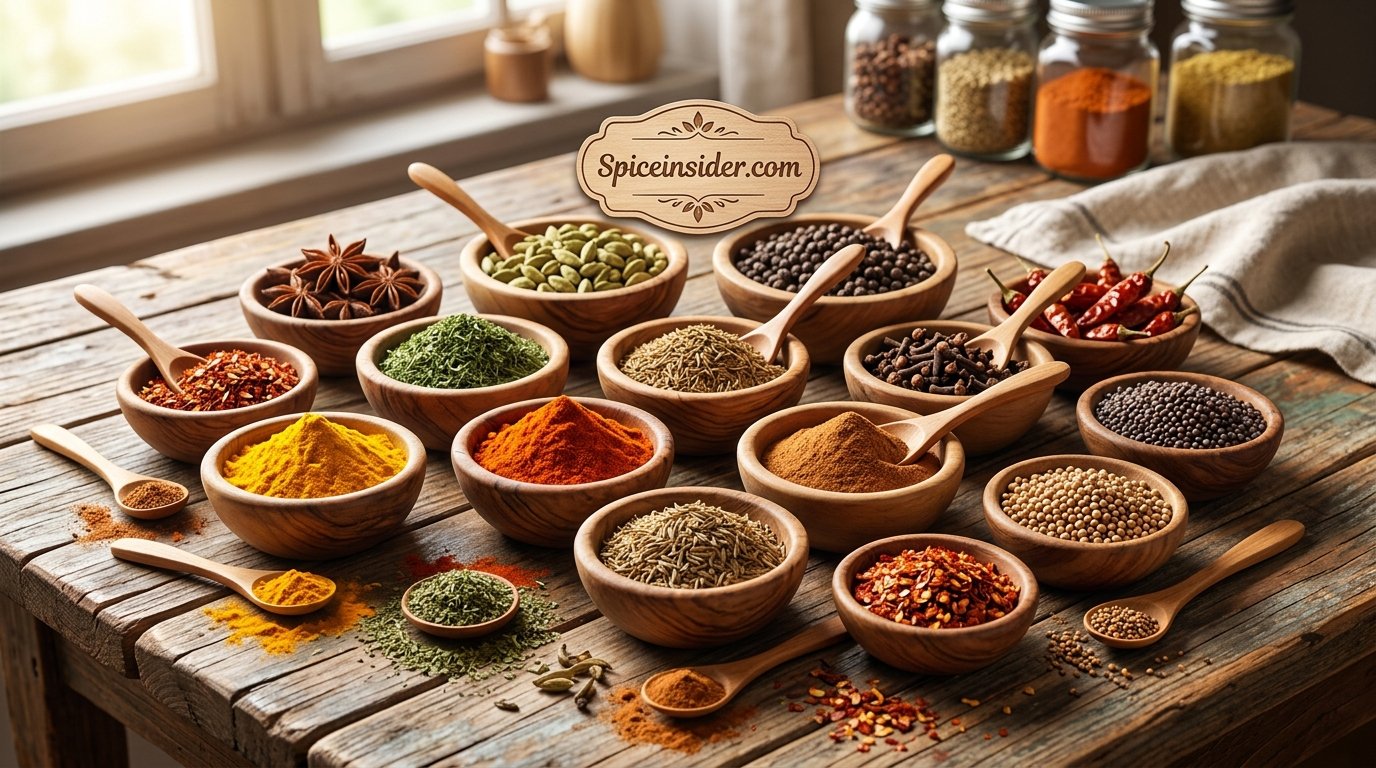
A well-chosen starter set covers most of the names on this list.
Spices Starting With A, B and C
The first three letters carry a huge share of the world’s most-used spices, including the heavyweights black pepper, cinnamon, cardamom, and cumin. Here is the full run.
A
- Ajwain (carom seed). Tiny, ridged seeds that taste like a sharper, more peppery cousin of thyme. Common in Indian breads, fried snacks, and lentil tempering. A little goes a long way.
- Aleppo pepper. A moderately hot, fruity, slightly salty dried chile from Syria and Turkey. Sprinkle it on eggs, roasted vegetables, and grilled meats where you want warmth without a sharp bite.
- Allspice. The dried unripe berry of a Caribbean tree. It tastes like a mix of clove, cinnamon, and nutmeg, which is where the name comes from. Essential in jerk seasoning, spice cakes, and pickling brines.
- Amchur (dried mango powder). A tart, citrusy powder made from unripe green mangoes. Indian cooks use it to add sourness to curries, chutneys, and chaat without adding liquid.
- Anise (aniseed). Small seeds with a sweet, licorice-like flavor. Used in Italian biscotti, Middle Eastern liqueurs, and Mexican champurrado.
- Annatto (achiote). Brick-red seeds prized for their color more than their taste, which is mildly earthy and peppery. Central to Latin American and Filipino cooking, and used to tint cheeses.
- Asafoetida (hing). A pungent resin that smells sulfurous raw but turns savory and onion-like once cooked in hot oil. A cornerstone of Indian vegetarian cooking, especially for dishes that skip onion and garlic.
B
- Barberry (zereshk). Small, ruby-red dried berries with a bright tartness. Persian cooks scatter them over rice for a jewel-like finish.
- Bay leaf. Technically a leaf, but always lives on the spice shelf. It adds a subtle, tea-like depth to soups, stews, stocks, and braises. Remove it before serving.
- Black cardamom. A large, dark pod dried over open fires, giving it a smoky, resinous, almost menthol-like aroma. Best in hearty meat dishes and rice pilafs, quite different from green cardamom.
- Black pepper. The most traded spice in history, made from the dried berries of the pepper vine. Bold, pungent, and slightly woody. If you want to go deeper on premium types, it is worth knowing about Tellicherry, which appears later in this list.
C
- Calabrian chile. Southern Italian chiles that bring fruity, smoky heat. Sold crushed in oil or dried flakes, and superb on pizza, pasta, and sandwiches.
- Caraway. Crescent-shaped seeds with an anise-meets-dill flavor. Classic in rye bread, sauerkraut, and Hungarian goulash.
- Cardamom (green). Often called the queen of spices. Floral, citrusy, and warmly sweet, it flavors chai, Scandinavian pastries, and Indian rice dishes.
- Cassia. A bolder, spicier relative of true cinnamon, and the type most Americans buy under the label “cinnamon.” Our comparison of Ceylon vs. cassia cinnamon explains the differences in detail.
- Cayenne. A hot, clean, fruity chile powder used to add heat to almost anything, from Cajun blends to hot chocolate.
- Celery seed. Earthy, slightly bitter seeds that taste like concentrated celery. They are the backbone of coleslaw dressing, Bloody Marys, and pickling spice.
- Chili flakes (crushed red pepper). Coarsely crushed dried chiles, usually with seeds. The everyday shaker on pizza tables.
- Chipotle. Smoke-dried jalapeño with a deep, smoky, raisin-like heat. Sold whole, ground, or canned in adobo.
- Cinnamon (Ceylon). The “true” cinnamon from Sri Lanka, with delicate, sweet, layered bark. If baking is your main use, our guide to the best cinnamon for baking is a good next stop.
- Cloves. Dried flower buds with an intense, sweet, numbing warmth. Studded into hams, simmered in mulled wine, and ground into garam masala.
- Coriander seed. The dried fruit of the cilantro plant, but with a completely different flavor: citrusy, nutty, and warm. Toast it and grind it fresh for the best result.
- Cubeb (tailed pepper). A peppery, slightly camphor-like berry once wildly popular in medieval Europe. It shows up today in some Moroccan blends.
- Cumin. Earthy, smoky, and slightly bitter. It is the signature note in chili, tacos, hummus, and countless Indian and Middle Eastern dishes.
- Curry leaf. Sold fresh or dried, these leaves add a nutty, citrusy, faintly smoky aroma to South Indian tempering (tadka). They are not the same as “curry powder,” which is a blend.
Cumin, cardamom, cloves, and cinnamon are the workhorses worth buying whole.
Spices Starting With D Through H
This stretch of the alphabet includes fennel, fenugreek, ginger, and the brilliant, underused grains of paradise. Several of these are staples in pickling and curry work.
D
- Dill seed. Stronger and more caraway-like than fresh dill weed. It flavors pickles, breads, and potato salads.
- Dried lime (loomi). Whole limes dried until hard and dark. They add a sour, fermented, slightly bitter tang to Persian and Gulf stews.
E
- Espelette pepper. A mild-to-medium, fruity chile from the Basque region of France. It is the traditional finishing spice for Basque cooking and a wonderful salt-and-pepper alternative.
- Epazote (dried). Often classed as an herb, but sold in the spice aisle. It has a pungent, medicinal, almost citrusy flavor used in Mexican bean dishes.
F
- Fennel seed. Sweet, mildly anise-flavored seeds. Toasted and chewed after meals in India, they are also the signature flavor in Italian sausage.
- Fenugreek seed. Slightly bitter, maple-like seeds that are essential in curry powders and pickles. Use sparingly, since too much turns dishes bitter.
- Fenugreek leaves (kasuri methi). Dried leaves that add a savory, celery-maple aroma to butter chicken and other North Indian gravies. Crush between your palms before adding.
- Filé powder. Ground sassafras leaves, used to thicken and flavor Louisiana gumbo. It has a woodsy, root-beer-like quality and should be added at the end of cooking.
G
- Galangal. A cousin of ginger with a sharper, piney, citrusy flavor. Sold fresh, dried slices, or powder, and essential in Thai tom kha soup.
- Garlic (granulated or powder). Dehydrated garlic that delivers convenient savory depth. Granulated versions resist clumping better than fine powder.
- Ginger. The fresh rhizome is zesty and juicy, while dried ground ginger is warmer and more peppery. Vital in gingerbread, stir-fries, and curries.
- Grains of paradise. Peppery, floral seeds from West Africa with hints of cardamom and citrus. A fun swap for black pepper on steaks and in cocktails.
- Grains of Selim (Selim pepper). Smoky, musky pods from West Africa with a gentle spiciness, typically ground into coffee-like drinks and stews.
- Guajillo chile. A mild, tangy, berry-toned Mexican chile that forms the base of many red sauces and adobos.
H
- Habanero (dried). Intensely hot with a tropical, fruity note. Dried and ground versions bring serious heat to hot sauces and rubs.
- Horseradish (dried or prepared). A sharp, nose-clearing root. Dried horseradish rehydrates into the classic steakhouse condiment.
- Hot paprika. Hungarian paprika with a noticeable kick. Use it when you want paprika’s sweetness with real heat behind it.
- Hyssop (dried). A minty, slightly bitter herb-spice used in some Middle Eastern blends, including certain versions of za’atar.
Fennel, fenugreek, and grains of paradise are all worth trying in whole form.
Spices Starting With I Through M
Juniper, kokum, mace, and mustard round out a section that skews toward tart, resinous, and pungent flavors. It is also home to two of the world’s most prized flavor-makers: mahlab and mastic.
I
- Indian bay leaf (tej patta). Unlike European bay, this leaf comes from a cinnamon-family tree and tastes faintly of cinnamon and clove. Used whole in biryanis and curries.
- Ichimi togarashi. Pure ground Japanese red chile. Its cousin, shichimi togarashi, is a seven-spice blend covered later in this guide.
J
- Jalapeño (dried). When smoked, it becomes chipotle. Dried and ground on its own, it is grassy, bright, and moderately hot.
- Juniper berries. Dark blue-purple cones with a piney, gin-like flavor. Crush them for game meats, sauerkraut, and Scandinavian cures.
K
- Kaffir (makrut) lime leaf. Intensely fragrant, citrusy leaves that flavor Thai curries and soups. Many cooks now prefer the name “makrut.”
- Kala namak (black salt). A pungent, sulfurous Himalayan salt often grouped with spices. It gives Indian chaat and vegan egg dishes their distinctive eggy tang.
- Kalonji. The Hindi name for nigella seed, covered again under N. Sprinkled over naan and used in Bengali panch phoron.
- Kashmiri chili. Prized for its brilliant red color and mild heat. It gives Indian dishes their vivid red hue without scorching your palate.
- Kokum. Dried fruit rinds with a sour, fruity tang, used in coastal Indian curries as an alternative to tamarind.
L
- Lavender (culinary). Floral, slightly minty buds that pair with honey, lemon, and lamb. Herbes de Provence often includes it.
- Lemongrass (dried). Bright, citrusy stalks used in Southeast Asian soups, curries, and teas.
- Lemon myrtle. An Australian leaf with an intensely lemony aroma that is more concentrated than lemon zest.
- Licorice root. Sweet, earthy root used in teas, spice rubs, and Chinese cooking.
- Long pepper (pippali). A spicy, sweet, slightly floral catkin related to black pepper. It has a warm, lingering heat and appears in Indian pickles and ancient recipes.
M
- Mace. The lacy red covering of the nutmeg seed. Subtler and more citrusy than nutmeg, it flavors pound cakes and doughnuts.
- Mahlab. Ground pits of the St. Lucie cherry, offering a nutty, almond-cherry flavor for Middle Eastern breads and sweets.
- Mastic. A resin harvested from trees on the Greek island of Chios. It tastes piney and faintly sweet and flavors ice cream, breads, and liqueurs.
- Mustard seed. Yellow (mild), brown (pungent), and black (sharpest) varieties. Bloom them in hot oil for Indian dishes or grind them into prepared mustard.
Mace, juniper, and mustard seed unlock a different side of everyday cooking.
Spices Starting With N Through R
Nutmeg, paprika, and pepper varieties dominate this stretch, and it also covers a few letters where the list thins out. We have included the well-known blends that begin with Q and R so nobody leaves empty-handed.
N
- Nigella (black cumin, kalonji). Small, matte-black seeds with an oniony, oregano-like, slightly bitter taste. They top Turkish breads and Indian naan.
- Nutmeg. A warm, sweet, woody seed that is best grated fresh from the whole nut. Our roundup of the best whole nutmeg covers what to look for when you buy.
O
- Onion powder (and granulated onion). Dehydrated onion that gives rubs, dips, and seasoning blends a sweet, savory backbone.
- Orris root. The powdered root of certain irises. It has a violet-like scent and works as a fixative in Moroccan ras el hanout and some gin recipes.
P
- Paprika (sweet). Ground dried sweet red peppers, ranging from mild and fruity to earthy. It brings color and gentle flavor to goulash and deviled eggs.
- Smoked paprika (pimentón). Peppers dried over oak fires for a deep, smoky flavor. Spanish cooking relies on it for chorizo, paella, and patatas bravas, and our guide to the best smoked paprika shares the top choices.
- Pequin (piquin) pepper. Tiny, fiery peppers with a citrusy, smoky snap, sprinkled over Mexican fruit and street snacks.
- Peppercorns, pink. Not true pepper but the dried berries of a different plant. They are fruity, slightly sweet, and mildly peppery, and make an elegant finishing spice.
- Peppercorns, green and white. Green peppercorns are the unripe fresh berries, and white ones are ripe berries with the skin removed. White pepper appears again under W.
- Pimento (Jamaican pimento). Another name for allspice in Jamaica. Do not confuse it with the red pimiento peppers stuffed into olives.
- Piri piri (peri peri). A small African bird’s eye chile used in Portuguese and Mozambican grilling and marinades.
- Poppy seed. Mild, nutty, faintly sweet seeds that top breads, fill pastries, and thicken Indian curries.
Q
- Quatre épices. The letter Q has no widely used single spice, but this French “four spices” blend is worth a mention. It combines ground pepper (usually white), nutmeg, clove, and ginger or cinnamon, and seasons pâtés, sausages, and stews.
- Quassia (bark). An intensely bitter bark used in tiny amounts in bitters and herbal drinks rather than everyday cooking.
R
- Ras el hanout. A North African blend whose name means “head of the shop.” Recipes vary, but they may contain over a dozen spices such as cumin, coriander, cinnamon, turmeric, and rose petals.
- Red pepper flakes. Crushed dried chiles for heat. Similar to chili flakes, with slightly different varieties depending on the brand.
- Rose petals (dried). Delicate, perfumed petals used in Persian rice, Middle Eastern sweets, and spice blends.
- Rosemary (dried). Technically an herb, but a fixture on spice racks. Piney and resinous, it excels with roasted potatoes, lamb, and focaccia.
Whole nutmeg and quality smoked paprika instantly upgrade everyday cooking.
Spices Starting With S Through Z
The final stretch holds some of the most valuable and recognizable spices on Earth: saffron, turmeric, vanilla, and wasabi. It is also home to the classic finishing blend za’atar.
S
- Saffron. Hand-picked crocus stigmas with a honeyed, floral, faintly metallic flavor and a golden-orange color. Our guides to the best saffron brands and how to tell if saffron is real can keep you from overpaying for fakes.
- Sansho. A Japanese cousin of Sichuan pepper with a lemony, tingly, numbing quality. It is traditionally sprinkled over grilled eel.
- Sassafras. Dried leaves ground into filé powder, discussed under F.
- Sesame seed. Nutty, rich seeds, white or black, used whole, toasted, or ground into tahini.
- Sichuan pepper (Szechuan pepper). Not a true pepper. The husks produce a citrusy, mouth-numbing tingle that defines Sichuan mala flavor.
- Star anise. A star-shaped pod with a strong licorice flavor. It is a pillar of Chinese five-spice and Vietnamese pho.
- Sumac. Ground dried berries with a bright, lemony tartness. To learn more, see our explainer on what sumac spice is and how to use it.
- Sweet paprika. The mildest paprika, best when you want color and sweetness without heat.
T
- Tamarind. Sticky, sweet-sour pulp from a tropical tree pod. It gives pad thai, chutneys, and Indian sambar their tang.
- Tellicherry pepper. The larger, more mature black peppercorns from India’s Malabar Coast. They deliver more aroma and complexity than standard black pepper.
- Togarashi (shichimi). A Japanese blend of chile, sansho, orange peel, sesame, seaweed, and more, sprinkled on noodles and grilled foods.
- Tonka bean. A wrinkled black seed smelling of vanilla, almond, and cherry. Grated sparingly into desserts, and regulated in some countries because of its coumarin content.
- Turmeric. A golden rhizome with an earthy, slightly bitter, mustardy flavor. Its color stains everything. If you want a good jar, our list of the best turmeric powder is a helpful place to begin.
U
- Urfa biber. A Turkish chile that is dried in the sun by day and wrapped at night, giving it a dark purple color and smoky, raisin-like, chocolatey flavor with slow-building heat.
- Ume (dried plum) powder. A salty-sour Japanese seasoning used as a finishing sprinkle for rice and tempura.
V
- Vanilla. The cured pod of an orchid, and the second most expensive spice by weight after saffron. Compare pods in our guide to the best vanilla bean brands, or see how vanilla extract stacks up against vanilla bean paste.
- Vadouvan. A French-Indian curry blend with shallots, garlic, and spices, which is savory and slightly sweet.
- Voatsiperifery pepper. A rare wild pepper from Madagascar with floral, woody, citrusy notes.
W
- Wasabi. A Japanese rhizome with a sinus-clearing heat. Most powder and paste sold outside Japan is actually horseradish colored green.
- Wattleseed. Roasted Australian acacia seeds with a coffee, chocolate, and hazelnut aroma.
- White pepper. Black pepper’s smoother, more fermented cousin, common in Chinese soups and pale sauces.
X
- Xanthoxylum. The botanical genus that includes Sichuan pepper and sansho. You will see the name on ingredient labels from time to time.
- Xcatik (xcat’ik) chile. A pale yellow Yucatán chile with mild to medium heat and a fresh, fruity flavor.
Y
- Yellow mustard seed. The mildest mustard seed, and the one that gives American ballpark mustard its color and tang.
- Yuzu kosho. A Japanese paste of yuzu peel, chile, and salt, with bright citrus and heat that transforms grilled fish and noodle broths.
Z
- Za’atar. A Middle Eastern blend of wild thyme or oregano, sumac, and toasted sesame. It is superb with olive oil on flatbread.
- Zedoary. A relative of turmeric with a pale interior and a flavor described as mango-ginger with a touch of bitterness, used in some Southeast Asian and Indian dishes.
- Zereshk. The Persian name for barberries, covered under B.
These two premium spices reward you when you choose quality over price.
Spice Flavor Families: Grouping the Alphabet by Taste
Memorizing a hundred names is unrealistic. It is far easier to learn spices by family, because once you know how a flavor behaves you can swap within it and improvise with confidence. Here is a helpful way to group the entries above.
| Flavor Family | Key Spices | Best For |
|---|---|---|
| Warm and sweet | Cinnamon, cassia, nutmeg, mace, clove, allspice, cardamom | Baking, desserts, mulled drinks, braised meats |
| Earthy and savory | Cumin, turmeric, coriander, fenugreek, black cardamom | Curries, chili, stews, rice dishes |
| Hot and pungent | Black pepper, cayenne, chili flakes, wasabi, horseradish | Rubs, sauces, marinades, finishing |
| Smoky | Smoked paprika, chipotle, black cardamom, urfa biber | Grilling, beans, roasted vegetables |
| Sour and bright | Sumac, amchur, tamarind, dried lime, kokum | Salads, marinades, curries needing acidity |
| Licorice and anise | Star anise, fennel, anise, caraway, licorice root | Soups, sausages, breads, sweet dishes |
| Floral and perfumed | Saffron, rose, lavender, cardamom, orris root | Rice, sweets, drinks, delicate sauces |
| Tingly and numbing | Sichuan pepper, sansho, grains of paradise | Stir-fries, grilled meats, noodles |
| Savory aromatics | Garlic, onion, asafoetida, celery seed | Rubs, dips, seasoning blends |
Why Families Matter in Substitution
When a recipe calls for a spice you do not have, look to its family. Allspice can stand in for a mix of clove, cinnamon, and nutmeg. Fennel seed can substitute for anise in a pinch. Sumac and lemon zest overlap in brightness. The swap is never identical, but it keeps the dish in the right flavor neighborhood.
Sample-size sets make it easy to taste widely without committing to full jars.
Whole vs. Ground Spices: Which Form Should You Buy?
Nearly every spice on this list can be bought whole or ground, and the choice affects both flavor and shelf life. Whole spices keep their aromatic oils sealed inside until you crack or grind them, so they stay potent for a couple of years when stored well. Ground spices have more exposed surface area, and they lose fragrance within months. We go into depth in our comparison of grinding whole spices vs. pre-ground.
Whole Spices: Pros
- Longer shelf life
- More vivid aroma and flavor
- Toast and grind to order
- Better for infusing and pickling
Whole Spices: Cons
- Need a grinder or mortar
- Extra prep time
- Take up more shelf space
- Uneven texture if ground by hand
Ground Spices: Pros
- Convenient and quick
- Consistent texture
- Ideal for rubs and baking
- Cheap and easy to find
Ground Spices: Cons
- Fade within months
- Can be adulterated or stale
- Less complex flavor
- Clump in humid kitchens
Toasting Unlocks More Flavor
Dry-toasting seeds like cumin, coriander, and fennel in a skillet until fragrant deepens their flavor dramatically. It only takes a minute or two over medium heat, and the trick is to keep them moving so nothing scorches. Our walkthrough on how to toast spices before grinding covers timing for the most common seeds.
Grinding at Home
A small dedicated grinder makes a real difference. If you are choosing one, start with our overview of the best spice grinder options, and read up on blade vs. burr grinders for spices to see which style suits your cooking. No grinder at all? You can still grind spices without a grinder using a few kitchen basics.
A good grinder turns whole spices into fresh, fragrant powder in seconds.
Famous Spice Blends and the Single Spices Inside Them
Many of the names cooks throw around are not single spices at all but blends. Knowing what goes into them helps you decode a recipe, and it lets you build your own version when the store-bought jar has run out. Here are the blends you are most likely to meet.
| Blend | Origin | Typical Ingredients |
|---|---|---|
| Garam masala | India | Cumin, coriander, cardamom, cinnamon, clove, black pepper, nutmeg |
| Curry powder | British-Indian | Turmeric, coriander, cumin, fenugreek, chile, ginger |
| Chinese five-spice | China | Star anise, cloves, cinnamon or cassia, Sichuan pepper, fennel |
| Pumpkin pie spice | United States | Cinnamon, ginger, nutmeg, allspice, clove |
| Za’atar | Levant | Wild thyme, sumac, sesame seed |
| Ras el hanout | North Africa | Cumin, coriander, cinnamon, turmeric, ginger, rose petals, and more |
| Berbere | Ethiopia | Chile, fenugreek, coriander, ginger, cardamom, korarima |
| Herbes de Provence | France | Thyme, rosemary, savory, marjoram, lavender |
| Shichimi togarashi | Japan | Chile, sansho, orange peel, sesame, nori, ginger |
| Panch phoron | Bengal | Fenugreek, nigella, mustard, cumin, fennel seed |
| Old Bay-style seasoning | United States | Celery salt, paprika, black pepper, mustard, bay leaf |
| Cajun and Creole seasoning | Louisiana | Paprika, garlic, onion, cayenne, black pepper, oregano |
Deeper Dives Into Two Popular Blends
Two blends generate an especially large number of questions. The first is the fall favorite, and if you have ever wondered exactly what is in it, our breakdown of what is in pumpkin pie spice shows how five ordinary spices combine into a seasonal classic. The second is the star anise-led blend of the East. To understand how it balances sweet, bitter, and numbing notes, see what is in Chinese five-spice.
Should You Buy Blends or Build Your Own?
Store-bought blends are convenient and consistent, but they sit on shelves for months. Building your own from freshly toasted and ground whole spices gives a noticeably brighter result, and you can tune the balance to your taste. A good compromise is to buy a few reliable blends for weeknight cooking and to mix your own for special dishes.
Garam masala, za’atar, and five-spice are the easiest ways to broaden your cooking fast.
Spices by Cuisine: What Belongs Where
Spices did not spread evenly. Each cuisine developed a signature set of flavors based on what grew nearby, what traded through its ports, and what preserved food in its climate. Here is a quick regional cheat sheet to help the alphabetical list feel more practical.
India and South Asia
Indian cooking may use the widest range of spices in the world. Cumin, coriander, turmeric, mustard seed, fenugreek, cardamom, clove, cinnamon, asafoetida, ajwain, amchur, and Kashmiri chili all show up regularly. Many dishes start with tempering: whole seeds are sizzled in hot fat so their flavor infuses the entire dish. If you cook Indian food often, a dedicated tool helps, and our review of the best grinder for Indian spices is worth reading.
Middle East and North Africa
Sumac, za’atar, cumin, coriander, cinnamon, allspice, saffron, dried lime, mahlab, and mastic define the region. Sweet and savory often blend in the same dish, as in a Moroccan tagine with cinnamon, ginger, and saffron.
East and Southeast Asia
Star anise, Sichuan pepper, white pepper, ginger, galangal, lemongrass, makrut lime leaf, sesame, and togarashi anchor the flavors. Heat is layered with acidity and aromatics rather than just piled on.
Latin America and the Caribbean
Annatto, cumin, allspice, dried chiles (guajillo, chipotle, pequin), epazote, and cinnamon form the backbone. Mexican cooking especially depends on toasted and rehydrated dried chiles rather than powders alone.
Europe
European kitchens lean on caraway, juniper, paprika, nutmeg, mace, clove, bay, and black pepper. Hungary is famous for paprika, Spain for pimentón and saffron, and Scandinavia for cardamom and cinnamon in baking.
The American South and Beyond
Filé powder, cayenne, paprika, celery seed, mustard, and black pepper shape Cajun, Creole, and barbecue traditions. Rubs typically balance salt, sugar, paprika, and heat.
Start with three or four signature spices from a single cuisine and cook a full menu.
Buying, Storing and Organizing Your Spices
The best spice list in the world does not help if what is in your cabinet has lost its punch. A few simple habits keep flavor high and waste low.
How to Buy Smart
Buy whole spices whenever you can, purchase small quantities of ground spices you use rarely, and check that colors look vivid rather than dull. Aroma is the best test: a fresh spice should smell strong the moment you open the lid. Pricey spices deserve extra care, and our article on the most expensive spice in the world explains why saffron and vanilla cost what they do and where quality differences really show.
How to Store
Heat, light, air, and moisture are the enemies. Keep jars in a cool, dark cabinet, away from the stove and dishwasher steam. Airtight glass or tin containers protect the contents best. Larger quantities benefit from a plan, and we cover the details in our tips on how to store bulk spices.
| Spice Type | Approximate Peak Freshness |
|---|---|
| Whole spices (seeds, bark, pods) | About two to four years |
| Ground spices | About six months to a year |
| Dried leafy herbs | About one to two years |
| Chile flakes and paprika | About six months to a year |
| Blends | About six months to a year |
These are rough windows, not expiration dates. Spices rarely spoil in a dangerous way, but they slowly lose potency. Trust your nose: if it smells weak, use more or replace it.
How to Organize and Label
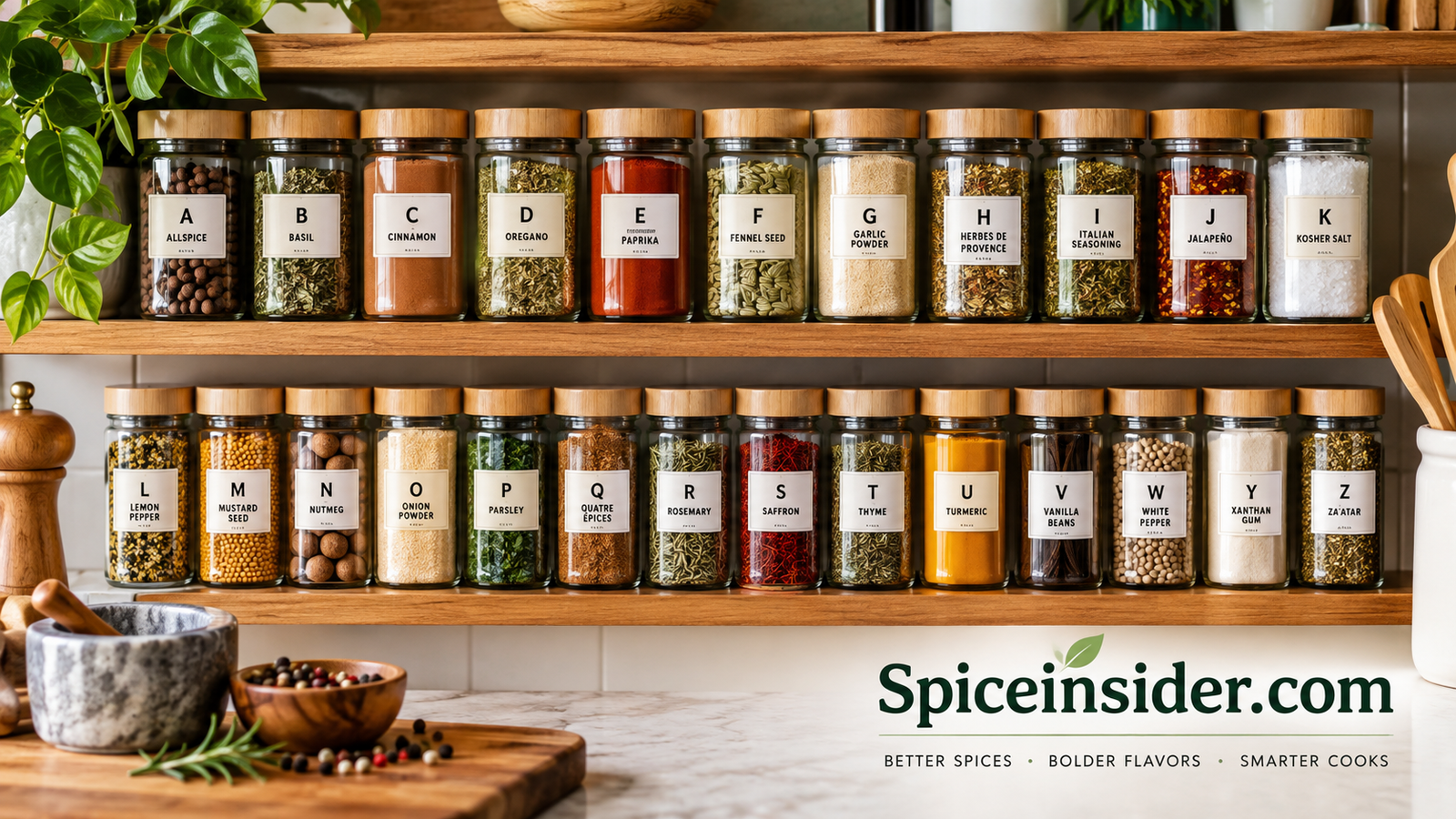
An alphabetical shelf is the most intuitive system, which fits nicely with the list above. Drawer inserts, tiered shelves, and magnetic tins all help. Browse our roundup of the best spice organizers for space-saving options, read our tips on how to organize spices in your kitchen, and use our guide to how to label spice jars so you always know the name and the purchase date.
When a Dish Turns Out Too Spicy
Even seasoned cooks overdo the heat once in a while. Dairy, sugar, acid, and extra bulk can all tame a fiery dish. We share specific fixes in our guide on how to reduce spice in food.
Matching jars, clear labels, and a good organizer make cooking faster and more fun.
Tools for Prepping Spices at Home
Once you start cooking with more of these spices, a few tools will make a real difference. You do not need a lot of equipment, but the right pieces help you get fresher flavor with less effort.
Mortar and Pestle
The oldest spice tool is still one of the best. It crushes rather than slices, which releases oils gently and gives you control over texture. It is ideal for small quantities and pastes. See our picks for the best mortar and pestle to find one that fits your kitchen.
Manual Grinders
Hand-cranked mills are compact, quiet, and require no power. They shine for peppercorns and coarse grinds. Our guide to the best manual spice grinder compares the top options.
Electric Grinders
For speed and fine powders, an electric grinder cannot be beaten. Many cooks keep one just for spices and clean it between uses. If you are unsure how to use one, our beginner walkthrough on how to use a spice grinder gets you started.
Other Handy Extras
- A small dry skillet for toasting seeds
- A fine-mesh sieve for sifting ground spices
- A microplane or nutmeg grater for whole nutmeg
- Airtight jars with wide mouths for scooping
- A label maker or waterproof labels
A mortar and pestle plus a small grinder covers nearly every spice job.
Frequently Asked Questions About Spice Names
How many spices are there in the world?
There is no official count, because the definition of a spice varies. Most food references recognize roughly 100 to 150 commonly used spices, and many more regional ones. This A–Z list covers the ones you are most likely to encounter.
What is the difference between a spice and an herb?
Spices usually come from the seeds, bark, roots, buds, or fruit of a plant, while herbs are the leafy green parts. Spices tend to be dried and stored long-term, and herbs are often used fresh, although dried herbs are common too.
What are the most common spices used in cooking?
Black pepper, cumin, paprika, cinnamon, garlic powder, onion powder, chili powder, turmeric, oregano, and ginger sit at the top of most kitchen lists. Those ten will carry you through the vast majority of everyday recipes.
Which spice starts with the letter Q?
True single spices starting with Q are rare. Quassia bark is used in bitters, and quatre épices is a classic French four-spice blend that is common in charcuterie and stews.
What is the most expensive spice?
Saffron is generally considered the most expensive spice by weight, because each crocus flower yields only a few threads that must be picked by hand. Vanilla is a close second. Our guide to the most expensive spice explains the price gap in detail.
Is salt a spice?
Not botanically. Salt is a mineral, and spices come from plants. Cooks still treat salt like a seasoning alongside spices, which is why the question keeps coming up. We dig into the reasoning in our article on whether salt is a spice.
Is sugar considered a spice?
Sugar is generally classed as a sweetener rather than a spice. Some spices, such as cinnamon and vanilla, taste sweet, but sugar itself comes from cane or beets and does not fit the plant-part definition.
What is the difference between cinnamon and cassia?
True cinnamon (Ceylon) has thin, delicate, multi-layered bark and a mild, sweet flavor. Cassia has thick, hard bark and a bolder, spicier taste. Most cinnamon sold in North American supermarkets is actually cassia.
Which spices are actually hot?
Heat comes from different compounds. Chiles (cayenne, habanero, pequin) use capsaicin, black and long pepper use piperine, and wasabi, horseradish, and mustard produce a sharp vapor that hits the nose. Sichuan pepper creates a tingling sensation rather than true heat.
How long do spices last?
Whole spices keep their potency for two to four years, while ground spices are best within six months to a year. Store them away from heat and light. If a spice smells faint, it is time to use more or replace it.
Are whole spices better than ground?
Whole spices generally deliver more flavor and last longer, but ground spices are more convenient. Many cooks keep both: whole for cumin, coriander, pepper, and nutmeg, ground for turmeric, paprika, and ginger.
What are the best beginner spices to buy first?
Start with black pepper, cumin, paprika, cinnamon, chili flakes, turmeric, and garlic powder. Add smoked paprika and a good curry or garam masala blend when you are ready to branch out, then add unusual spices one at a time as recipes call for them.
Conclusion: Your Spice Alphabet Awaits
The spice world can look overwhelming when you see it as a long alphabetical list, but it gets friendlier the moment you cook with it. You do not need to own every spice from ajwain to zedoary. What matters is knowing what each name means, so a new recipe or a new market never feels intimidating.
Pick a handful of spices from a cuisine you love, buy them whole where you can, store them well, and learn how they behave. Add one new name every few weeks. Before long, you will find that flavor combinations you once found mysterious feel natural, and the alphabet on your shelf will start to reflect your own cooking.
Bookmark this page as a quick reference, and keep exploring the guides below whenever you want to go deeper on a single spice, a tool, or a technique.
Browse top-rated spices, blends, and kitchen tools all in one place.