Pantry Fundamentals
Spices Every Kitchen Needs: The Complete Guide to Building a Flavor-First Pantry
A practical, no-clutter roadmap to the spices that earn their place in your cupboard — what each one does, which form to buy, how to store it, and how to use it without overthinking dinner.
Open a well-used spice cabinet and you can tell a lot about the cook who owns it. There is usually a jar of cumin that gets refilled every few months, a bottle of paprika that has quietly faded from red to orange, three different forms of cinnamon bought for three different recipes, and something expensive at the back that was purchased with great enthusiasm and used exactly once.
That cabinet is not a failure. It is a normal kitchen in the middle of learning what it actually cooks. The trouble is that most spice advice online is written as a shopping list rather than a strategy: buy these forty things, and good luck. Then the list sits on a bookmark bar, the jars multiply, and dinner still tastes like it is missing something.
This guide takes a different approach. Instead of ranking products or pushing you toward an enormous starter kit, it walks through the spices every kitchen genuinely needs — the ones that cover the full range of flavors you use week after week — and explains what each spice is for. You will find the flavor job of every essential, the smartest form to buy it in, how long it stays vibrant, how to store it, how to pair it, and the handful of mistakes that make spices taste flat, bitter, or dusty.
You will also find honest guidance on the gear side of things, because half of what makes a spice collection useful is whether it is fresh, findable, and easy to grind. Where that comes up, you can dig deeper into our related guides on everything from choosing the best spice grinder to labeling spice jars properly, so the advice here stays focused on the spices themselves.
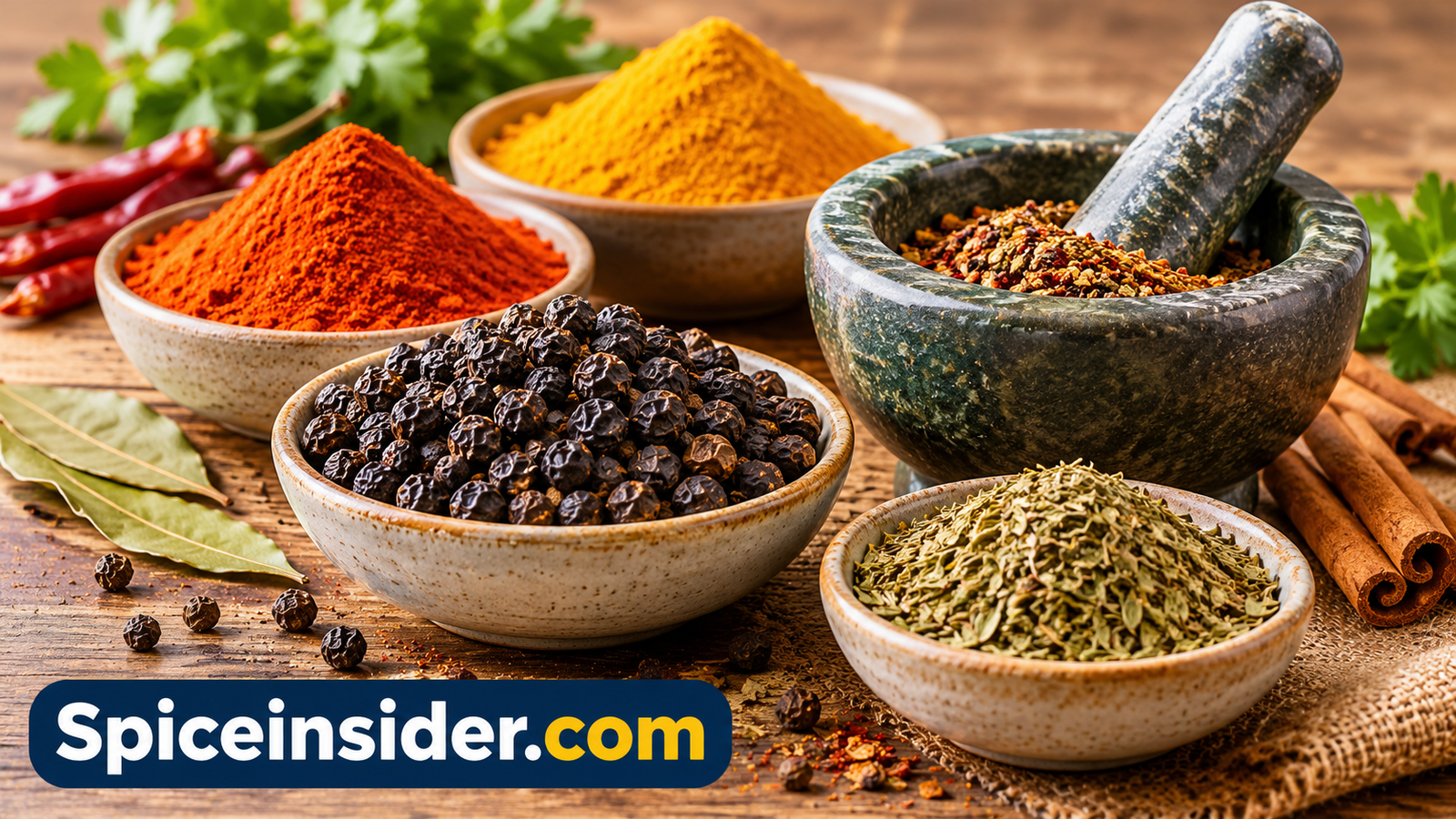
Think of the sections ahead as three overlapping layers. First, the foundation: salt, pepper, and the handful of seasonings that touch almost every meal. Second, the workhorses: the herbs and ground spices that define the cuisines you cook most often. Third, the exploration layer: the spices that let you branch out without committing to a shelf full of one-recipe purchases. By the end, you will be able to look at any spice rack — yours or someone else’s — and know instantly what is essential, what is redundant, and what is simply missing.
Let’s start with the question underneath the question: what does it actually mean for a kitchen to “need” a spice?
Starting From an Empty Cabinet?
A small starter set is the fastest way to cover the basics.
Then swap in better jars as your cooking habits settle.
01What “Every Kitchen Needs” Really Means
There is a tempting way to answer this question: list the most popular spices in the world and call it a day. But popularity is not the same as usefulness. Salt is universal; saffron is famous. Only one of those will change how your Tuesday night chicken tastes.
A spice earns a permanent place in your kitchen when it does one of three things. It covers a flavor you use constantly — salt for seasoning, black pepper for background heat, garlic powder for instant savory depth. It anchors a cuisine you cook often — cumin for tacos and chili, oregano for tomato sauces, cinnamon for baking and for Moroccan-style stews. Or it solves a specific problem — smoked paprika when you want a barbecue impression without a smoker, red pepper flakes when a sauce needs a lift, mustard powder when a dressing needs emulsified sharpness.
If a jar does none of those three things, it is a garnish for your shelf, not a tool. That is a perfectly fine category to own a few items from — food should be joyful, and sometimes a jar of sumac is simply delightful — but it is not the same as “needs.”
The Flavor Coverage Test
Here is a simple way to audit what you already own. Every savory meal you make draws on some combination of these flavor dimensions:
Write those nine words on a piece of paper and put a check next to every one you can cover with something in your cabinet right now. Most kitchens can handle salty, peppery heat, and herbal without trouble. The gaps usually show up in smoky, bright, and earthy — which is exactly why so many home-cooked meals taste “fine but flat.” The missing dimension is rarely more salt. It is usually warmth, smoke, or acid-adjacent tang from a spice rather than a squeeze of lemon.
This is why a thoughtful spice collection is smaller than people expect. You do not need four kinds of chili powder if you only cook mild food. You do not need fresh and dried versions of every herb. You need one reliable way to reach each flavor dimension, plus a couple of extras for the cuisines you love.
The Three-Tier Approach
Rather than a single flat list, think in tiers:
- Foundation tier (roughly a dozen items). Salt, black pepper, garlic powder, onion powder, dried oregano, dried thyme, bay leaves, sweet paprika, cumin, chili powder or red pepper flakes, cinnamon, and one dried herb blend. These belong in every kitchen that cooks, full stop.
- Workhorse tier (add as your cooking habits reveal themselves). Smoked paprika, cayenne, coriander, turmeric, ginger, nutmeg, cloves, allspice, rosemary, mustard powder. These unlock entire categories of food rather than single recipes.
- Exploration tier (buy one at a time, cook three things, then decide). Sumac, cardamom, star anise, saffron, za’atar, fennel seed, fenugreek, Sichuan peppercorn. This is where a kitchen develops a personality — and where waste happens if you shop impulsively.
The exploration tier deserves a rule of its own: never buy an unfamiliar spice without a specific plan for three meals. If you cannot name the dishes, wait. That one habit prevents more cabinet clutter than any organizational system ever will.
A Note on “Complete” Spice Lists
Long alphabetical catalogues of every spice name in existence are useful as reference, but they are terrible shopping lists. If you want the full vocabulary for curiosity’s sake, keep a reference page handy — it belongs in your bookmarks, not in your cart.
With that framework in place, the actual list becomes much easier to defend. Let’s look at the core collection in full, then take each family apart.
Fill the Flavor Gaps
Search by the dimension you are missing:
smoky, earthy, bright, or warm.
02The Core Collection: The Spices Worth Owning
What follows is the working list — the spices that show up again and again across cuisines, techniques, and weeknight cooking. It is deliberately compact. Each entry has a flavor job, a recommended form, and a short list of natural pairings so you can see at a glance why it earns its space.
Two things before the table. First, “form to buy” matters more than brand: whole spices for anything you will grind or toast, ground spices for anything you will use in a hurry. Second, this list assumes you cook at home several times a week. If you cook less often, buy smaller containers of everything on it.
| # | Spice | Flavor Job | Form to Buy | Everyday Pairings |
|---|---|---|---|---|
| 1 | Kosher or flaky saltFoundation | Seasoning and flavor amplification for everything | Coarse or flaky | Every dish, finishing, baking, pasta water |
| 2 | Black peppercorns | Background heat, floral sharpness, aroma | Whole, for grinding | Eggs, steak, salads, sauces, soups |
| 3 | Garlic powder | Instant savory depth without chopping | Ground, fine | Roasted vegetables, rubs, soups, marinades |
| 4 | Onion powder | Sweet allium backbone and body | Ground, fine | Burgers, gravies, taco seasoning, dressings |
| 5 | Cumin | Earthy warmth; the anchor of countless cuisines | Whole seed and ground | Beans, chili, lamb, roasted cauliflower, rice |
| 6 | Coriander | Citrusy, gently floral counterpoint to cumin | Whole seed and ground | Curries, pickles, chicken, carrots, lentils |
| 7 | Sweet paprika | Color, mild pepper sweetness, body | Ground | Roast chicken, potatoes, stews, eggs |
| 8 | Smoked paprika | Campfire depth without a smoker | Ground | Beans, rice, roasted vegetables, seafood |
| 9 | Chili powder | Balanced, blend-style heat for everyday food | Ground blend | Chili, tacos, corn, burgers, braises |
| 10 | Red pepper flakes | Finishing heat with texture and visible sparks | Crushed | Pasta, pizza, eggs, stir-fries, oil infusions |
| 11 | Cayenne | Clean, direct heat you control by the pinch | Ground | Mac and cheese, blackened fish, stews |
| 12 | Turmeric | Earthy bitterness and golden color | Ground | Rice, lentils, eggs, cauliflower, soups |
| 13 | Dried oregano | Robust herbal note that survives long cooking | Dried leaf | Tomato sauce, roasted chicken, beans, salads |
| 14 | Dried thyme | Quiet, savory herbal backbone | Dried leaf | Soups, mushrooms, potatoes, poultry, beans |
| 15 | Bay leaves | Slow-building aromatic depth in liquids | Whole dried leaves | Stocks, braises, rice, beans, tomato sauce |
| 16 | Ground ginger | Warm, sharp brightness for sweet and savory | Ground | Stir-fries, marinades, baking, carrots, squash |
| 17 | Cinnamon | Warm-sweet aroma that also works in savory food | Quills and ground | Baking, oats, coffee, lamb, chili, squash |
| 18 | Ground nutmeg | Creamy, warming perfume in tiny amounts | Whole nuts, grated | Cream sauces, spinach, potatoes, baking |
| 19 | Dried mustard powder | Sharp tang, emulsifying bite, rub crust | Ground | Vinaigrettes, cheese sauces, ham, roasts |
| 20 | Vanilla | Aromatic sweetness and rounded depth | Extract or paste | Baking, custards, coffee, fruit, oatmeal |
Twenty entries, and between them you can cover an enormous amount of real cooking: weeknight roasts, soups, tacos, curries, pasta, eggs, rice bowls, cookies, and cakes. Notice how few “exotic” items appear. Notice, too, that a handful of the entries are on the list in both whole and ground form — cumin, coriander, and cinnamon earn that double purchase because they show up in both fast weeknight dishes and slow weekend projects.
If you want a more exhaustive reference before you shop — the full universe of spice names, sorted and explained — keep one open in a second tab. But let the table above decide what actually comes home with you. A quick read on the complete list of spice names is genuinely useful for identifying what a recipe is asking for; it is far less useful as a shopping cart.
How to Read the “Form to Buy” Column
The form question is the single most impactful buying decision in this whole article, and it comes down to volatility. Spices get their character from aromatic oils, and those oils begin to dissipate the moment the spice is crushed. Whole spices hold their oils inside an intact structure; ground spices have a huge exposed surface area and lose aroma fast.
- Buy whole when the spice will be toasted, ground fresh, or simmered in liquid where it can slowly release — peppercorns, cumin seed, coriander seed, cinnamon sticks, bay leaves, nutmeg, cloves, cardamom pods.
- Buy ground when the spice is used raw, blended into rubs, or added in tiny measured amounts where grinding is impractical — turmeric, paprika, cayenne, garlic powder, onion powder, ginger, mustard powder.
- Buy both only for the three or four spices you use constantly in two very different ways. Everything else is just duplication.
From here, the rest of this guide works through the families in detail, starting with the two items that make every other spice work harder.
Build the Core, Not the Clutter
Start with the twenty above, in small jars.
Refill only the ones you actually empty.
03Salt and Pepper: The Two Non-Negotiables
Every spice conversation eventually arrives at an argument about taxonomy: is salt a spice? The short answer is that salt is a mineral, not a spice — it comes from the ground or the sea, not from a plant — but in the kitchen it functions as the master seasoning that makes every other flavor legible. If you want the full breakdown, we have a dedicated explainer on whether salt counts as a spice, and the distinction matters more than it sounds.
Here is why: if you treat salt as just another spice in the rotation, you under-salt. Salt does not add a flavor of its own so much as it raises the volume on everything else. A pinch in a tomato sauce makes it taste more like tomatoes. A proper seasoning of a roast makes the herbs read as herbs rather than as dust. No amount of expensive saffron will fix under-seasoned food, and no spice on this list performs properly without it.
Choosing Your Salt
| Type | Texture | Best For | Watch Out For |
|---|---|---|---|
| Kosher salt | Light, coarse flakes that pinch easily | Everyday cooking, seasoning meat, pasta water, baking | Brands measure differently by volume; weigh for baking |
| Fine sea salt | Dense, uniform crystals | Baking, doughs, precise seasoning, shakers | Easier to over-salt because it flows fast |
| Flaky finishing salt | Large, brittle, pyramid-like crystals | Finishing chocolate, tomatoes, buttered bread, salads | Costly; do not waste it inside a braise |
| Table salt | Very fine, uniform, with anti-caking agents | Baking where fine dissolve matters, table shakers | Harsher flavor; harder to control by feel |
| Smoked or flavored salt | Varies; usually coarse | Finishing grilled food, eggs, roasted vegetables | A specialty item, not a workhorse |
Most experienced home cooks land on two: a box of kosher salt beside the stove for everything savory, and a jar of flaky salt for finishing. Fine sea salt joins for baking. That is three containers, and it covers every situation.
Pepper: Freshly Ground Changes Everything
If there is one upgrade that costs almost nothing and improves nearly every dish, it is grinding peppercorns at the moment you need them. Pre-ground pepper is not unsafe and it is not useless — it is simply a shadow of the fresh thing. The volatile compounds that give pepper its floral, citrusy top notes are the first to escape after grinding, which is why a two-year-old tin smells like dust and tastes like mild bitterness.
A basic burr-style pepper mill is a lifetime purchase. The grind adjustment matters more than the price tag: you want to be able to go from coarse crackle for a steak to fine powder for a cream sauce. Store peppercorns in the mill in a cool, dark cupboard, not above the stove where steam and heat reach them.
Freshly Ground Pepper
- Floral, citrusy, aromatic top notes survive to the plate
- Adjustable grind for texture as well as flavor
- Peppercorns keep their punch far longer than ground pepper
- One small tin lasts months and costs very little per dish
Pre-Ground Pepper
- Aroma fades noticeably after opening
- Fixed grind limits how you can use it
- Easy to over-pour and accidentally dominate a delicate dish
- Often tastes flat rather than sharp
One practical tip that saves seasoned food more often than any technique: salt and pepper in layers. Season the meat before it goes in the pan, season the vegetables separately, season the sauce as it reduces, then finish the plated dish. Layered seasoning creates depth; a single heavy pour at the end creates a surface impression and a salty bite.
Upgrade the Two Essentials
A good salt cellar and a reliable pepper mill
change more dinners than any gadget.
04Warm and Sweet: The Baking Backbone
Warm spices are the ones people fall in love with first. They are the reason a kitchen smells like a bakery when a cake is in the oven, and they are far more versatile than their dessert reputation suggests. Cinnamon in a chili, nutmeg in a potato gratin, ginger in a stir-fry — the warm family adds rounded sweetness and aroma without adding sugar.
The family has five core members and one wildcard. Learn what each one actually smells and tastes like, and recipes stop being instructions to follow and start being adjustable.
| Spice | Flavor Note | Best Uses | Buy Form |
|---|---|---|---|
| CinnamonStart Here | Sweet wood, warmth, gentle heat | Baking, oatmeal, coffee, squash, lamb, chili | Quills plus ground |
| Nutmeg | Creamy, woody, faintly sweet perfume | Cream sauces, spinach, potatoes, custards, baking | Whole nuts, grated fresh |
| Ground ginger | Sharp, bright, peppery warmth | Stir-fries, marinades, cookies, carrots, squash | Ground |
| Cloves | Intense, medicinal-sweet, numbing in quantity | Ham glaze, pumpkin desserts, mulled drinks, pickles | Whole |
| Allspice | Cinnamon-nutmeg-clove in a single note | Stews, jerk marinades, baking, preserved fruit | Whole berries |
| Vanilla | Floral, creamy, deep sweetness | Cakes, custards, fruit, coffee, whipped cream | Extract or paste |
Cinnamon: The One Worth Choosing Carefully
Not all cinnamon behaves the same, and the difference is not marketing. The two most common types have distinct flavor profiles — one is bold, woody, and spicy-sweet; the other is delicate, floral, and citrusy with far less bite. If you have ever made a snickerdoodle that tasted harsh, or a rice pudding that tasted refined and perfumed, you have experienced the difference without knowing it. Our guide to Ceylon versus cassia cinnamon walks through the trade-offs, and we have specific recommendations for the best cinnamon for baking.
The practical version: keep a bolder type for cooking, coffee, and hearty baking, and consider a finer type for delicate desserts and for anything where cinnamon is the star rather than a supporting actor. If you only want one, buy a good-quality quill and grind it yourself — cinnamon quills are one of the few whole spices that are genuinely easy to pulverize.
Nutmeg: Always Buy Whole
Pre-ground nutmeg loses its perfume faster than almost any other spice. Whole nutmegs, by contrast, last an extraordinarily long time and cost very little per gratin. A few passes over a microplane is all a pound of potatoes needs. This is one of the highest-return purchases in the whole collection; if you are going to upgrade one item after reading this guide, make it this one. Our roundup of the best whole nutmeg covers what to look for when you shop.
Cloves, Allspice and the Power of Restraint
Cloves are the spice most often ruined by overuse. Their intensity is extraordinary — one clove too many and an entire dish tastes like a dentist’s office. The safe rule is to use fewer than you think, remove whole cloves before serving, and taste before committing. Allspice is far more forgiving and is the secret behind many slow-cooked stews and jerk-style marinades; it behaves like a blend even though it is a single berry.
Vanilla: Extract, Paste, or Bean
Vanilla is a spice even though we buy it as a liquid. The choice between formats is mostly about texture and intensity: pure extract dissolves invisibly into batters and custards, paste carries visible seeds and a slightly thicker aroma, and whole beans deliver the most complex flavor but demand more work. There is no single right answer, and the honest comparison in vanilla extract versus vanilla bean paste lays out exactly when each shines. If you are shopping for beans specifically, see our guide to the best vanilla bean brands before you spend.
Blends That Belong in This Family
Pumpkin pie spice is the classic warm-spice blend, and understanding what is actually in pumpkin pie spice teaches you something useful: most commercial warm blends are just cinnamon with small supporting amounts of the other spices in this section. Once you know that, you can make your own in thirty seconds and adjust the cinnamon-heavy formula to suit your taste.
And yes, warm spices cross categories freely. If you want inspiration beyond baking, our piece on what goes well with cinnamon covers savory pairings most people never try — including the ones that make a simple pot of beans taste restaurant-level.
Bake With Better Aromatics
Fresh quills and whole nutmeg outperform
anything pre-ground sitting in a tin.
05The Savory Everyday Workhorses
If warm spices are the poetry of a spice cabinet, the savory workhorses are the plumbing. They are the reason a Tuesday soup tastes like something rather than like hot water with vegetables. This group is unglamorous, inexpensive, and by far the most-used in any kitchen that cooks on weeknights.
The Allium Foundation: Garlic and Onion Powder
Fresh garlic and fresh onion are non-negotiable for most cooking, and dried alliums are not substitutes for them. But dried garlic and onion do something fresh cannot: they form a savory crust, they blend into rubs and dressings without moisture, and they distribute evenly in a big pot of chili or a tray of roasted vegetables where chopped pieces would burn or clump.
Use them in three specific situations. First, dry rubs, where added liquid would defeat the purpose. Second, long-simmered dishes, where they build a background layer that fresh aromatics alone do not reach. Third, fast cooking — a stir-fry sauce, a weeknight dressing — where you need savory depth in seconds. Avoid garlic salt entirely; it limits how much garlic flavor you can add without over-salting, and it is one of the most common sources of “why is this so salty.”
The Herb Shelf: Oregano, Thyme, Rosemary, Bay
Dried herbs are often dismissed in favor of fresh, which is backwards. Dried herbs are not a downgrade in general — they are a different tool. Dried oregano and dried thyme are actually more concentrated and stable than their fresh counterparts, and they are better suited to dishes that simmer. Fresh thyme and fresh rosemary are better for finishing and for roasts where the leaves have time to perfume fat.
- Oregano. The backbone of tomato sauces, roasted chicken, bean dishes, and marinades. Add it early so it can soften into the dish.
- Thyme. Quiet, savory, extremely flexible. Excellent in soups, mushroom dishes, potatoes, and anything with cream.
- Rosemary. Piney and assertive. It dominates if overused, but it makes potatoes, breads, and lamb extraordinary in the right quantity.
- Bay leaves. Not a garnish to leave in out of habit — remove before serving. They add a subtle, tea-like depth to anything that simmers for more than fifteen minutes.
- Parsley (dried). Mild, slightly grassy, useful as a color and freshness note. It is the least essential item in this list but handy for quick sauces.
Mustard Powder: The Underrated All-Rounder
Ground mustard deserves far more attention than it gets. It brings sharp tang without liquid, it helps emulsify vinaigrettes and cheese sauces, and it creates a fantastic crust on roasts and ham. It is also one of the few spices that improves with a little hydration — mixing it with water or vinegar before use wakes up its heat.
A Five-Minute Weeknight Rub
Here is a formula, not a recipe. Use it on chicken thighs, pork chops, salmon, cauliflower, or chickpeas:
- Two parts sweet paprika, two parts garlic powder, one part onion powder
- One part dried oregano or thyme, half part ground cumin
- A pinch of cayenne or red pepper flakes to taste
- Salt and freshly ground pepper, added separately and generously
- A little oil to help it adhere, and onto a hot pan or sheet tray
That single formula is the reason most spice collections exist. Once it is memorized, the rest of the cabinet becomes experimentation rather than necessity.
Timing Matters as Much as Quantity
Hardy dried herbs — oregano, thyme, rosemary, bay — want time to soften, so add them early. Delicate dried herbs and ground spices can turn bitter if they sit in hot fat too long. When in doubt, add in two stages: a foundation at the start and a small finishing pinch at the end.
Restock the Everyday Shelf
Garlic, onion, oregano, thyme and bay
are the cheapest flavor upgrades you can make.
06The Heat Cabinet
Heat is the most misunderstood dimension in home cooking. People tend to treat it as a single dial — mild, medium, hot — when it is really several different sensations arriving from different directions. Black pepper gives floral, back-of-the-throat warmth. Chili peppers give front-of-the-mouth burn that builds. Mustard gives a nasal sharpness. Ginger gives a bright, zingy heat. Knowing which one you are reaching for is what separates food that tastes layered from food that just tastes spicy.
| Heat Source | Level | Character | Use It For |
|---|---|---|---|
| Red pepper flakes | Medium | Bright, direct burn with visible texture | Finishing pasta, pizza, eggs, stir-fries |
| Chili powder | Mild to medium | Rounded, blend-style, usually with garlic and cumin | Chili, tacos, corn, burgers, braises |
| Cayenne | Hot | Clean, sharp, no distracting flavor | Precision heat in sauces, rubs, cheese dishes |
| Smoked hot paprika | Mild to medium | Smoke first, heat second | Beans, rice, roasted vegetables, potatoes |
| Black pepper | Mild | Floral, aromatic warmth rather than burn | Everything, especially eggs and cream sauces |
| Ground ginger | Mild | Bright, zingy, warming rather than burning | Marinades, baking, carrots, squash, soups |
How to Layer Heat Instead of Piling It On
The best spicy dishes never rely on one heat source. A good chili might have chili powder early for body, a pinch of cayenne mid-cook for depth, and red pepper flakes at the table for brightness. That layering is why restaurant food can taste intensely flavorful without tasting painful.
Three habits make heat controllable:
- Add in stages and taste between them. You can always add more; you cannot subtract. If you do overdo it, there are fixes — a fat source, a dairy element, an acid, or simply dilution with more of the base ingredient. Our guide on how to reduce spice in food covers the rescue techniques worth knowing before you need them.
- Match heat to fat. Fat carries and softens chili heat, which is why a creamy sauce can be heavily spiced without being aggressive and a lean broth cannot.
- Separate cooking heat from finishing heat. Cayenne cooked into a stew reads very differently from the same amount shaken over the finished bowl.
Paprika Deserves Its Own Conversation
Paprika is the spice most likely to disappoint people, usually because the jar is old or the style is wrong for the dish. Sweet paprika adds color and gentle pepper flavor. Smoked paprika adds the impression of a grill or a fire, and it is transformative in vegetarian cooking where nothing else supplies that note. Hot paprika adds straightforward heat. If you have only ever used a generic dusty-red tin, it is worth seeking out a quality smoked style — we compare the options in our guide to the best smoked paprika.
A Word on Handling Hot Chilies
If you work with fresh hot peppers as well as ground heat, basic kitchen caution applies: the oils cling to skin and transfer easily to eyes and other sensitive areas. Wash hands thoroughly after handling, avoid touching your face, and consider using a spoon or gloves when seeding very hot varieties. If a dish ends up hotter than intended, the dilution and fat techniques above are your first line of defense.
Build Your Heat Range
Mild, smoky, sharp and bright —
four kinds of heat cover almost every dish.
07Earthy and Global Flavor Bridges
Once the foundation and workhorse tiers are in place, this is where a kitchen develops a voice. The spices in this section are not strictly necessary in the way salt is — but they are the ingredients that let you cook food from somewhere else with any credibility at all. They are also the ones most worth buying carefully, because quality varies enormously and a bad version of a good spice teaches you nothing about the real thing.
Cumin, Coriander and Turmeric: The Workhorse Trio
These three show up together across South Asia, the Middle East, North Africa, and Latin America, which is about as strong a recommendation as a spice can get. Cumin is deep, earthy, and slightly bitter. Coriander seed is citrusy and floral and acts as a counterweight. Turmeric is earthy and mildly bitter with brilliant color — it is a background player in savory cooking, not a lead, and it pairs beautifully with black pepper and fat.
Quality differences here are real and visible. Freshly ground coriander smells like citrus; a stale jar smells like dust. Good turmeric is vividly golden and stains everything it touches. If turmeric is a regular in your cooking, it is worth buying a well-sourced powder rather than whatever sits at eye level; our comparison of the best turmeric powders explains what separates a vibrant jar from a flat one.
Cardamom, Star Anise and the Aromatic Wing
Cardamom is arguably the most complex spice in any kitchen — floral, eucalyptus-like, sweet, and slightly citrusy. Green cardamom pods are the everyday form and hold their aroma far longer than pre-shelled seeds. Star anise brings a strong licorice note and is central to several slow-simmered dishes and braises.
Both are worth buying whole. Both are also worth using with restraint; cardamom in particular can take over a dish entirely.
The Spice That Costs the Most
Saffron sits in a category of its own. It is delicate, floral, hay-like, and unmistakable — and it is famously the most expensive spice in the world, which is exactly why it is so often adulterated. If you are curious about the price side of that story, we explain why saffron commands the price it does. If you want to buy it, read our guide to how to tell if saffron is real first — the visual and aroma checks take thirty seconds and save you from paying premium prices for dyed threads. Our roundup of the best saffron brands is where we go once you know what to look for.
The practical advice on quantity: saffron is used in pinches, not spoonfuls. A tiny amount properly bloomed in warm water or milk delivers more flavor than a large amount thrown in dry. It is one of the rare spices where less genuinely is more.
Sumac, Za’atar and the Bright Category
Sumac is the answer to a question most home cooks have not asked yet: how do I add tang and brightness to a dish without adding liquid acid? Its deep red, coarse-ground berries bring a lemony tartness that works on grilled meats, roasted vegetables, salads, and rice. If you have never cooked with it, start with our explainer on what sumac spice actually is, then buy a small jar and use it as a finishing spice.
Za’atar is a blend rather than a single spice, but it belongs here because it performs the same job — bright, herbal, sesame-rich, and instantly recognizable. It is one of the most useful blends you can own for a simple reason: it turns olive oil and bread into something worth serving.
Mapping Spices to Cuisines
| Cuisine | Anchor Spices | Starter Dishes |
|---|---|---|
| Mexican / Tex-Mex | Cumin, chili powder, oregano, coriander, cayenne | Tacos, beans, chili, roasted corn |
| Indian Subcontinent | Cumin, coriander, turmeric, garam masala, cardamom, mustard seed | Lentil dal, rice pilaf, roasted cauliflower |
| Middle Eastern | Sumac, za’atar, cumin, coriander, allspice, cinnamon | Roasted chicken, hummus, rice, grilled vegetables |
| East Asian | Five-spice, ginger, white pepper, star anise, Sichuan peppercorn | Braised meats, stir-fries, noodle soups |
| Mediterranean | Oregano, thyme, rosemary, paprika, fennel seed | Tomato sauces, roasted fish, beans, potatoes |
| North African | Cumin, coriander, cinnamon, ginger, turmeric, saffron | Slow stews, couscous, roasted squash |
Two blends from this world deserve mention because they are so often misunderstood. Chinese five-spice is a specific, deliberate balance of sweet, bitter, and aromatic elements — understanding what goes into Chinese five spice makes it far easier to use well. And for Indian cooking, the right grinder makes an outsized difference when you are working with hard seeds and nuts of spice; if that is your main culinary direction, see our guide to the best grinders for Indian spices.
Add One New Bridge at a Time
Buy small, cook three dishes, then decide
whether the jar earned its place.
08Whole vs. Ground: What to Buy and Why
This is the decision that quietly determines how good your food tastes, and most people make it on autopilot based on whatever the supermarket shelf offers. The difference between whole and ground spices is not subtle, and it is not about snobbery. It is chemistry.
What we call “spice flavor” is largely volatile aromatic oil. Those oils are protected inside whole seeds, bark, and buds. The moment the structure is broken, the oils begin to oxidize and evaporate. Ground spice has an enormous surface area compared to whole spice, which means it starts losing its top notes immediately and continues to fade every week it sits in a jar.
| Factor | Whole Spices | Pre-Ground Spices |
|---|---|---|
| Freshness window | Holds aroma for a long time in intact form | Fades noticeably over months, faster once opened |
| Flavor intensity | Noticeably brighter, more layered, more aromatic | Muted, often dusty or flat in older jars |
| Effort | Requires a grinder, mortar, or microplane | Open jar, measure, done |
| Cost | Often cheaper per usable amount | Convenient, but wasteful if it goes stale |
| Best for | Toasting, blooming, finishing, long-simmered dishes | Rubs, baking, quick sauces, precise small amounts |
| Biggest risk | Buying too much and grinding rarely | Keeping jars long past their prime |
Our full comparison of whole versus pre-ground spices covers the evidence in detail, but the practical takeaway is short: whole spice where you can, ground spice where convenience genuinely matters.
The Grinders Worth Knowing About
Grinding at home is what makes whole spices worth buying. The tool you choose shapes what you can do:
| Tool | Best For | Trade-offs |
|---|---|---|
| Electric blade grinder | Fast, small-batch grinding for everyday cooking | Produces a mix of particle sizes unless you pulse carefully |
| Burr grinder | Consistent, even grind sizes and precision work | Costs more and needs occasional clearing of retained powder |
| Manual hand grinder | Small amounts, quiet kitchens, travel, control | Slower; can be tiring for hard spices in volume |
| Mortar and pestle | Pastes, crushing seeds, releasing oils by hand | Effort and cleanup; not ideal for large quantities |
Which type suits you depends on what you grind. If you want to understand the mechanical difference, our breakdown of blade versus burr grinders for spices explains why particle size matters so much for flavor extraction. If you are leaning toward an electric model, start with our roundup of the best spice grinders; specific reviews of the Cuisinart SG-10 and the Secura spice grinder cover two popular options in depth. For people who prefer quiet and control, manual spice grinders and a classic mortar and pestle are both excellent choices.
What If You Do Not Own a Grinder?
You are not stuck. A heavy pan and a rolling pin will crack peppercorns and cumin seeds; a fine grater handles nutmeg and cinnamon; a zip-top bag and a mallet do surprisingly honest work. We keep a full guide on how to grind spices without a grinder for exactly this situation, and it is worth reading before you buy a tool you may not need.
The Coffee Question
Nearly everyone eventually wonders whether they can use the same machine for coffee beans and spices. It is possible, but the residue issue is real: coffee oils cling to the grinding chamber and will absolutely migrate into your cumin. If you want to share one appliance, be prepared to clean between uses — and read our guidance on whether you can grind coffee in a spice grinder before you commit.
Grind It Yourself
Whole spices plus a decent grinder is the single
biggest flavor-per-dollar upgrade in the kitchen.
09Grinding, Toasting and Blooming: Getting More From Less
Owning whole spices is only half the equation. The other half is knowing three simple techniques that make even a modest spice taste expensive: toasting, grinding, and blooming. Together they take about four extra minutes and produce results that no amount of extra seasoning can replicate.
Technique 1: Toast Before You Grind
Dry toasting means heating whole spices in a dry pan until they become fragrant. It drives off residual moisture, deepens the flavor, and makes the seeds easier to grind. The visual cues are simple: the spices darken slightly, become aromatic within a minute or two, and may release a little of their own oil. The moment you can smell them strongly, take the pan off the heat and transfer the spices to a cool plate — residual heat keeps cooking them in the pan.
This is the technique that transforms a flat curry into something that tastes like it came from a restaurant. If you want the step-by-step visual version, we have a complete walkthrough on how to toast spices before grinding, including the warning signs that you have gone too far.
Technique 2: Grind in Short Pulses
Grinding is not about holding a button down. Long continuous runs heat the chamber, which drives off the very aromatics you are trying to capture. Short pulses, a shake between bursts, and patience produce a finer, more even grind with better flavor.
If you own an electric grinder, our practical guide to how to use a spice grinder covers loading, timing, and technique. A few common frustrations come up constantly, and they all have straightforward fixes:
| Symptom | Likely Cause | Fix |
|---|---|---|
| Grind is not fine enough | Overloaded chamber or too-short grinding | Smaller batches, more pulses — see why your grinder isn’t getting fine enough |
| Chunks left behind | Oily spices sticking to the walls | Shake between pulses — full guide to why grinders leave chunks |
| Burning smell | Runs that are too long for the motor | Pulse instead of hold; see motor burning smell explained |
| Lid will not open | Oil residue sealing the gasket | Gentle pressure and warmth — stuck lid troubleshooting |
And when a grinder simply cannot hold up to hard spices, the fix is usually a better tool rather than better technique — which is exactly what we cover in our guide to spice grinders that don’t break.
Technique 3: Bloom in Fat or Liquid
Blooming means adding ground spices to warm oil, butter, or another fat for a short period before the rest of the liquid goes in. Many of the flavor compounds in spices are fat-soluble rather than water-soluble, so this step makes them dramatically more expressive. It is the reason a curry paste cooked in oil tastes so much more vivid than spices dumped into water.
The danger is burning. Ground spices in hot fat can go from fragrant to bitter in under a minute. Keep the heat moderate, keep them moving, and add your liquid as soon as they smell great.
Keeping Your Grinder Honest
Everything in this section depends on having a clean grinding chamber. Old residue turns rancid and makes every subsequent batch taste like the last one. Basic maintenance is quick: empty fully after each use, wipe the chamber with a dry brush or cloth, and give it a deep clean when you notice lingering aroma.
Our complete how to clean a spice grinder guide covers routine and deep cleaning, and the closely related question of whether a spice grinder can be washed with water depends entirely on the motor housing — read before you rinse. For stubborn smells, the classic dry methods work remarkably well: uncooked rice or a piece of stale bread absorbs oil and odor from the chamber. We detail both in our rice and bread odor-removal method and the broader grinder odor removal guide. And for the daily habits that prevent the problems in the first place, our spice grinder dos and don’ts is the short version worth keeping in mind.
Toast, Grind, Bloom
Three minutes of technique delivers more flavor
than three more jars ever will.
10Storage, Freshness and Organization
Spices die quietly. There is no dramatic moment when a jar becomes inedible — it just slowly stops smelling like anything, and the food made with it slowly becomes flatter. The good news is that storage mistakes are easy to fix, and the fixes cost nothing.
The Four Enemies
- Heat. The cabinet above the stove is the single worst place to store spices. Every time you boil a pot, you are gently cooking everything in that shelf.
- Light. Sunlight degrades color and aroma compounds. Clear jars are beautiful; they are also faster to fade unless kept in a dark cupboard.
- Air. Every time a jar is opened, oxygen works on the exposed surface. Small containers that you refill beat large containers that sit half-empty for a year.
- Moisture. Steam and damp spoons introduce water, which leads to clumping and, in the worst cases, spoilage. Never store a wet spoon in a spice jar.
The ideal location is therefore simple: a cool, dark, dry cupboard away from the stove and sink, or a drawer with a lid. If you want the specific setups, we have written extensively about the best spice organizers and the practical details of organizing a spice drawer so everything is visible at once.
Container Comparison
| Storage Method | Best For | Downside | Freshness Impact |
|---|---|---|---|
| Small glass jars in a drawer | Everyday spices used constantly | Light exposure if the drawer is glass-topped | Excellent if refilled in small amounts |
| Opaque tins | Light-sensitive spices and whole seeds | Hard to see contents at a glance | Very good |
| Original supermarket jars | Low-effort storage and quick shopping | Large openings, inconsistent sizing, cluttered shelves | Fine for a few months, then fades |
| Wall rack near the stove | Visual display and fast access | Heat and steam exposure from cooking | The worst of the common options |
Labeling Is Not Fussy — It Is Functional
The single most common cause of spice waste is not staleness; it is not knowing what is in a jar. Decanted collections look lovely and then become a guessing game of powders. A consistent labeling system fixes this permanently. Our step-by-step on how to label spice jars covers what to write beyond the name — date, source, and whether the jar contains whole or ground — because those three details change how you cook with it.
Date labeling in particular is a small habit with big consequences. Write the purchase month on the lid. Six months later, you will know instantly which jars are candidates for replacement and which are still worth using.
Buying and Storing in Bulk
Bulk bins are the best value in spice shopping and the easiest way to waste money simultaneously. The rule is simple: buy in bulk only for spices you use in volume, and transfer to airtight containers immediately. Our guide on how to store bulk spices covers container choice, portioning, and the freezer trick for very long storage.
How to Tell If a Spice Is Past Its Best
- Smell test. Rub a pinch between your fingers. If it barely smells like anything, it will barely flavor anything.
- Color check. Paprika and turmeric should be vivid; faded color means faded flavor.
- Texture test. Ground spices should pour freely. Persistent clumps mean moisture got in.
- Taste test. A small pinch on the tongue is the final word. Bland means replace.
None of this requires money or equipment. It requires a cool cupboard, small jars, labels with dates, and the discipline to buy only what you will actually use.
Organize Once, Use Everything
Matching small jars and clear labels are the difference
between a spice rack and a spice museum.
11Pairing Cheat Sheet and Blends
Knowing which spices to own is only useful if you know where they belong. Pairing is where a spice collection stops being inventory and starts being cooking. The table below is designed for real weeknights: it covers the ingredients most people actually cook, and it maps them to warm spices, herbal spices, and bright finishing notes.
| Ingredient | Warm Spices | Herbal Spices | Bright / Finishing |
|---|---|---|---|
| Chicken | Cumin, coriander, paprika, cinnamon pinch | Thyme, oregano, rosemary, bay | Lemon zest, sumac, fresh parsley, black pepper |
| Pork | Cumin, coriander, allspice, ginger, mustard | Thyme, sage, rosemary, oregano | Apple cider vinegar, fennel seed, red pepper flakes |
| Salmon | Coriander, ginger, paprika, mustard | Dill, thyme, fennel, bay | Black pepper, sumac, citrus, white pepper |
| Sweet potatoes | Cinnamon, cumin, ginger, smoked paprika | Thyme, rosemary, sage | Chili flakes, flaky salt, lime |
| Beans and lentils | Cumin, coriander, turmeric, allspice | Oregano, thyme, bay | Red pepper flakes, sumac, black pepper |
| Roast vegetables | Cumin, coriander, smoked paprika, ginger | Thyme, rosemary, oregano | Flaky salt, lemon, chili flakes |
We go deeper into specific pairings elsewhere — a complete guide to what spices go with chicken, another on what spices go with pork, one for what spices go with salmon, and a favorite on what spices go with sweet potatoes. For the bigger question of how flavors combine in general — which spices belong together and why — see what spices go well together.
Blends: Buy or Make?
Most commercial blends are simply combinations of spices you already own. Making your own is cheaper, adjustable, and usually better — but store-bought blends are unbeatable for consistency and convenience when you cook the same flavor profile constantly.
- Make your own when you use the blend occasionally, want to control heat or salt, or own the components already. Warm-spice blends, taco seasoning, and simple herb mixes fall here.
- Buy prepared when the blend has hard-to-source components, involves specific roasting, or is something you use weekly without variation. Complex curry blends and specialty regional mixes fall here.
- Never buy a blend where salt or sugar is the first ingredient and you cannot control the amount. That is a sauce base, not a spice.
Speaking of sugar — it comes up constantly in spice conversations because so many blends contain it. For the record, sugar is a sweetener rather than a spice, but the boundary gets blurry with cinnamon-sugar mixes and sweet rubs. We break down the reasoning in our explainer on whether sugar counts as a spice if you want the full picture.
Three Blends to Memorize
- Everyday savory: garlic powder, onion powder, sweet paprika, dried oregano, black pepper, salt. Use on everything from roasted potatoes to sheet-pan chicken.
- Warm sweet: cinnamon with small amounts of ginger, nutmeg, and cloves. Use in baking, oatmeal, coffee, and — surprisingly — in squash and chili.
- Bright finishing: sumac or lemon zest, red pepper flakes, flaky salt, and a little black pepper. Sprinkle at the table on almost anything.
Blends Make Weeknights Faster
Keep two or three premixed jars ready
and dinner is halfway done before you start.
12Mistakes, Budget and Smart Buying
The last section is about money and habits, because a spice collection is only as good as the discipline behind it. Most kitchen spice waste comes from four predictable mistakes, and all four are avoidable.
Mistake 1: Buying Large Containers of Rarely Used Spices
A big jar looks like value until it sits half-full for two years. The correct size is always the one you will finish within a season or two. For anything in the exploration tier, buy the smallest container available or split a purchase with a friend.
Mistake 2: Ignoring Price Per Gram
Spice pricing is wildly inconsistent. The same cumin can cost several times more per gram in a small branded jar than in a bulk bin or at a shop specializing in a particular cuisine. The smartest shoppers build a mental map of which stores offer which categories — supermarket for basics and convenience, specialty shops and bulk bins for volume and quality on specific items.
Mistake 3: Letting the Rack Grow Faster Than the Cooking
If a jar has been unopened for a long time, it is not seasoning — it is clutter. A one-in-one-out habit keeps the cabinet honest: when you buy a new spice, use it in three dishes within a month, or pass it on.
Mistake 4: Adding Everything at the Beginning
Spices added too early can lose their top notes; herbs added too late can taste raw and dusty. Learning the timing for each family is worth more than buying better brands. It is the difference between a cook who follows recipes and one who adjusts them.
Buying in Bulk: The Honest Trade-offs
Advantages of Bulk Buying
- Far better value per gram for spices you use constantly
- Lets you buy exactly the amount you need for a project
- Access to fresher stock with higher turnover
- Reduces packaging waste over time
Where Bulk Buying Backfires
- Whole spices keep well, ground spices fade quickly
- Requires proper airtight storage to stay usable
- Easy to over-buy and waste without a plan
- Quality varies; bulk bins are not always the freshest
The compromise that works for most households: buy in bulk the five or six spices you use weekly, and buy small jars for everything else. That single rule keeps quality high and waste low.
A Note on Safety and Cleanliness
Spices are shelf-stable, but they are not invulnerable. Water introduced by a damp spoon, storage in a humid location, or an improperly sealed jar can lead to clumping and, eventually, spoilage. Keep utensils dry, keep lids tight, and if a spice shows signs of moisture, unusual odor, or any visible change beyond fading, replace it rather than risk it. When in doubt about anything involving grinder maintenance or food safety with your equipment, consult the manufacturer’s guidance alongside the practical advice in our cleaning guides.
The Final Shopping Rule
If you take one thing from this entire guide, take this: buy for the food you actually cook. A spice cabinet built around someone else’s cuisine will not make you a better cook; a spice cabinet built around your real weeknights will. Start with the foundation, add workhorses as patterns emerge, and let the exploration tier follow your curiosity rather than drive it.
Shop Smarter, Not Bigger
Small jars, honest dates, and a cool cupboard
beat a crowded shelf every single time.
Frequently Asked Questions
These are the questions that come up most often when people start building a spice collection from scratch.
What spices should every kitchen have?
At minimum: kosher or flaky salt, whole black peppercorns, garlic powder, onion powder, cumin, sweet paprika, dried oregano, dried thyme, bay leaves, chili powder or red pepper flakes, cinnamon, and one warm-spice like nutmeg or ginger. That foundation covers most everyday cooking, and you expand from there based on what you make.
How many spices does a beginner actually need?
Around a dozen. Anything beyond the foundation tier should be added one at a time with a specific dish in mind. Buying forty jars at once feels productive and usually results in a shelf full of items used twice.
Is it better to buy whole or ground spices?
Whole spices keep their aroma much longer and taste noticeably brighter when freshly ground. Ground spices are more convenient and work well for rubs, baking, and quick sauces. A practical kitchen uses both: whole for cumin, coriander, peppercorns, cinnamon, and nutmeg; ground for paprika, turmeric, cayenne, garlic powder, and ginger.
How long do spices stay fresh?
Whole spices hold their flavor far longer than ground ones. As a general guide, ground spices are at their best within several months of opening and noticeably weaker after a year, while whole spices can stay vibrant considerably longer when stored properly. The smell test is more reliable than any date on the label.
Where should I store spices?
In a cool, dark, dry cupboard away from the stove, oven, and sink. Heat, light, air, and moisture are the four things that destroy flavor fastest. A drawer with a lid is ideal; a rack directly above the cooktop is the worst common choice.
Why does my food taste flat even with plenty of spice?
Usually because the spices are stale, added at the wrong time, or under-salted. Salt amplifies everything else, so no amount of cumin will compensate for under-seasoning. Toasting or blooming spices in fat before adding liquid is another common fix, as is a finishing pinch of fresh spice or herb at the end.
Do I need a spice grinder?
If you buy whole spices, yes — or at least a mortar and pestle. A basic electric grinder handles most home needs quickly. If you would rather not buy one, there are workable methods using a pan, rolling pin, or fine grater, though they take more effort.
Can I use the same grinder for coffee and spices?
Technically yes, but the oils and residue from one will affect the other. If you share a grinder, clean it thoroughly between uses and accept that some flavor transfer may occur. Many people prefer to keep separate machines precisely for this reason.
What is the difference between herbs and spices?
Broadly, herbs come from the leafy parts of a plant while spices come from seeds, bark, roots, or buds. Some plants give us both — coriander leaves are an herb, coriander seeds are a spice. In the kitchen the distinction matters mainly for timing: delicate herbs go in late, hardy spices and dried herbs can cook longer.
How do I fix a dish that is too spicy?
Add fat, dairy, acid, or simply more of the base ingredient to dilute the heat. A spoon of yogurt or cream, a splash of something acidic, or extra vegetables or starch can all bring a dish back into balance. The key is to dilute and adjust rather than to add more seasoning on top.
Should I buy expensive saffron and vanilla?
Buy quality where the spice is the star. Saffron and vanilla are used in small amounts but have enormous influence, and low-quality versions are often adulterated or diluted. For background spices like garlic powder or dried oregano, brand matters far less than freshness.
Still Building Your Collection?
Start with the foundation list and grow from there.
Consistency beats completeness in every kitchen.
Conclusion: Build a Cabinet That Matches How You Cook
The spices every kitchen needs are not a fixed list handed down from somewhere official. They are the spices that cover the flavors you use constantly, anchor the food you actually eat, and occasionally push you toward something new. Salt and pepper come first because everything else depends on them. The savory workhorses follow because they make weeknight cooking taste intentional. The warm spices, the heat, and the global bridges come after that — and they come one at a time.
What separates a spice collection that works from one that simply takes up space is rarely the budget. It is freshness, storage, timing, and restraint. A dozen well-chosen jars kept cool and used confidently will outperform a crowded rack of faded powders every day of the week.
Start small. Toast something this week. Grind it fresh. Taste the difference. Then decide what belongs in your cabinet — not in someone else’s list.
Ready to Upgrade Your Spice Cabinet?
Start with the essentials and build from there.
Every great dish begins with the right seasonings.
You May Also Like
More from Spice Insider to keep your pantry sharp and your kitchen running smoothly.
How to Clean a Spice Grinder
Routine and deep cleaning methods that keep residue and rancid oils out of every batch.
TechniqueSpice Grinder Dos and Don’ts
The daily habits that prevent clogs, uneven grinds, and premature motor wear.
GearCan You Grind Coffee in a Spice Grinder?
What actually happens to flavor when one chamber does both jobs, and how to manage it.
ExplainerWhat Is in Chinese Five Spice
The five elements behind the blend and how to use them in everyday cooking.
ExplainerWhat Is in Pumpkin Pie Spice
A breakdown of the classic warm blend and how to mix your own in seconds.
ReferenceThe Complete List of Spice Names
An alphabetical reference for identifying what a recipe is actually asking for.
Buying GuideThe Best Mortar and Pestle
Materials, weights, and sizes compared for crushing spices and building pastes.
Buying GuideThe Best Manual Spice Grinder
Quiet, controlled grinding for cooks who prefer to work by hand.
ExplainerIs Sugar a Spice?
Where the line between seasoning, spice, and sweetener actually sits.