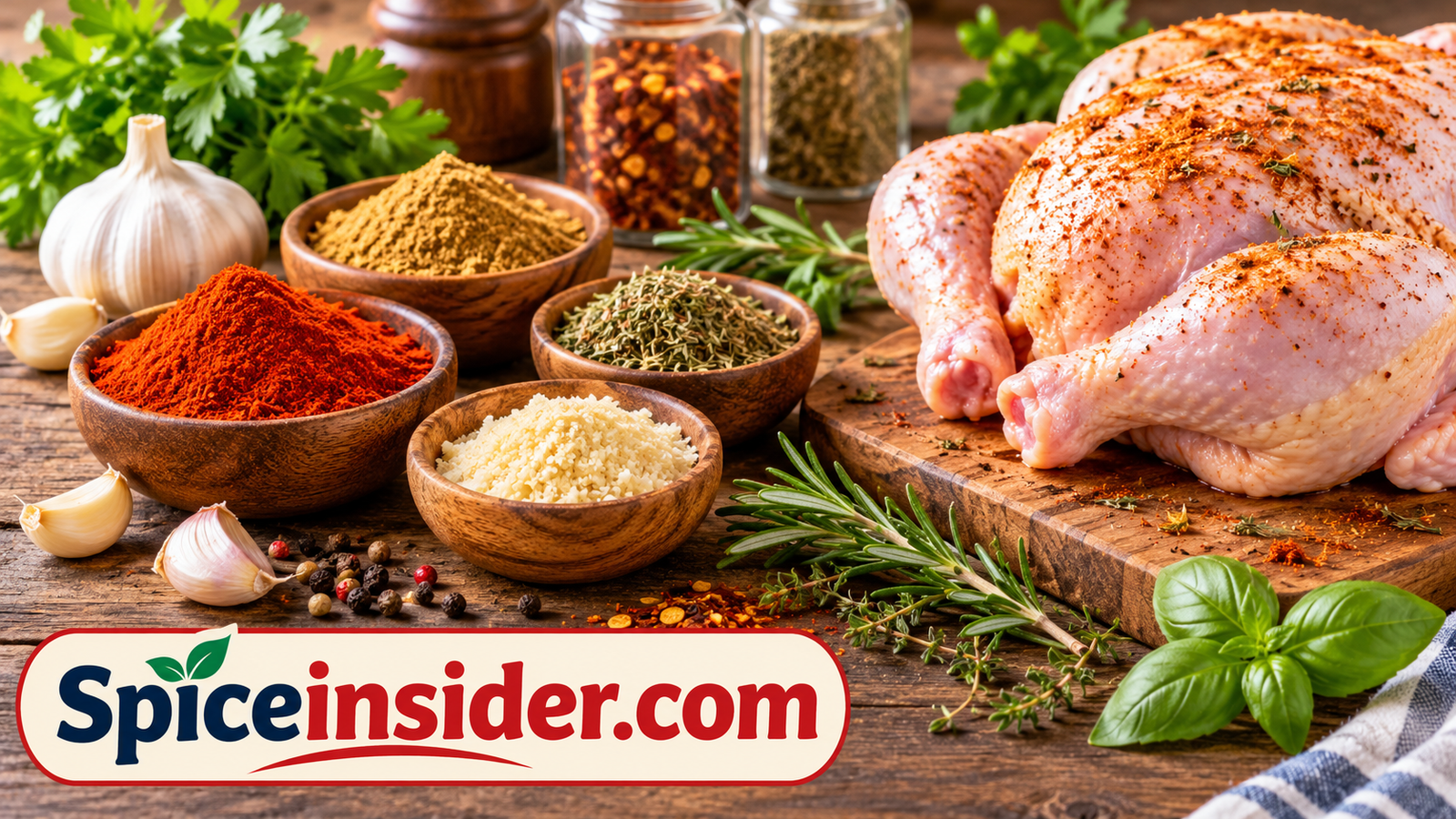
Ask ten cooks what spices go with chicken and you will get ten different answers, all of them correct. That is the whole point of chicken. It is the blank canvas of the protein world — mild in flavor, forgiving in texture, and equally happy under a smoky Texan rub, a fragrant Indian masala, a lemon-and-oregano Mediterranean crust, or nothing but salt, pepper and butter.
The reason the question feels so open-ended is that chicken does not dictate a flavor direction the way salmon, pork, or lamb does. A fatty pork shoulder leans toward sweet and sour. Salmon practically begs for dill, citrus, and mustard. Lamb has an assertive flavor that can handle rosemary, cumin, and bold warm spices. Chicken gives you almost no resistance at all. Whatever you put on it, that is what it becomes.
Which is exactly why seasoning chicken well is a skill worth learning properly. The difference between a weeknight chicken breast that tastes like heated cardboard and one that makes people pause mid-bite almost never comes down to some rare, expensive ingredient. It comes down to three things: choosing a clear flavor direction, using salt and fat correctly, and knowing which spices survive the particular way you are cooking.
This guide covers all of it. We start with why chicken behaves the way it does around seasoning, then walk through the core spices worth owning, the families of flavor — warm and earthy, bright and herby, smoky and hot, sweet and aromatic — and the famous blends that have already done the pairing work for you. After that we get practical: which spices suit roasting versus grilling versus braising, which cuts want which flavor style, how to decide between whole and pre-ground spices, how to build a balanced rub from scratch, and how to store everything so it still tastes alive six months from now.
Think of it less as a list and more as a map. Once you can see the territory, you will stop Googling “what spices go with chicken” every time you open the fridge — and start improvising with confidence.
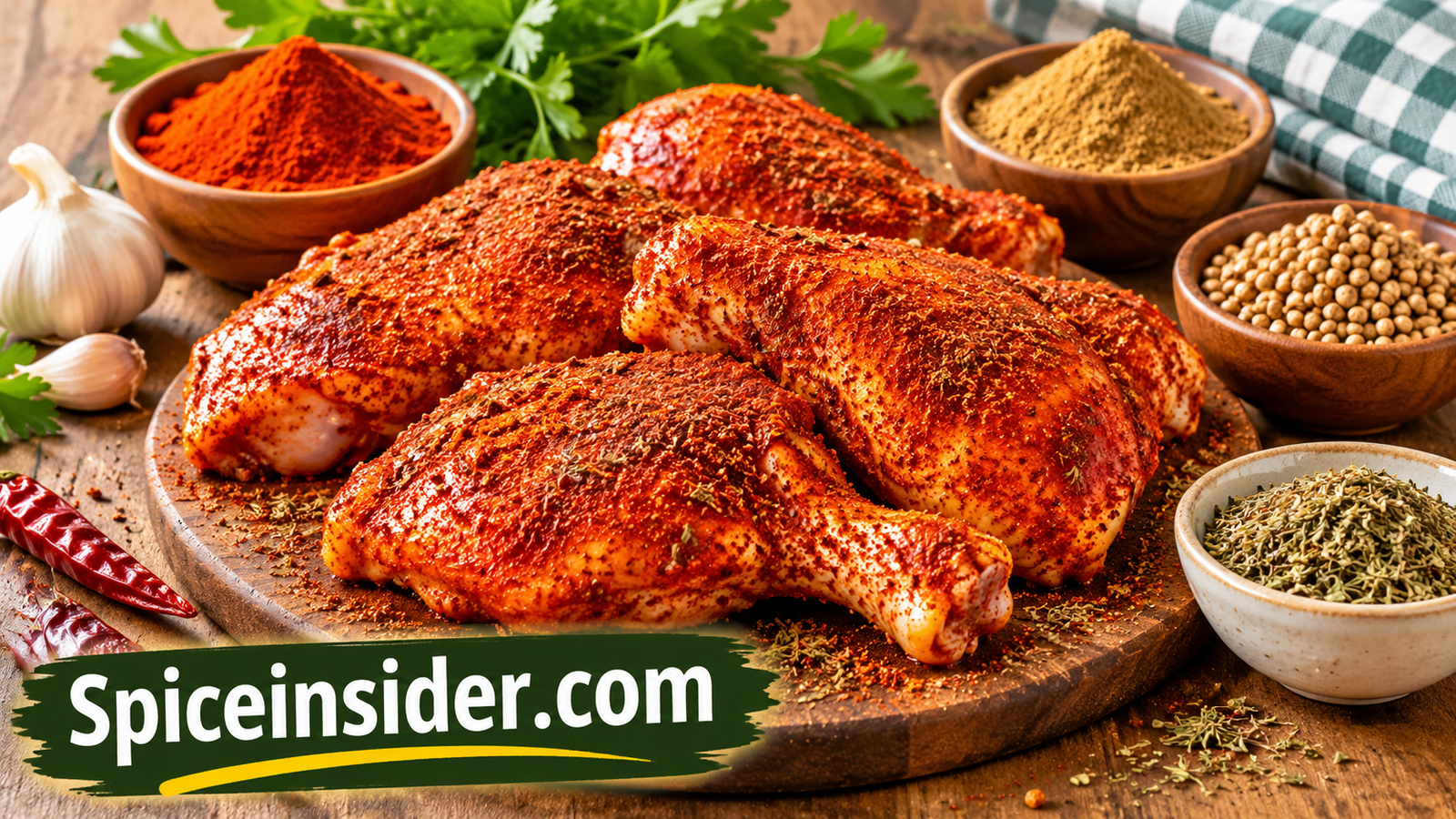
Chicken takes on whatever flavor you give it — which is exactly why choosing a direction matters more than choosing an exotic ingredient.
Why Chicken Is the Perfect Canvas for Spice
Before we talk about which spices to use, it helps to understand what is actually happening when spice meets chicken. Once you see the mechanics, a lot of seasoning advice stops being a list of rules and starts being obvious.
Chicken is mild, and mild means absorbent
Compared to red meat or oily fish, chicken has a relatively delicate flavor. It is lower in the strongly flavored compounds that give beef its mineral depth or salmon its distinctive richness. From a seasoning standpoint, that mildness is an open door: the flavors you add are not competing with a loud base note, they become the flavor of the dish. A teaspoon of cumin that would disappear into a lamb stew can completely define a pan of chicken thighs.
This is why chicken shows up in nearly every cuisine on earth. It is not that chicken is universally loved as a flavor — it is that chicken is an outstanding delivery vehicle for other flavors. The spice tradition comes to the chicken, not the other way around.
Fat is what carries the flavor
Most of the aromatic compounds that make spices smell and taste like themselves are fat-soluble rather than water-soluble. The bright red carotenoids in paprika, the warm depth of cumin, the heat of capsaicin in chili, the fragrance of thyme and rosemary — these bind to fat and get carried across your palate. This is why a spice rub tastes so much more vivid on a skin-on chicken thigh than on a skinless breast, and why a marinade with a little oil in it tastes rounder than one made with only citrus juice.
Practical takeaway: if you are cooking a lean cut like a breast, give the spices a fat to ride on. A light coat of oil, a smear of softened butter under the skin, a spoon of yogurt, or a spoonful of tahini in the marinade will all make the same spices taste noticeably more present.
Salt does more work than any spice
It is worth saying plainly: the single most impactful seasoning decision you make with chicken is when and how you salt it. Salt does not just make chicken taste salty — it penetrates the meat, loosens the protein structure slightly, and helps the muscle hold on to moisture during cooking. It also amplifies every other flavor you add. A beautifully spiced piece of chicken that is under-salted will always taste flat.
This is also the answer to a question that comes up constantly — see our explainer on whether salt counts as a spice. Technically, salt is a mineral, not a spice. Functionally, it is the foundation everything else stands on.
Surface, skin, and time
Spices do not travel far into meat on their own. Most of the flavor you get from a rub stays within a couple of millimeters of the surface. That is fine — surface flavor is what you taste first — but it changes how you should think about seasoning:
- For quick-cooking pieces (sautéed breast, grilled tenders), season generously right before cooking. You want maximum surface impact.
- For roasts and whole birds, season well ahead — an hour, or even overnight in the fridge. This gives salt time to migrate inward and lets dried herbs hydrate and bloom.
- For skin-on chicken, the skin is a barrier. Rubbing spices on top of the skin flavors the skin (delicious), but to season the meat you want some of the rub underneath it too.
- Wet surfaces block browning. Pat the chicken dry before adding oil and spice. A dry surface browns, and browned surface is where toasted spice flavor lives.
Everything that follows builds on that idea: pick a direction first, then pick the spices that express it.
Start with a well-made base seasoning
A balanced all-purpose chicken seasoning takes the guesswork out of weeknight cooking.
Check Price on AmazonThe Core Spices Every Chicken Cook Should Own
You do not need a wall of jars to make excellent chicken. You need a small, well-chosen set that covers the main flavor territories: savory depth, warmth, earthiness, herbal lift, and heat. Everything beyond that is exploration — wonderful, but not required.
Below is the core roster. If these live in your cupboard, you can make chicken taste convincingly Mediterranean, Indian, Mexican, Middle Eastern, or American BBQ-style without buying another thing.
- Garlic powderThe quiet backbone of almost every chicken seasoning. Warm, savory, and far more reliable than fresh garlic on a high-heat grill, where fresh cloves scorch.
- Onion powderRound sweetness that fills in the gaps garlic leaves. It builds body in rubs and makes pan sauces taste long-cooked.
- Smoked paprikaInstant depth. It reads as “grilled” even when nothing has been near a flame, and it gives chicken that appetizing brick-red color.
- Sweet paprikaGentler and fruitier than smoked. Useful when you want color and mild pepper flavor without the smoke note.
- Ground cuminEarthy, warm, slightly bitter — the anchor of Tex-Mex, Indian, and North African chicken alike.
- Ground corianderCitrusy and floral where cumin is heavy. They are classic partners because they cover each other’s weaknesses.
- Black pepperFreshly cracked is a different ingredient from pre-ground. It adds bite and a faint floral heat that supports everything else.
- Chili powder or cayenneHeat control. Chili powder blends are mild and complex; cayenne is pure, sharp heat. Own both eventually.
- Dried oreganoThe defining herb of Greek, Italian, and Mexican chicken. Robust enough to survive long roasting.
- Dried thymeSubtle, slightly minty, slightly earthy. It works in almost every savory blend without ever dominating.
- TurmericGolden color and a musky, bitter-earthy base note. A little goes a long way.
- Mustard powderSharp, tangy, and a secret weapon in rubs — it emulsifies into marinades and adds savory lift without any visible “mustard” flavor.
If you want to go deeper into building a complete pantry, we have a full guide to the spices every kitchen needs, plus a complete reference of all the spice names worth recognizing on a label.
How the core spices divide the work
A useful mental model is to think of your spice rack as a team with defined roles:
| Spice | Flavor Role | Best Chicken Uses | Keep In Mind |
|---|---|---|---|
| Garlic powder | Savory backbone | Rubs, roasting, pan-seared breast, fried chicken coating | Burns easily over direct flame; move chicken to indirect heat |
| Onion powder | Sweet depth and body | Gravy, braises, dry brines, any rub base | Clumps in humid climates; break it up with your fingers |
| Smoked paprika | Smoke, color, warmth | Roast chicken, wings, drumsticks, sheet-pan dinners | Can turn bitter if scorched in a screaming-hot pan |
| Cumin | Earthy anchor | Tacos, curries, shawarma, chili-style bakes | Too much reads as dusty; balance with citrus or coriander |
| Coriander | Citrusy lift | Curries, marinades, grilled thighs, soups | Fresh seed and ground taste quite different; try both |
| Turmeric | Color and earthy base | Curries, rice dishes, braises, golden marinades | Stains everything; measure carefully and wipe spills fast |
| Oregano | Herbal backbone | Greek chicken, fajitas, pizza-style bakes, kebabs | Dried is stronger than fresh; use about one-third as much |
| Black pepper | Heat and aroma | Literally everything | Grind at the last moment for the biggest difference |
Notice how few “exotic” ingredients appear. The spices doing the heavy lifting in most great chicken dishes are the same eight or nine you already half-own. The magic is in proportion, timing, and combination — which is where the rest of this guide lives.
Build your starter spice set
Look for a curated spice starter set so the basics arrive matched in strength.
Check Price on AmazonWarm and Earthy Spices: The Flavor Family That Loves Chicken
If there is one family of spices that chicken gravitates toward, it is the warm-and-earthy group. Cumin, coriander, turmeric, paprika, fenugreek, and their relatives share a depth that stands up to roasting, grilling, and long braising without fading into the background. They are also the spices most associated with “comfort food” chicken across dozens of cuisines.
Cumin: the earthy anchor
Cumin is probably the single most useful chicken spice there is. It is warm, slightly bitter, and deeply savory, with an aroma that most people recognize instantly even if they cannot name it. It is the backbone of taco seasoning, of many Indian masalas, of Middle Eastern shawarma spice, and of a good chili.
Two things separate good cumin use from mediocre. First, cumin needs heat and fat to show its best side — blooming it briefly in oil or toasting the seeds makes it rounder and sweeter. Second, cumin alone can taste muddy. It sings when paired with something citrusy (coriander, sumac, lime) or acidic (yogurt, tomato, vinegar).
Coriander: the citrus counterweight
Ground coriander is floral, faintly sweet, and unmistakably citrus-adjacent. It is what stops cumin-heavy blends from tasting like dust. If a chicken dish tastes heavy or one-dimensional, coriander is very often the fix. Fresh coriander seed — toasted and lightly crushed — is brighter and more aromatic than the pre-ground version and is worth trying at least once.
Paprika: color, sweetness, and smoke
Paprika is not one spice but a spectrum. Sweet paprika is fruity and gentle; hot paprika carries real heat; smoked paprika has been dried over wood fire and brings an unmistakable barbecue note. For chicken, smoked paprika is the shortcut to depth — it makes oven-roasted chicken taste like it spent time over a fire.
Quality varies enormously here. If paprika is one of your key ingredients, it is worth seeking out a good one; our guide to the best smoked paprika covers what to look for on the label.
Turmeric: color first, flavor second
Turmeric is used as much for its glowing golden color as for its flavor, which is musky, earthy, and slightly bitter. It is foundational in Indian and Southeast Asian chicken cookery and works beautifully in rice, braises, and coconut-milk-based sauces. Because of that bitterness, it is almost never used alone — it needs fat, salt, and usually something sweet or creamy beside it.
Not all turmeric powders are equal in color or intensity; our roundup of the best turmeric powder explains the difference.
Saffron: the luxury note
Saffron is the world’s priciest spice, and there is a reason for it — the harvest is brutally labor-intensive. You can read about why in our piece on the most expensive spice in the world. For chicken, saffron is the signature of paella, Persian rice dishes, and certain biryanis: a floral, honeyed, hay-like aroma with a golden hue.
Because it is expensive and commonly adulterated, sourcing matters. We cover trusted saffron brands and, just as importantly, how to tell if saffron is real before you spend money on it.
Fenugreek, nigella, and the supporting cast
A few earthy spices work as background players rather than leads. Fenugreek has a maple-like bitterness that makes butter chicken taste like butter chicken. Nigella seed adds a subtle onion-y crunch. Caraway brings a rye-bread warmth to roasted drumsticks. Used in small amounts, these give a chicken dish a sense of place — the difference between “spiced chicken” and “this tastes like something specific.”
| Spice | What It Tastes Like | Best Chicken Match | Watch Out For |
|---|---|---|---|
| Cumin | Warm, earthy, faintly bitter | Tacos, shawarma, curry, chili-style bakes | Overuse tastes dusty — balance with citrus |
| Coriander | Floral, sweet, citrus-like | Curries, marinades, grilled thighs, soups | Loses aroma fast once ground |
| Smoked paprika | Sweet pepper with woodsmoke | Roast chicken, wings, drumsticks | Bitter when scorched in very hot oil |
| Turmeric | Musky, earthy, slightly bitter | Curries, coconut sauces, golden rice | Stains cloth and counters permanently |
| Fenugreek | Maple-like bitterness | Butter chicken, creamy tomato sauces | Even a pinch too much turns acrid |
| Saffron | Floral, honeyed, hay-like | Paella, biryani, Persian rice dishes | Commonly faked; buy from a known source |
Stock the warm-and-earthy shelf
Ground cumin, coriander and turmeric are the highest-value spices for chicken.
Check Price on AmazonBright, Herby and Citrusy Notes: Lifting Chicken Out of the Ordinary
If warm spices give chicken depth, the bright and herbal side of the pantry gives it freshness. This is the flavor territory of Greek lemon chicken, of Persian herb stews, of a simple roast bird finished with parsley and a squeeze of lemon. Without these notes, spiced chicken can taste heavy — like a closed room with no window open.
Sumac: sour without liquid
Sumac is one of the most useful discoveries for anyone cooking chicken regularly. It is a coarsely ground dried berry with a deep burgundy color and a bright, lemony tartness. The beauty of sumac is that it delivers acidity without adding any moisture — which means you can sprinkle it over chicken before, during, or after cooking and still keep a crisp skin or a good sear.
It is a staple in Levantine cooking, where it appears on grilled chicken, on rice, over onions, and in the herb blend za’atar. If the name is unfamiliar, our full explainer on what sumac spice is covers flavor, sourcing, and uses.
The herb question: dried or fresh?
Herbs are technically not spices — spices come from seeds, bark, roots, and fruit, while herbs are the leafy green parts of plants — but you cannot answer “what spices go with chicken” without talking about them, because in practice they work as a team. The rule of thumb is simple: robust dried herbs belong early in cooking; tender fresh herbs belong at the end.
Oregano, thyme, rosemary, sage, and marjoram are sturdy. They hold up to roasting, braising, and grilling, and their flavor actually deepens with heat. Parsley, cilantro, dill, basil, tarragon, chives, and mint are delicate — their charm is volatile and disappears with prolonged cooking, so they go on at the very end or into the sauce off the heat.
| Option | Pros | Cons | Best Used For |
|---|---|---|---|
| Dried herbs | Concentrated flavor, long shelf life, consistent, fine for rubs | Can taste dusty or stale, less aromatic, easy to overdo | Dry rubs, roasting, braises, slow-cooked sauces |
| Fresh herbs | Bright, aromatic, adds color and texture, more complex scent | Perishes quickly, weakens with heat, more expensive per use | Finishing, marinades, pan sauces, salads and salsas |
| Herb pastes | Big flavor in small space, clings well to meat, freezer friendly | Can contain added oil or salt, texture varies by brand | Marinades, compound butters, sheet-pan cooking |
| Whole dried herbs | Best aroma retention, crumble to order, visually appealing | Harder to measure evenly, needs crushing before use | Slow braises, stocks, whole-leaf seasoning under skin |
The citrus effect
Almost every tradition that cooks chicken well has an acid in the mix: lemon in the Mediterranean, lime in Mexican and Thai cooking, tamarind and yogurt in South Asia, vinegar in Filipino adobo, sumac across the Middle East. Acid does something salt cannot — it sharpens flavor perception and makes rich, fatty chicken taste lighter. It also tenderizes the surface of the meat slightly when used in a marinade.
The catch is that acid works fast and too far. A chicken breast sitting in pure citrus juice for hours will turn chalky and tough on the outside. For marinades, keep the acidic component moderate and the marination time sensible — we will cover exact ranges in the rub section below.
Lemon pepper, za’atar, and the hybrid seasonings
Some of the most popular chicken seasonings sit exactly at this bright intersection. Lemon pepper combines citrus oil with cracked pepper and salt. Za’atar blends thyme, sumac, and sesame for something herbal, tangy, and nutty at once. Dukkah adds toasted nuts and seeds for crunch. These blends work because they deliver contrast in a single spoonful — which is precisely what chicken needs to avoid tasting flat.
Quick rule for herbal balance
If your chicken tastes heavy or one-note, the fix is almost never more spice. It is a brightener: a squeeze of citrus, a pinch of sumac, a spoon of chopped fresh herbs, or a splash of vinegar stirred into the pan sauce at the end.
Explore bright, tangy seasonings
Za’atar, sumac and lemon pepper blends are fast ways to lift plain chicken.
Check Price on AmazonHeat and Smoke: The Spice Side That Makes Chicken Craveable
Heat is the most personal seasoning decision you will make. Some people want a chicken wing that makes them reach for a drink; others want the flavor of chili without any burn at all. The good news is that the chili family offers a full range, and heat is one of the easiest things to control once you understand how it behaves.
The difference between chili flavor and chili heat
These are two separate things, and confusing them is the most common mistake people make with spicy chicken. Dried chilies vary wildly in both dimensions. Ancho chili is mild and fruity, tasting of raisins and cocoa. Chipotle is smoky and medium-hot because it is a smoke-dried jalapeño. Cayenne is sharp, straightforward heat with little flavor of its own. Gochugaru is fruity and gently warm. Aleppo pepper is oily, tangy, and moderately hot.
If you want flavor without fire, reach for ancho, sweet paprika, or mild chili powder. If you want fire without changing the dish’s character, use cayenne or a hot chili powder in small, adjustable amounts.
Smoke without a smoker
Smoked paprika and chipotle powder are the two most reliable ways to add a smoke note to chicken cooked in an ordinary kitchen. Smoked salt does the same job at the seasoning layer. Between them, you can make oven-roasted chicken thighs taste convincingly like they came off a barbecue — which is why they appear in so many rub recipes.
Because smoke flavor reads as “outdoor cooking” to most palates, it pairs beautifully with a touch of sweetness (brown sugar, maple, honey glaze) and with a sour finish (vinegar slaw, pickled onions, lemon).
Black pepper, white pepper, and Sichuan pepper
Pepper deserves more attention than it gets. Black pepper brings a floral, piney heat that is the default for roast chicken for good reason. White pepper is sharper and more fermented-tasting — it is the reason classic European cream sauces and Chinese stir-fried chicken taste the way they do, and it disappears visually into light-colored dishes. Sichuan pepper is not actually a chili at all; it delivers a tingly, buzzing sensation rather than heat, and it transforms fried chicken and dry-rubbed wings.
How to control heat level
- Build in layers. Start with a mild base (paprika, ancho) and add heat separately so you can adjust.
- Remember that fat and dairy calm heat. A yogurt marinade, a butter finish, or a creamy sauce will noticeably soften a spicy rub.
- Heat intensifies as it sits. A rub that tastes perfectly seasoned an hour before cooking will taste hotter the next day.
- Salt and sugar do not remove heat — they shift your perception of it. Sugar rounds the edges; salt makes the other flavors louder so the burn seems less dominant.
- Seeds and ribs carry most of the capsaicin. With fresh chilies, removing them changes the dish far more than choosing a different chili variety.
If you do find yourself having overreached, there are solid fixes — we cover the full set in our guide to how to reduce spice in food without starting over.
Where each type of heat belongs
Cayenne and hot sauce belong on wings, where the point is a direct hit. Chipotle belongs in rubs for roasted thighs and in creamy marinades. Gochugaru belongs on grilled chicken with sesame and scallion. Aleppo belongs on finished dishes, sprinkled at the table like a condiment. Fresh chilies belong in marinades and sauces, where their grassy brightness has room to show.
Stock up on smoke and heat
Smoked paprika and a good chili powder will cover most spicy chicken recipes.
Check Price on AmazonSweet-Warm Spices: The Unexpected Match for Chicken
Cinnamon on chicken sounds strange until you have eaten a Moroccan tagine, a Lebanese seven-spice roast, a plate of jerk chicken, or a Mexican mole. Sweet-warm spices — cinnamon, nutmeg, allspice, clove, ginger, cardamom — are not dessert ingredients that wandered into the wrong cupboard. They are some of the most effective seasonings for poultry in existence, used in savory cooking for centuries across the Middle East, South Asia, the Caribbean, and Latin America.
Why warm spices work on poultry
Poultry is mild and slightly sweet-tasting on its own, which gives sweet-warm spices something to attach to rather than fight. Where cumin adds savory depth, cinnamon adds aromatic lift. Where chili adds heat, ginger adds a bright, biting warmth. In small quantities these spices read as complexity rather than sweetness — the same way vanilla makes a tomato sauce taste more like itself without making it taste like dessert.
The keyword is small. Sweet spices have intense volatile oils. Half a teaspoon of cinnamon in a rub for four chicken thighs is seasoning. A tablespoon is a mistake.
Cinnamon: the crossover spice
Ground cinnamon is a staple in baharat, in ras el hanout, in many curry powders, in jerk seasoning, and in the spice rub for Mexican slow-cooked chicken. It works especially well alongside cumin, coriander, and allspice, and it loves fat — butter, olive oil, rendered chicken skin, coconut milk.
Not all cinnamon is the same ingredient. Cassia is bold, spicy, and slightly bitter; Ceylon is delicate, floral, and complex. Our comparison of Ceylon versus cassia cinnamon explains which suits savory cooking, and our guide to the best cinnamon for baking doubles as a quality reference. For more savory pairing ideas, see what goes well with cinnamon.
Nutmeg, allspice, and clove
Nutmeg is warm, sweet, and slightly woody — extraordinary in creamy chicken dishes, béchamel-based bakes, and any marinade with dairy in it. Buy it whole and grate it fresh; the difference is dramatic, and we explain why in our guide to the best whole nutmeg.
Allspice is a single berry that tastes like a combination of cinnamon, nutmeg, and clove — which is where its name comes from. It is the signature flavor of Jamaican jerk chicken and a key note in many Caribbean and Middle Eastern blends. Clove is the sharpest of the group: numbing, medicinal in excess, superb in tiny amounts alongside allspice and cinnamon.
Ginger and cardamom
Ground ginger brings a bright, peppery warmth that pairs beautifully with garlic and soy, which is why it shows up in so many Asian chicken marinades. Cardamom is intensely floral and eucalyptus-tinged; it is the perfume of biryani and of many Middle Eastern rice dishes, and it flatters chicken like almost nothing else when used with restraint.
The pre-made warm blends
You will also encounter warm spice blends sold as finished products. Pumpkin pie spice is one — and while the name suggests only baking, its component spices (cinnamon, ginger, nutmeg, allspice, clove) appear in savory rubs all the time. If you are curious about the exact composition, we break down what is in pumpkin pie spice, and you can use a small amount as a shortcut in a sweet-heat chicken glaze.
A simple sweet-warm chicken rub to try
Smoked paprika, garlic powder, a little ground cinnamon, a small pinch of allspice, brown sugar, salt, and black pepper. The sugar caramelizes into a lacquered crust, the warm spices give it depth, and the paprika keeps it firmly in savory territory. It works on thighs in the oven or on a grill.
Try the warm spice family
Whole nutmeg, cinnamon and allspice are the fastest route to complex chicken.
Check Price on AmazonSignature Spice Blends From Around the World
The fastest way to answer “what spices go with chicken” is to borrow a blend that centuries of cooks have already perfected. Every major culinary tradition has a signature seasoning built specifically for poultry and meat, and each one is a ready-made answer to the pairing question.
Why blends beat individual spices for beginners
When you season with a single spice, you are responsible for balance — the ratio of salt to aroma to heat to sweetness. A good blend has already solved that equation. It also guarantees a consistent result from one batch to the next, which matters more than most home cooks realize. The same chicken recipe with a slightly different cumin-to-coriander ratio tastes like a different dish.
Blends are also forgiving. A teaspoon of garam masala cannot make chicken inedible. A tablespoon of cayenne can.
The essential chicken blends
| Blend | Where It Comes From | What It Tastes Like | Best Chicken Match |
|---|---|---|---|
| Garam masala | South Asia | Warm, aromatic, gently sweet — cardamom, cinnamon, clove, cumin | Curries, tikka, roasted thighs, yogurt marinades |
| Chinese five spice | China | Sweet-anise, warm, aromatic — star anise, clove, cinnamon, fennel, Sichuan | Roast chicken, glazed wings, braised drumsticks |
| Ras el hanout | North Africa | Complex and floral, up to a dozen spices, sometimes rose | Tagines, slow-cooked thighs, rice dishes |
| Za’atar | Levant | Herbal, tangy, nutty — thyme, sumac, sesame | Grilled skewers, flatbreads, roast breast |
| Baharat | Middle East | Warm and peppery with a sweet edge | Roast chicken, meatballs, rice pilaf |
| Cajun / Creole | Southern United States | Peppery, garlicky, paprika-forward with real heat | Blackened chicken, jambalaya, grilled thighs |
| Jerk seasoning | Jamaica | Fiery, aromatic, sweet-hot — allspice, scotch bonnet, thyme | Grilled quarters, drumsticks, slow-roasted legs |
| Adobo | Latin America & Philippines | Garlicky, tangy, earthy — garlic, oregano, pepper, vinegar | Braised chicken, weeknight roasts, stews |
| Curry powder | Adapted globally | Turmeric-forward, warm, mildly bitter | Chicken salad, coconut curries, baked thighs |
| Italian seasoning | Italy-inspired | Herbal and savory — oregano, basil, rosemary, thyme | Roast breast, chicken parmesan, sheet-pan bakes |
Buying blends versus making your own
Both approaches have real advantages. Commercial blends offer consistency and convenience, and the better ones are genuinely well formulated. Homemade blends let you control salt content, heat level, and freshness — and they cost less per use once you own the component spices.
A sensible strategy: keep two or three reliable store-bought blends on hand for busy nights, and mix your own for the styles you cook most often. If Indian food is a regular event in your kitchen, grinding and blending your own masala is worth the effort — and pairing a good blend with the right equipment matters. We cover the tools in our guide to the best grinder for Indian spices.
Blends with a secret identity
One blend deserves special mention: Chinese five spice is a fascinating study in contrast. Its anise-forward sweetness seems like it belongs only in braised pork, yet on roast chicken it produces a glossy, deeply aromatic crust that is unlike anything else in Western cooking. We break down the components in our guide to what is in Chinese five spice, along with ideas for using it well.
Start with a classic blend
Garam masala, baharat or a Cajun blend instantly opens up new chicken territory.
Check Price on AmazonMatch the Spices to the Cooking Method
The same rub can be brilliant on grilled chicken and disappointing in a braise. This is not a contradiction — it is physics. Different cooking methods treat spices differently, and the seasonings that shine in one setting can disappear or turn bitter in another.
High, dry heat: roasting, grilling, air frying
Direct, intense heat does two things to spice. It drives off volatile aromatics quickly, and it can carbonize delicate ingredients. This is where robust players win: garlic powder, onion powder, smoked paprika, chili powder, cumin, dried oregano, black pepper. These have flavor compounds stable enough to survive the heat and even improve as they toast against the surface of the meat.
The vulnerable ingredients are fresh garlic, fresh onion, ground dried herbs applied in thick layers, and anything with sugar. All of these go from perfect to acrid within a minute at grill temperatures. If your rub contains sugar or fresh aromatics, cook over indirect heat or move the chicken away from the hottest zone.
Wet, slow heat: braising, stewing, slow cooking
Long, moist cooking is where spice blends become sauces. Flavors have hours to meld and deepen, which means you can use warm spices (cinnamon, cardamom, clove), whole spices (cumin seed, coriander seed, bay leaf, star anise), and long-cooking aromatics (ginger, garlic, onion) with confidence. These ingredients need time; a braise gives it to them.
The mistake to avoid is adding delicate herbs early. Parsley, cilantro, and dill turn muddy in a long simmer. Stir them in at the end, off the heat.
Pan-searing and sautéing
Fast, hot, and shallow. This is the method where spice timing is most critical. Garlic powder and paprika will burn in a hot pan before the chicken is cooked through. The reliable approach is to season the chicken simply (salt, pepper, a little paprika), get the sear, then build the flavor into the pan sauce — add a spoon of your spice blend to the butter or oil along with aromatics and a splash of liquid, and let it bloom for twenty seconds before tossing the chicken back through.
| Method | How Spice Behaves | Best Spices To Use | Pro Tip |
|---|---|---|---|
| Roasting | Dry heat toasts the rub and builds a crust | Smoked paprika, garlic powder, thyme, rosemary, pepper | Season well ahead so salt penetrates the meat |
| Grilling | Very fast; delicate ingredients scorch | Cumin, coriander, chili powder, oregano, coarse pepper | Keep sugary rubs away from direct flames |
| Pan-searing | Surface spice can burn before the inside cooks | Salt, pepper, mild paprika, mustard powder | Add the full spice blend to the pan sauce instead |
| Braising | Long, wet cooking deepens and melds flavors | Whole cumin, cinnamon, cardamom, bay, ginger, star anise | Add delicate fresh herbs only at the very end |
| Slow cooker | Gentle heat; flavors stay soft and blended | Curry powder, garam masala, adobo, tomato-friendly herbs | Add a fresh hit of spice in the final half hour |
| Deep frying | Flour coating insulates spice from direct heat | White pepper, garlic powder, cayenne, mustard powder, sage | Season the flour and the meat for full coverage |
| Smoking | Hours of low heat; bark forms on the surface | Coarse black pepper, chili powder, garlic, onion, paprika | Coarse grinds build better bark than fine powder |
Timing rules that apply everywhere
- Salt early. Everything else can wait, salt cannot.
- Whole spices go in first — they need time to release their oils into fat and liquid.
- Ground spices go in mid-cook, so they have time to lose their raw edge without burning.
- Fresh herbs and citrus go in last, to keep their brightness.
- If the dish tastes flat at the end, the answer is usually acid and fresh herbs, not more cooked spice.
Get a reliable all-purpose rub
A well-balanced rub works across roasting, grilling and pan cooking.
Check Price on AmazonMatch the Spices to the Chicken Cut
Cuts of chicken are not interchangeable when it comes to seasoning. A spice blend that makes a skinless breast sing can overwhelm a rich, gelatinous wing, and a rub built for slow-cooked thighs will taste thin and underpowered on a quickly grilled tenderloin. The variables are fat content, surface area, skin, bone, and cooking time — and all of them affect how much spice you need and what kind.
Chicken breast: lean, quick, and easily overwhelmed
The breast is the most commonly over-seasoned cut in home cooking. It is lean and mild, which tempts people to pile on flavor to compensate. In practice, the opposite works better: a lighter hand, a real fat source, and a fresh finish. Think lemon zest, thyme, black pepper, a little garlic powder, and a butter baste. Very heavy, sweet, or intensely spiced rubs make dry breast meat taste even drier by contrast.
Because breast cooks fast, quick-blooming spices work best — ground spices and powders rather than whole seeds. If you are marinating, keep the acidic component modest and the time under two hours.
Thighs: the spice lover’s cut
Bone-in, skin-on thighs are the most forgiving and flavorful cut on the bird, with enough fat to carry heavy seasoning. This is where bold spice blends belong: cumin and coriander, smoked paprika, chipotle, garam masala, jerk seasoning, ras el hanout. Thighs tolerate long cooking and can handle a rub with sugar in it, because the fat moderates the sweetness and the longer cook time turns it into a lacquered crust.
Drumsticks and wings
Both cuts are skin-heavy and bone-in, which means the surface gets a lot of seasoning relative to the meat. They are perfect for dry rubs and glazes, and they suit crowd-pleasing flavors: buffalo-style heat, honey-garlic, lemon-pepper, jerk, five-spice glaze. Because the skin crisps, avoid very fine powders that sit on the surface and scorch — coarser grinds behave better.
Whole bird
Seasoning a whole chicken is about distribution. A rub on the outside flavors the skin; to season the meat, you want some underneath the skin as well, and salt applied well in advance so it has time to travel. Classic whole-bird flavors are simple and aromatic: butter, lemon, garlic, thyme, rosemary, black pepper. Whole spices tucked into the cavity (bay leaf, lemon halves, onion, a cinnamon stick) perfume the meat gently from the inside without making the surface taste stronger than the interior.
Ground and minced chicken
Ground chicken mixes seasoning through the entire mass, which changes the math — you need a higher proportion of spice relative to weight, and you need salt to help the mixture bind. Cumin, coriander, garlic, ginger, scallion, and chili work particularly well, which is why ground chicken shows up in kebabs, dumplings, and spiced meatballs across South and East Asia.
| Cut | What Makes It Different | Best Spice Style | Pro Tip |
|---|---|---|---|
| Breast | Lean, mild, cooks fast, dries easily | Light hand, bright herbs, citrus, gentle garlic | Add fat and finish with fresh herbs |
| Thigh | Rich, juicy, forgiving, holds up to long cooking | Bold blends, warm spices, smoke, heat | Season under the skin as well as over it |
| Drumstick | Skin-heavy, bone-in, great texture | Dry rubs, glazes, coarse grinds | Score the meat to let flavor reach deeper |
| Wings | Small, skin-rich, high surface area | Peppery, tangy, spicy, sweet-heat | Salt the wings well ahead to dry the skin |
| Whole bird | Mixed white and dark meat, uneven cooking | Aromatic, balanced, classic herbs and butter | Season in advance and inside the cavity too |
| Ground chicken | Seasoning is mixed through the whole mass | Higher spice proportion, ginger, garlic, chili | Salt helps the mixture bind as well as flavor |
Marinade and rub kits for every cut
Pre-portioned blends make it easy to season different cuts correctly.
Check Price on AmazonWhole Spices, Ground Spices, and Why Grinding Your Own Changes Everything
There is one upgrade that improves every single thing in this guide at once, and it is not a more expensive chicken or a more complicated recipe. It is grinding spices fresh instead of buying them pre-ground.
Spices are aromatic because of volatile oils. Once a spice is ground, those oils are exposed to air, light, and heat, and they start leaving. Pre-ground cumin from a jar that has been open for a year still looks like cumin and still weighs the same, but much of what made it smell of anything is gone. Freshly ground cumin, by contrast, is almost a different ingredient — sweeter, warmer, more alive.
The three-way comparison
| Option | Pros | Cons | Best For |
|---|---|---|---|
| Pre-ground spices | Convenient, consistent, easy to measure, widely available | Aroma fades quickly, flavor flattens over time, hard to judge freshness | Weeknight cooking, large-volume rubs, everyday blends |
| Whole spices, ground at home | Maximum aroma, long shelf life, noticeably better flavor | Needs equipment, takes extra time, harder to measure precisely | Curry pastes, signature rubs, dishes where spice is the star |
| Mortar and pestle | No electricity, excellent texture control, quiet, inexpensive | Slower, requires effort, hard to get superfine results | Small batches, pastes, crushing seeds, coarse rubs |
| Electric blade grinder | Fast, affordable, handles most spices well, compact | Uneven grind, can overheat spices, retains odors | Regular grinding of cumin, coriander, peppercorns |
Toast before you grind
If you take one technique away from this section, make it this one. Dry-toasting whole spices in a pan for a minute or two before grinding deepens and rounds their flavor dramatically. The heat drives off residual moisture and begins reactions that create entirely new aroma compounds. Toasted cumin smells warmer and nuttier. Toasted coriander becomes citrusy and sweet.
The details matter — heat level, timing, when to pull the pan off — and we cover all of them in our walkthrough of how to toast spices before grinding.
Choosing a grinder
Grinders fall into two broad categories. Blade grinders chop spices with a spinning blade, which produces an uneven mix of fine powder and larger fragments. Burr grinders crush spices between two abrasive surfaces at a controlled gap, giving a much more uniform particle size. For coffee the difference is enormous; for spices it matters less than people expect, but it does show up in rub texture and in how evenly a spice dissolves into a sauce. We compare the two approaches in our blade versus burr grinder for spices guide.
If you are shopping, our roundup of the best spice grinder covers what to look for, and we have detailed reviews of the Cuisinart SG-10 and the Secura spice grinder if you want specifics. For hands-on cooks, a mortar and pestle or one of the best manual spice grinders offers complete control over texture.
Getting the most from your equipment
Once you own a grinder, technique makes the difference between great results and frustration. Our guide to how to use a spice grinder covers batch size, pulsing, and grind duration.
Two problems come up constantly. The first is an uneven grind that leaves fragments in your rub — usually a batch-size or pulsing issue, and we explain the fix in why your spice grinder leaves chunks. The second is a grind that never gets as fine as you want; that is addressed in what to do when your spice grinder is not fine enough.
And if you do not own a grinder at all? There are more ways to break down spices than people realize. Our guide to how to grind spices without a grinder covers the low-tech options that work in practice.
One common question
Cooks often ask whether they can use the same appliance for coffee and spices. The short answer is that you can, but the flavors cross-contaminate, so most people eventually want a dedicated unit. We lay out the tradeoffs in whether you can grind coffee in a spice grinder.
Grind your own for better flavor
A compact spice grinder is the single biggest upgrade to your seasoning game.
Check Price on AmazonBuilding a Balanced Rub: Ratios, Rules, and Mistakes to Avoid
Once you know which spices go with chicken, the remaining skill is proportion. This is where most home cooking goes quietly wrong: the right spices in the wrong balance produce a dish that is somehow both too much and not enough. The good news is that rub-making follows a simple structure that is easy to learn and hard to forget.
The rub formula
Every balanced rub is built from five roles. Not every rub needs all five, but knowing the roles tells you what is missing when something tastes flat.
| Component | Rough Share | What It Does | Example Ingredients |
|---|---|---|---|
| Salt | About a quarter to a third | Seasons, tenderizes, amplifies every other flavor | Kosher salt, sea salt, smoked salt, soy sauce |
| Aromatics | About a third | Builds savory depth and body | Garlic powder, onion powder, ground ginger |
| Warmth | About a quarter | Adds character and sense of place | Cumin, coriander, paprika, cinnamon, turmeric |
| Heat | Small, adjustable | Creates contrast and makes food compelling | Cayenne, chili powder, black pepper, chipotle |
| Sweet | Optional, small | Balances bitterness, aids browning and crust | Brown sugar, maple powder, honey glaze |
| Herbal lift | Optional, small | Adds freshness and keeps the rub from tasting heavy | Oregano, thyme, rosemary, sumac, lemon zest |
How much rub per pound of chicken
For a standard dry rub, a generous tablespoon per pound of chicken is a reliable starting point for bone-in, skin-on pieces. Lean boneless breast needs a lighter hand — closer to two teaspoons per pound — because there is no fat to moderate the intensity. You can always add more at the table; you cannot take it off the meat.
Dos and don’ts
Do
- Pat the chicken dry before seasoning so the rub sticks and the surface browns.
- Salt well ahead — ideally an hour or overnight in the fridge for larger pieces.
- Toast whole spices briefly before grinding for a rounder flavor.
- Keep a note of what you mixed so you can repeat the good batches.
- Finish with something fresh: herbs, citrus zest, a spoon of pan juices.
Don’t
- Don’t pile fine powders onto skin over direct flame — they burn and turn bitter.
- Don’t marinate in pure citrus for hours; the surface turns chalky.
- Don’t stack five heavy warm spices at full strength at once.
- Don’t use a rub with lots of sugar over the hottest part of the grill.
- Don’t reach for more spice when the dish tastes flat — it usually needs salt or acid.
There is also a long list of equipment habits worth knowing if you grind your own spice mixes — see our complete spice grinder dos and don’ts. And on the pairing side, understanding which spices go well together takes the guesswork out of inventing your own blends.
Is sugar a spice? And should it be in a chicken rub?
Technically, no — sugar is a sweetener, not a spice, and we get into the reasoning in our explainer on whether sugar counts as a spice. But it absolutely earns a place in some chicken rubs. Sugar promotes browning through caramelization and helps build the lacquered crust that makes glazed wings and sticky drumsticks so appealing. The tradeoff is that it burns at lower temperatures than spices do, so sugary rubs want gentler heat and closer attention.
When you overdo it
It happens to everyone: too much cayenne, too much clove, a rub that tasted perfect raw and tastes aggressive cooked. Most over-seasoned chicken can be rescued rather than discarded. Dilution with fat or dairy, adding acid, adding something starchy on the side, or splitting the batch and stretching it into a sauce are all effective. Our full guide to how to reduce spice in food walks through each fix in order of practicality.
The most common mistake of all
Burning the spices. Charred spice is not “extra flavor” — it is bitter, acrid, and dominant, and it will ruin an otherwise good dish. If your pan starts smoking when the rub hits it, the pan is too hot. Related to this: running a grinder too hard and too long generates friction heat that dulls the aroma of what you just ground. We cover the warning signs in what to do about a burning smell from your spice grinder.
Make better rubs at home
A rub mixing kit with fresh whole spices gives you total control over balance.
Check Price on AmazonStorage, Freshness, and Buying Smart
All of the pairing knowledge in this guide is worth exactly as much as the freshness of the jars you are working with. Stale cumin does not taste like weak cumin — it tastes like dusty paper, and it can drag an entire dish down with it. Managing freshness is unglamorous and completely essential.
What freshness actually looks like
The simplest test is the one you can do right now: open the jar, take a pinch, rub it between your fingers, and smell. Fresh spices announce themselves immediately. If you have to press your nose into the jar to detect anything, they are past their best. Ground spices should look vibrant in color — dull brown paprika or faded yellow turmeric is telling you something.
| Spice Form | Typical Freshness Window | Signs It Is Past Its Best |
|---|---|---|
| Whole spices | Roughly one to two years when stored well | Little aroma when crushed, faded color, brittle or shriveled seeds |
| Ground spices | Roughly six to twelve months once opened | Dusty smell, clumping, washed-out color, flat taste |
| Dried herbs | Roughly six to twelve months once opened | Crumbles to grey powder, no scent, stems with no flavor |
| Blends with salt or sugar | Often longer due to low moisture content | Hardened clumps, moisture in the jar, separation of ingredients |
How to store spices properly
The three enemies of spice are light, heat, and air. That rules out the classic rack above the stove, which is about the worst location in any kitchen. What works instead: a closed cupboard away from the oven, ideally with spices in airtight containers and labeled clearly so you use them before they fade.
If you buy in bulk to save money, the storage question gets more serious — our guide to how to store bulk spices covers the practical approach, including what to decant and what to leave in its original packaging. Organization makes a real difference to freshness too, because you actually use what you can see. We cover the options in our roundup of best spice organizers, plus how to label spice jars properly and how to organize a spice drawer so nothing gets lost at the back.
Keeping your grinder in good condition
Residual spice oil builds up in grinders fast, and once one flavor dominates the chamber, everything you grind afterwards tastes faintly of it. Regular cleaning is the fix, and the method depends on your machine. We cover the basics in how to clean a spice grinder, and the water question specifically in whether you can wash a spice grinder. For stubborn odors, two household methods work remarkably well — see how to get the smell out of a spice grinder using rice or bread and the fuller odor removal guide.
Two mechanical annoyances come up often enough to be worth knowing about. A stuck grinder lid is almost always caused by compacted spice dust or a worn seal, and there is a safe sequence to work through before forcing anything. And if you have had one unit fail early, our guide to choosing a spice grinder that does not break explains which construction details predict longevity.
Buying smart: what to look for
- Buy small, buy oftenA small jar used within months beats a large jar that sits for years. Bulk only makes sense for spices you use weekly.
- Whole when possibleWhole spices last longer and taste better freshly ground. Pre-ground is fine for everyday blends.
- Check the grind date or packaging dateFresher stock has done less time on the shelf losing its aromatics.
- Prefer opaque or dark containersLight degrades spice oils. Clear jars look good in photos and fade faster in real life.
- Smell before you commitEven in a shop, a good spice should have a noticeable aroma through the seal when it is fresh.
- Trust your palate over the labelIf a spice does nothing for a dish, it is far more likely stale than it is that you dislike it.
Store spices the right way
Airtight labeled jars keep your seasonings strong and easy to find.
Check Price on AmazonFrequently Asked Questions About Spices and Chicken
What spices go with chicken the best?
Garlic powder, onion powder, smoked paprika, cumin, coriander, black pepper, oregano, and thyme are the most versatile spices for chicken. Together they cover savory depth, warmth, earthiness, herbal lift, and gentle heat — which is why they appear in chicken seasonings across nearly every cuisine. Start with salt as the foundation, add these in balance, and you can produce convincingly Mediterranean, Mexican, Indian, or American-style chicken without buying anything else.
What is the best all-purpose seasoning for chicken?
An all-purpose chicken seasoning is one built around salt, garlic, onion, paprika, and black pepper, with a small amount of an herb and an optional touch of heat. That combination works for roasting, grilling, pan-searing, and air frying. If you want to mix your own, use roughly equal parts garlic powder, onion powder, and sweet or smoked paprika, then add salt to taste and a smaller amount of dried oregano and cayenne.
Should I season chicken before or after cooking?
Season before cooking, always — salt needs time and heat to do its work on the meat. For the best flavor, salt chicken at least forty-five minutes ahead, or up to a day ahead in the fridge for larger pieces. Add delicate fresh herbs, citrus zest, and finishing salt after cooking, because their aromas fade quickly under heat. Ground spices are best applied before cooking so they can bloom against the surface.
How long should spices sit on chicken?
For a dry rub, thirty minutes to an hour is a useful minimum for smaller pieces, and several hours or overnight for a whole bird or bone-in cuts. Beyond that, the benefit is mostly to the salt rather than the spices, since ground spices stay near the surface. If the rub contains a lot of acid, keep the time shorter — usually under two hours — to avoid a chalky texture on the outside of the meat.
What spices go best with chicken breast specifically?
Chicken breast suits lighter, brighter seasoning: lemon zest, black pepper, garlic powder, thyme, oregano, a little sweet paprika, and fresh parsley at the end. Because breast meat is lean, add a fat source like butter or olive oil so the spices taste round rather than dusty. Avoid very heavy sweet-warm blends at full strength, which can make mild, dry breast taste even more one-dimensional.
What spices go with a whole roast chicken?
For a whole bird, classic aromatics work best: butter, lemon, garlic, thyme, rosemary, black pepper, and a little sweet paprika for color. Rub some of the mixture under the skin as well as over it so the meat is seasoned, not just the skin. Tuck aromatics into the cavity — lemon halves, onion, a bay leaf, a cinnamon stick if you want warmth — and season well in advance so the salt has time to move inward.
Can I use the same spice blend on chicken and vegetables?
Yes, and it is one of the easiest ways to make a sheet-pan dinner taste coherent. Use the same blend for both, but add it in two stages: vegetables want oil and spice before roasting to develop a crust, while chicken needs to be patted dry first so it browns properly. If the vegetables are cut small, add them partway through so they do not burn before the chicken is done.
Are there any spices that do not work well with chicken?
Very few spices clash outright with chicken, but there are combinations to handle with care. Extremely bitter spices such as fenugreek and turmeric become unpleasant in large amounts. Very strong sweet spices like clove and star anise overwhelm the dish if over-measured. And fresh herbs added at the start of a long cook turn muddy rather than bright. None of these are wrong — they just need restraint and correct timing.
Do I still need salt if I use a spice blend?
Usually, yes. Many commercial blends contain salt, but often not enough for the amount of chicken you are seasoning. Check the ingredient list — if salt is first, the blend is mostly salt and you should adjust. Salt is what makes the other spices readable on your palate; without enough of it, even a well-balanced blend tastes flat. When in doubt, salt the chicken separately and treat the blend as flavor only.
How much spice rub should I use per pound of chicken?
About one tablespoon of dry rub per pound for bone-in, skin-on pieces, and closer to two teaspoons per pound for lean boneless breast. Coat the chicken evenly rather than piling the rub in one area, and press it gently onto the surface so it adheres. You can always season further at the table, but an over-rubbed piece cannot be rescued once it is cooked.
What is the difference between a rub and a marinade?
A rub is a dry mixture of spices, salt, and sometimes sugar that forms a flavorful crust on the surface. A marinade is a liquid — usually containing an acid, a fat, and aromatics — that tenderizes and seasons the outer layer of the meat while adding moisture. Rubs are better for crispy skin and grilled or smoked chicken; marinades are better for quick-cooking pieces that need moisture and for dishes where the sauce matters as much as the meat.
Can old spices ruin a chicken dish?
They will not make it unsafe, but they can certainly make it disappointing. Old spices lose their aromatic oils and taste flat, dusty, or slightly bitter, which is especially noticeable in dishes where a single spice is the main flavor. If a spice does not release a clear aroma when you rub it between your fingers, replace it — the improvement in a simple roast chicken is immediate and obvious.
Put these answers into practice
A versatile chicken spice bundle covers most of the questions above in one go.
Check Price on AmazonThe Short Answer, and the Longer One
So, what spices go with chicken? The short answer: garlic, onion, paprika, cumin, coriander, black pepper, oregano, thyme, and chili will carry you through almost anything.
The longer answer is more useful. Chicken is a blank canvas, which means the real question is not “which spice” but “which flavor direction.” Choose the mood first — warm and earthy, bright and herbal, smoky and hot, or sweet and aromatic — then pick two or three spices that express it clearly. Salt early. Give lean cuts some fat. Match the spice to the cooking method: robust and toasted for high heat, whole and slow-released for braises, fresh and bright for the finish. Keep your spices fresh, grind them yourself when it matters, and taste as you go.
Do that consistently and chicken stops being the boring default. It becomes the most flexible thing in your kitchen — a dish you can steer toward any cuisine in the world with the jars already sitting in your cupboard.
Ready to upgrade your chicken game?
Start with fresh spices, a reliable grinder, and one good all-purpose blend.
Check Price on Amazon